Crypt of the NecroDancer
Edit date: 9-04-2024, 00:12
Reason: Updated to version 4.1.0 (04.04.2024)
- Category:
- Release date:
- Game Genre:RPG, roguelike, 2D, rhythm, dungeon-crawler, top-down, indie games, action RPG
- Developer:
- Release:ElAmigos
- Platform:PC
- Languages (subtitles):English, French, Italian, German, Spanish, Russian, Portuguese-Brazil, Japanese, Korean, Simplified Chinese, Traditional Chinese
- Dubbing/Audio:English
- Crack:Tenoke
- Game size:1.95GB
Game Description
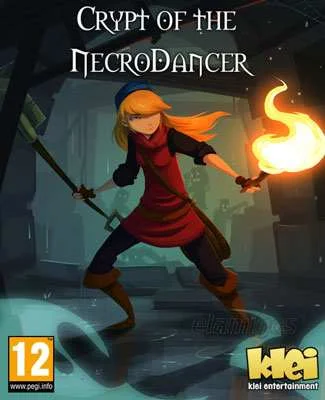
Crypt of the NecroDancer is a PC rhythm roguelike and top-down dungeon crawler from Brace Yourself Games, published on PC by Brace Yourself Games and Klei Entertainment. The current Steam storefront still uses the original name, with no verified rebrand or replacement edition. Its central idea remains unusually strict: movement, attacks, dodges, and enemy patterns all revolve around the music.
This is not a conventional action RPG with a soundtrack playing in the background. It is a grid-based game where the beat controls the pace of every encounter, making timing, positioning, and pattern recognition equally important.
A dungeon crawler built around the beat
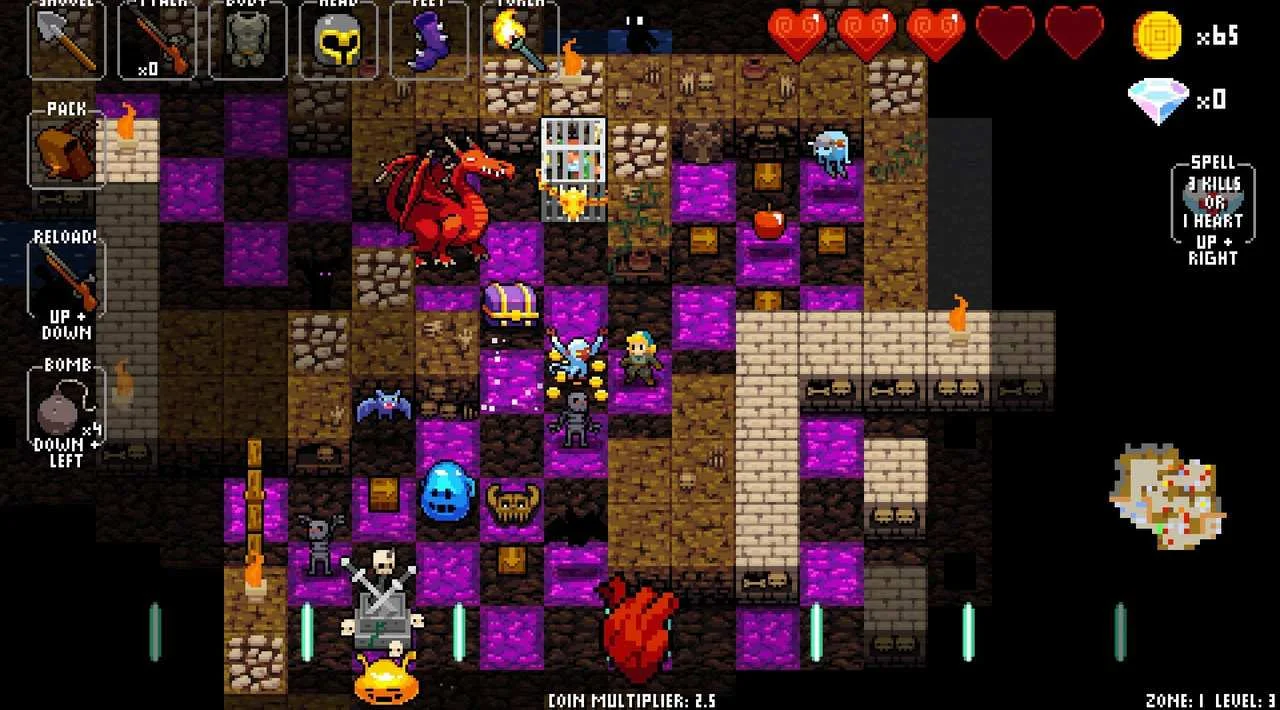
Each run sends you through an ever-changing dungeon filled with rooms, shops, treasure, traps, secrets, and enemies that move according to recognizable rules. You advance one tile at a time, but the safest move is usually the one made on the next beat.
Attacking is closely tied to movement. Walking into an enemy can be an attack, while stepping away at the wrong moment can expose you to damage. The result is a combat system that feels closer to rhythmic choreography than freeform button-mashing.
Maintaining a Groove Chain rewards consistent timing and keeps the run moving at its intended pace. Missing a beat does not simply reduce a score; it can break your momentum, leave you out of position, and turn a manageable room into a dangerous scramble.
Enemies are designed as timing puzzles. Skeletons, bats, dragons, slimes, and other creatures use different movement patterns, forcing you to learn when to strike, when to wait, and when to create distance. Understanding those patterns is more reliable than reacting blindly.
The game uses a top-down 2D perspective and grid-based navigation, giving you a clear view of nearby threats. That readability matters because the challenge comes from making the correct decision quickly, not from searching through a cluttered combat scene.
Progression, characters, and run mastery
Death resets the immediate dungeon run, but it does not erase all progress. You collect diamonds that unlock permanent upgrades, equipment options, spells, and other tools that broaden future attempts.
Gold has a more immediate purpose. It can be spent during a run on weapons, armor, health, spells, and other items, so every room becomes a decision about risk and reward. Breaking the beat to chase treasure may be tempting, but losing control of the room can cost more than the purchase is worth.
The base game includes 15 playable characters, and they are not simple cosmetic swaps. Each character changes the rules of movement, equipment, health, rhythm timing, or overall risk, turning the familiar dungeon into a different mechanical challenge.
Cadence is the most direct introduction to the standard rhythm loop, while other characters test whether you can adapt when the usual assumptions disappear. Bard, for example, changes the relationship between movement and the beat, making character selection part of the game's learning curve.
The long-term loop is therefore about more than reaching the deepest zone. You are learning enemy behavior, improving route decisions, unlocking options, and building the muscle memory needed to keep a run stable when the soundtrack becomes demanding.
Modes beyond a standard run
All Zones Mode provides the clearest test of complete-run consistency, asking you to progress through the crypt without treating each zone as an isolated practice session. It is the mode most closely associated with mastering the full journey.
Players who need a gentler learning structure can approach zones more independently, using the game's unlock and upgrade systems to make difficult sections more manageable. That structure gives newcomers room to practice without removing the underlying timing challenge.
Score attacks, speed-focused play, daily challenges, permanent leaderboards, and character-specific goals give experienced players reasons to continue after they understand the basic controls. The mastery loop is compact, repeatable, and built around cleaner execution rather than conventional level grinding.
The game also supports custom music through songs from your own MP3 collection. This changes the feel of a run while preserving the same movement rules, although the game's designed soundtrack remains the clearest reference for learning the intended rhythm.
Base game, DLC, and content model
Crypt of the NecroDancer is a paid base game rather than a free-to-play service. The core package includes the main dungeon experience, its character roster, the original Danny Baranowsky soundtrack, soundtrack remixes, local multiplayer, and PC creation tools.
The paid content lineup includes AMPLIFIED, a prequel-focused expansion built around Nocturna, with new levels and boss encounters. It expands the story and adds a different playable perspective without replacing the original campaign structure.
SYNCHRONY is the larger systems expansion. It adds online multiplayer with co-op and versus play, three characters, new items, enemies, traps, a built-in mod portal, and additional community-oriented features.
Separate character DLC includes Hatsune Miku and Shovel Knight. These are not full replacement campaigns; they provide distinct playable identities inside the established crypt framework. The Steam catalog also lists supporter and soundtrack-related add-ons separately from the main gameplay expansions.
That separation matters when comparing editions. The base game is already a substantial single-player and local multiplayer roguelike, while SYNCHRONY is the purchase that matters most if your priority is online play or expanded mod support.
Who should play it?
This is a strong fit for players who enjoy permadeath, repeated runs, arcade score chasing, and games that reward deliberate practice. You do not need to be an experienced rhythm-game player, but you do need to accept that timing is a core control skill rather than an optional flourish.
It also suits players who prefer readable systems. Enemies generally communicate their behavior clearly, and improvement comes from recognizing patterns, managing space, and maintaining composure under pressure.
Players who want a relaxed dungeon crawler, a conventional pause-friendly RPG, or a game where character power can compensate for poor execution may find the design demanding. Even strong equipment cannot fully rescue careless movement when the room is moving to the music.
For a rhythm-focused PC comparison with authored courses rather than procedural dungeon runs, music-synced precision platforming in Runner3 offers a useful contrast. The two games share timing-based mastery, but their level structure and movement demands are very different.
PC controls and platform features
The PC version supports keyboard controls, standard controllers, and even a USB dance pad. That range is more than a novelty: the dance pad option reflects how naturally the game's directional movement maps to rhythm-game hardware.
Steam lists full controller support alongside shared and split-screen co-op. It also includes Steam Achievements, Steam Cloud, Steam Leaderboards, Remote Play Together, Steam Workshop integration, and a level editor.
The verified PC storefront listing identifies English full audio and text, with interface and subtitle support for French, Italian, German, Spanish, Japanese, Brazilian Portuguese, Russian, Korean, Simplified Chinese, and Traditional Chinese. Localization is therefore broader than the audio offering.
The PC ecosystem is especially relevant for long-term players because Workshop and mod features extend the game beyond its shipped roster. SYNCHRONY strengthens that ecosystem with its built-in mod portal and community-created content support.
For another Brace Yourself Games title rather than a direct mechanical match, the studio's economic strategy game Industries of Titan shows how different the developer's catalog can be outside rhythm-based dungeon combat.
Similar PC games and useful comparisons
The closest comparison is not a game that merely contains music. The important overlap is between timing, repeated attempts, and systems that become clearer through practice.
Rhythm-action players coming from Unbeatable will recognize the importance of reading musical cues, but Crypt of the NecroDancer adds procedural exploration, enemy behavior, equipment choices, and spatial combat.
Traditional roguelikes may share the dungeon-reset structure, while rhythm games share the beat discipline. Few games combine both so directly, which is why NecroDancer can feel familiar to fans of either genre while still demanding a different kind of coordination.
Its closest real competition is often the player's own previous run. The design asks you to convert knowledge into consistency, then consistency into speed, higher scores, and mastery of increasingly unusual characters.
Crypt of the NecroDancer FAQ
Is Crypt of the NecroDancer still the official PC name?
Yes. The current Steam listing and Brace Yourself Games' official game page continue to use Crypt of the NecroDancer. No verified PC storefront rebrand was found.
Is it a rhythm game or a roguelike?
It is both. The dungeon exploration, procedural layouts, equipment, permanent unlocks, and death-reset structure come from roguelike design, while movement and combat are organized around the soundtrack's beat.
Does the base game include multiplayer?
The base PC game supports local shared or split-screen co-op. Online co-op and versus play are associated with the paid SYNCHRONY DLC rather than the original base package.
Does SYNCHRONY add online cross-platform play?
Yes. SYNCHRONY adds online multiplayer and supports cross-platform online play across the supported versions, along with new characters, items, enemies, traps, and mod features.
Can you play with a controller or dance pad?
Yes. The PC version supports keyboard, controller, and compatible USB dance pads. Controller and dance-pad options are particularly useful for players who prefer physical rhythm-game inputs.
Can you use your own music?
Yes. The PC version can use songs from your own MP3 collection. The game's original soundtrack and official remixes remain available for players who want music authored around the intended experience.
Is mod support available on PC?
Yes. The Steam version lists Steam Workshop and a level editor, while SYNCHRONY expands the feature set with full mod support and a built-in mod portal. Community content is an optional extension of the main game, not a requirement for enjoying its core runs.
System Requirements
Minimum: |
Processor: Dual Core 2.0 GHz Graphics: 512 MB VRAM Memory: 1.5 GB RAM Disk space: 2.5 GB HDD Operating system: Windows XP(SP3) |
Screenshots


Trailer/Gameplay
Download
Crypt of the NecroDancer (2015), 1.95GB
ElAmigos release, game is already cracked after installation (crack by Tenoke).

Updated to version 4.1.0 (04.04.2024).

1. Extract files.
2. Burn or mount the image.
3. Install the game.
4. Play the game. If you like this game, BUY IT!
Crypt of the NecroDancer Download
🔒 Premium access required
To see and use the download links, you must be logged in and have an active PREMIUM account.
* Unlock downloads via Torrent and TeraBox.
DLC: Hatsune Miku Character, Synchrony, AMPLIFIED, Soundtrack (mp3)
Torrent Download
The best torrent download speeds are with qBittorrent!