Distrust
- Category:
- Release date:
- Game Genre:Action, survival horror, Isometric view, elements of strategy, adventure elements, indie games, co-op
- Developer:Cheerdealers Publisher: Alawar Premium
- Release:ElAmigos
- Platform:PC
- Languages (subtitles):English, Italian, German, Russian, Polish, Turkish, Simplified Chinese, Korean
- Dubbing/Audio:English, Italian, German, Russian, Polish, Turkish, Simplified Chinese, Korean
- Crack:Codex
- Game size:0.59GB
Game Description
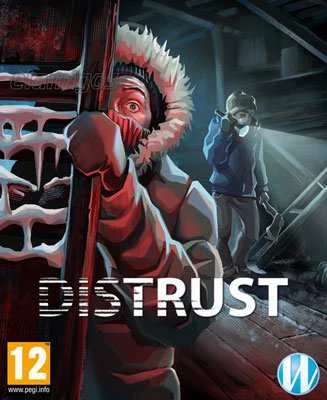
Distrust PC is an isometric survival horror and strategy game set inside a procedurally generated Arctic research station. The current Steam store metadata uses the subtitle Distrust: Polar Survival, while the game itself and its publisher materials continue to identify it as Distrust. Developed by Cheerdealers and published by Alawar, it combines cold-weather survival, psychological horror, resource management, and online co-op.
The premise is direct: a helicopter crash strands explorers near an abandoned polar base, where hunger, freezing conditions, exhaustion, and an unexplained force all threaten the survivors. Distrust is not a conventional action horror game. Its tension comes from deciding when to explore, when to conserve supplies, and how much sleep your characters can afford.
Survival Built Around Sleep
Each run begins with a small team of survivors moving through a randomly generated Arctic station. Rooms, supplies, tasks, and some events shift between playthroughs, so memorizing one ideal route is not enough. You need to read the situation, prioritize objectives, and adapt when the station gives you poor options.
The core survival loop revolves around hunger, cold, health, stamina, and sleep. Food keeps characters alive, heat prevents the environment from wearing them down, and tools help you open new areas or complete station tasks. Every resource has an opportunity cost because time spent searching can leave the team more exhausted and exposed.
Sleep is the defining risk. Allowing a survivor to rest can attract hostile anomalies, but forcing characters to stay awake causes exhaustion and eventually madness effects. These psychoses can distort perception, create dangerous hallucinations, or interfere with normal survival decisions.
That system creates a constant balancing act rather than a simple rest mechanic. A safe-looking room may not be safe, a useful item may not be worth the time needed to retrieve it, and a character who appears healthy can become a liability after too much time without sleep.
Characters, Madness, and Team Planning
Distrust offers 15 survivors, each with different skills, strengths, and weaknesses. Before a run, you select a pair whose abilities can support a particular survival strategy. Some characters are better suited to the cold, while others improve food use, movement, exploration, or general efficiency.
The character system gives the game more structure than a generic scavenging sandbox. Your team composition affects how aggressively you can explore and which shortages are most dangerous. A strong pairing can reduce pressure in one area while creating a weakness somewhere else.
Madness is more than a status bar. It changes how you interpret the station and can turn ordinary tasks into serious threats. The game encourages you to compare what survivors perceive, switch between characters, and question whether an apparent danger is real or a product of deteriorating sanity.
This is where the title’s psychological angle works best. Distrust does not rely only on enemies appearing from dark corridors; it makes the player doubt information, timing, and the reliability of the team itself.
Procedural Runs and Endings
Every new attempt uses procedural generation to rearrange the station experience. The exact layout, available resources, quests, and events are not fixed, which gives failure a practical purpose: each run teaches you more about the rules even when the next station is different.
The game includes multiple endings, with the official press material identifying four possible outcomes. Progress depends on surviving station zones, completing objectives, and making decisions under pressure rather than following a single linear campaign path.
Distrust is therefore better understood as a replayable survival scenario than as a long-form narrative adventure. Its story develops through exploration, quests, discoveries, and escalating anomalies, while the main mastery loop comes from learning how to manage risk across repeated attempts.
Randomness is part of the appeal, but it is also central to the game’s difficulty. A run can become much harder when food, fuel, medicine, or useful equipment appears in inconvenient places. Players looking for predictable puzzle solutions may find this frustrating; players who enjoy adapting to imperfect situations will get more from it.
What the PC Edition Includes
The current PC storefront presents Distrust as a paid base game rather than a free-to-play title. I found no separate DLC packs or season-pass structure in the current Steam listing. The commercial model is a single purchase for the core survival game, with bundles offered as store packages rather than additional gameplay expansions.
The main content is the combination of the station’s procedural structure, the survivor roster, quests, anomalies, resource pressure, and alternate endings. There is no character-class subscription system, cosmetic marketplace, or live-service progression model advertised for the PC edition.
Players should also note that the game is not built around base construction, open-world travel, or conventional weapon progression. Its content comes from managing a compact hostile environment and making different teams and decisions work across repeated runs.
Solo, Co-op, and Audience Fit
Distrust supports single-player and online co-op. In solo play, you manage the survivors yourself and can switch between them to coordinate movement, supplies, and reactions to threats. Co-op lets two players share the responsibility of keeping the team alive.
Co-op is most suitable for players who enjoy discussing priorities rather than rushing from room to room. The group still has to manage one shared survival situation, so arguments over sleep, food, heat, and exploration can become part of the challenge.
Players who enjoy procedural survival horror, resource scarcity, isometric exploration, and repeated high-pressure runs are the natural audience. It is less suitable for anyone expecting a power fantasy, steady action combat, or a fully authored campaign with generous resources and predictable encounters.
The station’s frozen isolation also makes it a strong fit for fans of bleak environmental survival. For a more first-person, mystery-driven take on cold-weather horror, the snowbound survival horror exploration of Kholat offers a useful contrast, although its structure and perspective are very different.
PC Features and Compatibility
The PC edition is distributed through Steam and includes Steam Cloud, achievements, trading cards, and Family Sharing according to the current storefront metadata. The game uses an isometric viewpoint and is designed primarily around mouse-driven movement and interaction.
Steam lists partial controller support, along with Steam Input API support. That means a controller can be used, but players should not assume the same level of native controller integration found in controller-first survival games.
Distrust is also marked as Steam Deck Playable in current compatibility data. The compatibility notes indicate that the game runs successfully on SteamOS and that the default controller configuration exposes its functionality, although some text can be small and text entry may require the on-screen keyboard.
Localization is broader than the audio coverage. Interface and subtitle support are listed for English, German, Simplified Chinese, Russian, Polish, Korean, Italian, Turkish, and Hungarian. Full audio is listed for English, German, Simplified Chinese, Russian, and Polish, while the remaining supported languages provide interface and subtitle localization.
No separate launcher, dedicated-server requirement, mod-support system, or anti-cheat feature is advertised in the current PC store information. Distrust is fundamentally a compact Steam survival game designed for solo play or its built-in co-op mode.
Similar PC Survival Games
Distrust sits between survival management and psychological horror rather than matching the usual open-world survival formula. Its closest appeal is the pressure of keeping vulnerable characters alive while the environment steadily removes safe options.
Players who want a more expansive frozen wilderness can compare it with open-ended Arctic survival games such as The Long Dark. The Long Dark emphasizes exploration across a larger wilderness, while Distrust compresses the survival problem into an enclosed station with procedural rooms, team abilities, and reality-distorting madness.
For co-op survival players, the important distinction is that Distrust is not a crafting sandbox. It is closer to a tactical survival scenario where every item, rest period, and route choice affects the immediate chance of reaching the next objective.
The game’s most distinctive identity comes from combining sleep deprivation, hallucinations, survivor specialization, and procedural objectives. Few PC survival games make rest itself such a dangerous decision.
Distrust FAQ
Is the current Steam name Distrust or Distrust: Polar Survival?
The current Steam store metadata uses Distrust: Polar Survival as the store name, while the product branding, developer materials, and common references use Distrust. It is best treated as the same PC game with a storefront subtitle rather than a separate edition.
Is Distrust single-player?
Yes. Distrust supports single-player, and the solo mode lets you control and switch between the survivors while managing their movement, needs, equipment, and reactions to anomalies.
Does Distrust have co-op?
Yes. The PC version includes online co-op, allowing two players to share control of the survival situation. It is not presented as a split-screen or local co-op game in the current Steam feature list.
How does sleep work in Distrust?
Sleep restores exhausted survivors but can attract hostile forces. Keeping characters awake avoids that immediate danger but increases exhaustion and can trigger madness, so the objective is to manage rest rather than eliminate it.
How many survivors are available?
The game features 15 survivors, each with individual skills and weaknesses. You select a pair before a run, making team composition a major part of planning.
Does Distrust have different endings?
Yes. The official press material identifies four endings. Outcomes depend on progress through the station, completed objectives, and decisions made during the run.
System Requirements
Minimum: | Recomended: |
| Processor: Intel Core i3-560 3.33 GHz Graphics: 512 MB GeForce 9600 GT / Radeon HD 3870 Memory: 4 GB RAM Disk space: 1 GB HDD Operating system: Windows 7/8/10 | Processor: Intel Core i5 2.6 GHz Graphics: 1 GB GeForce GTX 460 / Radeon HD 6850 Memory: 4 GB RAM Disk space: 1 GB HDD Operating system: Windows 7/8/10 |
Screenshots
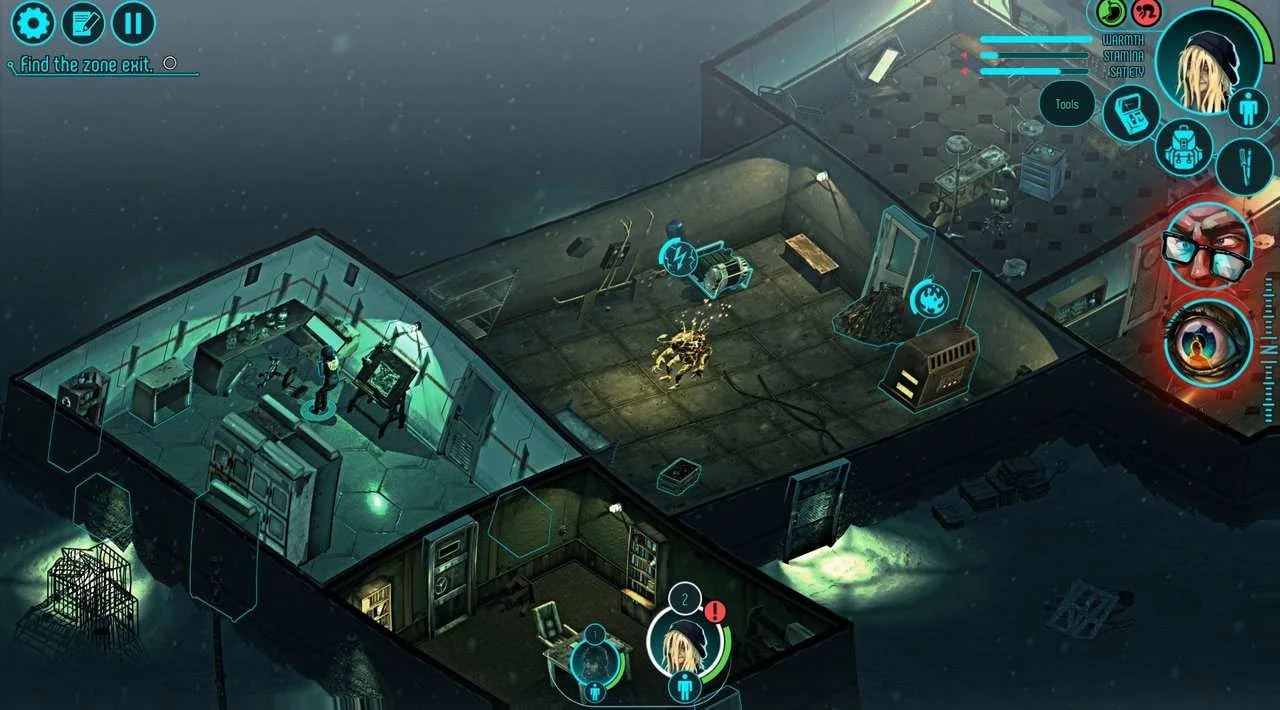


Trailer/Gameplay
Download
Distrust (2017), 0.59GB
ElAmigos release, game is already cracked after installation (crack by Codex).

Updated till 12.04.2018 (Update 4; Version 1.1.4).

1. Extract files.
2. Burn or mount the image.
3. Install the game.
4. ElAmigos release, game is already cracked after installation.
5. Play the game. If you like this game, BUY IT!
Distrust Download
🔒 Premium access required
To see and use the download links, you must be logged in and have an active PREMIUM account.
* Unlock downloads via Torrent and TeraBox.
Torrent Download
The best torrent download speeds are with qBittorrent!