INSIDE
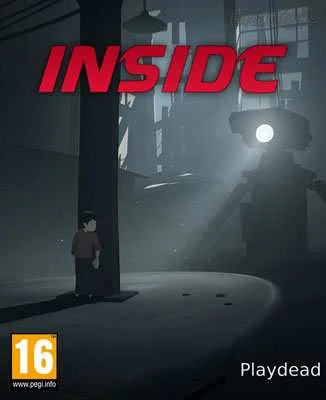
- Category:
- Release date:
- Game Genre:Arcade, play for free, platform, dystopia, 2.5 D, action adventure
- Developer:
- Release:ElAmigos
- Platform:PC
- Languages (subtitles):English, French, Italian, German, Spanish, Polish, Russian, Turkish, Portuguese, Portuguese-Brazil, Korean, Chinese Traditional, Chinese Simplified, Japanese
- Dubbing/Audio:English
- Crack:3DM, Codex, GOG
- Game size:1.02GB
Game Description
INSIDE on PC remains listed under its original all-caps title across the major storefronts. Playdead's dark 2.5D puzzle-platformer combines side-scrolling exploration, stealth, environmental interaction, and cinematic horror into a tightly directed single-player journey. Its minimal interface, sparse dialogue, and oppressive sound design make the world itself the main source of story.
The premise is deliberately restrained: a hunted boy crosses a hostile industrial landscape and becomes entangled in a disturbing project. INSIDE rarely explains its world directly. Instead, it uses movement, animation, architecture, and carefully staged encounters to make the player interpret what is happening.
A Side-Scrolling Puzzle Platformer Built Around Observation
INSIDE uses a fixed side-on perspective with carefully framed 2.5D environments. The boy can run, jump, climb, swim, grab objects, and manipulate parts of the scenery. These actions are simple, but the game constantly recombines them into new problems.
The core loop is straightforward: move through an area, identify a threat or obstacle, experiment with the environment, and find the sequence that opens the next route. There is no inventory grid or conventional combat system to manage. Progress depends on timing, positioning, and recognizing how objects behave.
Environmental puzzles often communicate their logic visually rather than through text prompts. A movable object, a suspicious switch, a pool of water, or a moving light source can all signal the intended solution without explicitly explaining it. This show-don't-tell puzzle design keeps the player engaged with the scene instead of interrupting the atmosphere with tutorials.
Players who enjoy the same studio's earlier style of dark platforming can compare its harsher trap-based puzzles with moody 2D puzzle-platformers such as Limbo. INSIDE expands that foundation with more elaborate environments, more varied interactions, and a stronger emphasis on cinematic staging.
Stealth, Pursuit, and Uneasy Physicality
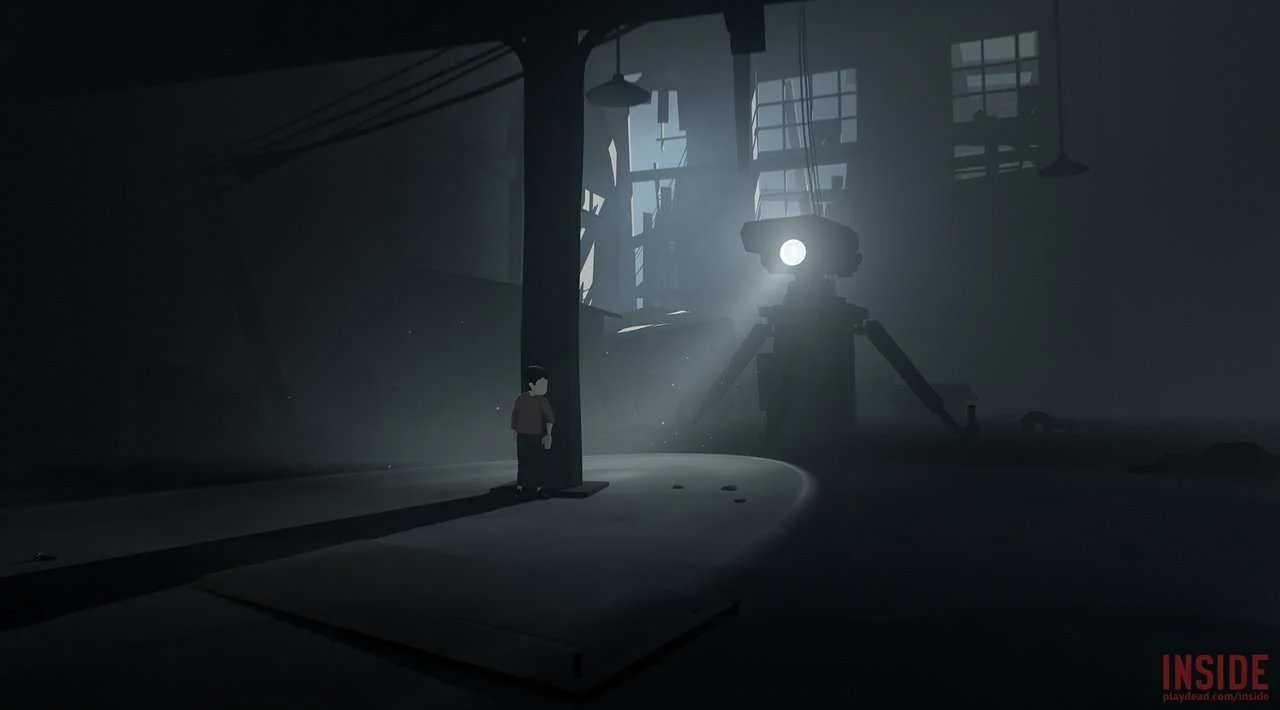
INSIDE is not a traditional stealth game, but stealth sequences are central to its tension. Searchlights, guard patrols, dogs, machinery, and other hazards force the player to read movement patterns and choose when to run, hide, or remain still.
Failure is part of the design. The game uses sudden hazards and lethal mistakes to teach the correct timing through repetition, but checkpoints are placed so that retries remain focused. The result is closer to a sequence of interactive cinematic set pieces than to an open-ended survival system.
Physical interaction also changes as the journey progresses. Early actions establish the rules of pushing, pulling, climbing, and avoiding danger. Later scenes introduce mechanisms that affect groups of bodies, submerged spaces, and unusual forms of control. These shifts preserve the basic input vocabulary while making the situations increasingly strange.
The atmosphere depends heavily on animation and sound. The boy's small movements contrast with massive machines, distant crowds, and threatening creatures. The ambient soundscape supplies much of the emotional direction, while the lack of conventional spoken exposition leaves room for interpretation.
How the Progression and Secrets Work
INSIDE is structured as a linear journey through connected environments rather than a map-based adventure with optional quest lines. The main route steadily introduces new puzzle contexts and hazards, so progression is based on learning the rules of each scene.
There are also hidden rooms and optional discoveries for players willing to inspect side paths. These secrets reward curiosity without turning the game into a large collectathon. Exploration remains compact and purposeful, with environmental details often hinting that a less obvious route may be available.
The game does not use character levels, equipment upgrades, skill trees, crafting, or combat builds. Its progression is entirely experiential: the player becomes better at reading spaces, predicting hazards, and understanding how the game's visual language communicates solutions.
That structure is one of INSIDE's defining strengths. It gives every new mechanic narrative weight because a change in interaction often arrives alongside a change in the world around the player.
Content Model and Storefront Options
INSIDE is sold as a standalone paid game rather than as a live-service product. The current PC storefront listings present the main game as a complete single-player experience, with no season-pass structure or catalog of table-sized content packs to assemble.
Steam lists a separate playable demo, while the full product includes the complete campaign, Steam Achievements, Steam Trading Cards, Steam Cloud, and Family Sharing. Epic Games Store lists the Windows version with cloud saves, controller support, and single-player functionality.
There is no co-op campaign, competitive multiplayer mode, split-screen option, or online matchmaking. INSIDE is designed for one player moving through a controlled sequence of puzzles and encounters.
The game is also available in a bundle with LIMBO on Steam, but INSIDE itself remains identifiable as its own standalone storefront product. No verified rebrand, definitive edition, or replacement PC name needs to be accounted for when searching for it.
Who Should Play INSIDE?
INSIDE is a strong fit for players who value atmospheric storytelling, wordless narrative design, environmental puzzles, and carefully paced tension. It suits people who prefer a focused experience with deliberate direction instead of open-world freedom or extensive character customization.
It is particularly effective for players who enjoy dark science-fiction settings, unsettling imagery, and stories that invite interpretation. The game trusts the player to notice details, connect visual clues, and accept ambiguity rather than delivering a complete explanation after every major scene.
Players looking for deep combat systems, role-playing progression, branching dialogue, or cooperative play should look elsewhere. INSIDE's challenge comes from solving situations and surviving sequences, not from building a powerful character or mastering a large combat sandbox.
The mature tone also matters. The game includes violence, disturbing imagery, and body-horror themes that are central to its setting rather than occasional decoration.
PC Features, Controls, and Localization
On PC, INSIDE is distributed through Steam and the Epic Games Store, with each storefront providing its own launcher features and account ecosystem. Steam adds achievements, trading cards, cloud support, and Family Sharing, while Epic lists cloud saves and controller support.
Full controller support makes the game comfortable from a couch or handheld-style setup, and its compact control scheme translates well to a gamepad. The design does not depend on fast hotbar management or a large number of simultaneous commands.
Steam lists 14 interface languages: English, French, Italian, German, Spanish, Japanese, Korean, Polish, Portuguese from Portugal, Brazilian Portuguese, Russian, Simplified Chinese, Traditional Chinese, and Turkish. The store language table does not list full audio tracks, which matches the game's largely wordless presentation.
Steam also lists the game as supporting Steam Cloud, achievements, trading cards, and Family Sharing. These are practical PC additions, but the main attraction remains the precise presentation and mouse-and-keyboard or controller-friendly interaction rather than platform-specific simulation features.
Related Atmospheric Puzzle Adventures
For a game that keeps the same side-scrolling stealth-and-puzzle DNA but shifts toward an alien-survival setting, Somerville offers another cinematic 2.5D adventure with environmental puzzles. Its science-fiction framing makes it a useful comparison for players interested in deserted landscapes, threatening encounters, and story told through visual context.
Players seeking a more abstract and systemic puzzle experience may also find isometric sci-fi puzzle adventures like Cocoon appealing. Cocoon is not a direct mechanical equivalent because it uses a different perspective and more elaborate world-within-world structure, but both games reward observation and let environmental rules carry much of the narrative.
Among these comparisons, Limbo is the closest match in control language and dark platforming structure. Somerville is closer in cinematic science-fiction mood, while Cocoon is the better fit for players who want puzzles to become increasingly systemic.
INSIDE FAQ
Is INSIDE still called INSIDE on PC?
Yes. The current Steam and Epic Games Store listings use the original title INSIDE. There is no verified PC rebrand or replacement edition that players need to search for instead.
Is INSIDE a single-player game?
Yes. INSIDE is built exclusively as a single-player experience. It has no online multiplayer, co-op, split-screen, or competitive mode.
Does INSIDE have combat?
Combat is not the main system. The game focuses on movement, stealth, escape sequences, and environmental manipulation. Most danger is handled by reading patterns, timing movement, and solving the surrounding puzzle.
Does INSIDE support controllers on PC?
Yes. Controller support is listed on the Epic Games Store, and Steam identifies controller support as a feature. The compact control scheme works naturally with a gamepad.
How does INSIDE tell its story?
INSIDE uses a largely wordless narrative built from animation, scenery, sound, character behavior, and the sequence of situations the boy encounters. The game leaves important details open to interpretation instead of explaining every event directly.
Does INSIDE include secrets?
Yes. The linear route contains optional areas and hidden discoveries for players who investigate unusual spaces and side paths. These secrets complement the main journey rather than changing it into an open-world exploration game.
System Requirements
Minimum: | Recomended: |
| Processor: Intel Core 2 Quad Q6600 2.4 GHz/AMD FX 8120 3.1 GHz Graphics: 1 GB GeForce 250 GTS/ Radeon HD6570 Memory: 4 GB RAM Disk space: 1 GB HDD Operating system: Windows 7/8/10 64-bit | Processor: Intel Core i7 920 2.7 GHz/AMD Phenom II 945 3.0 GHz Graphics: 2 GB GeForce 660/Radeon R9 270 Memory: 8 GB RAM Disk space: 1 GB HDD Operating system: Windows 7/8/10 64-bit |
Screenshots

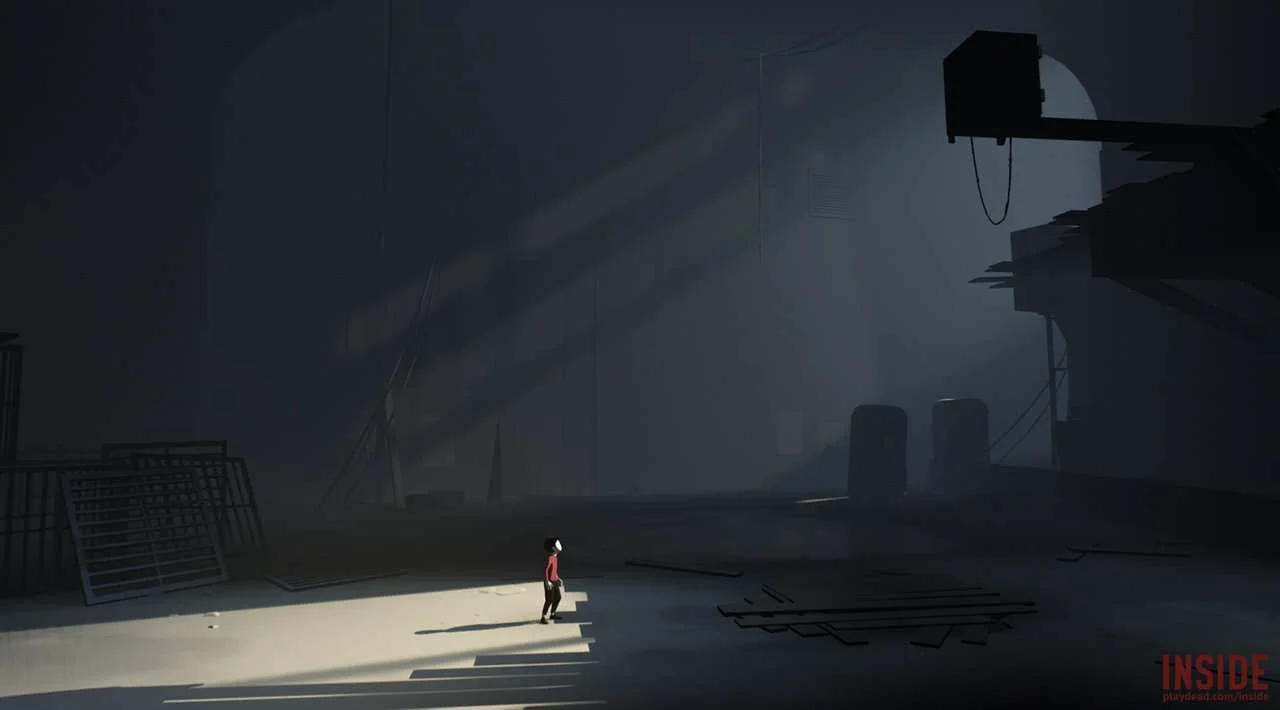
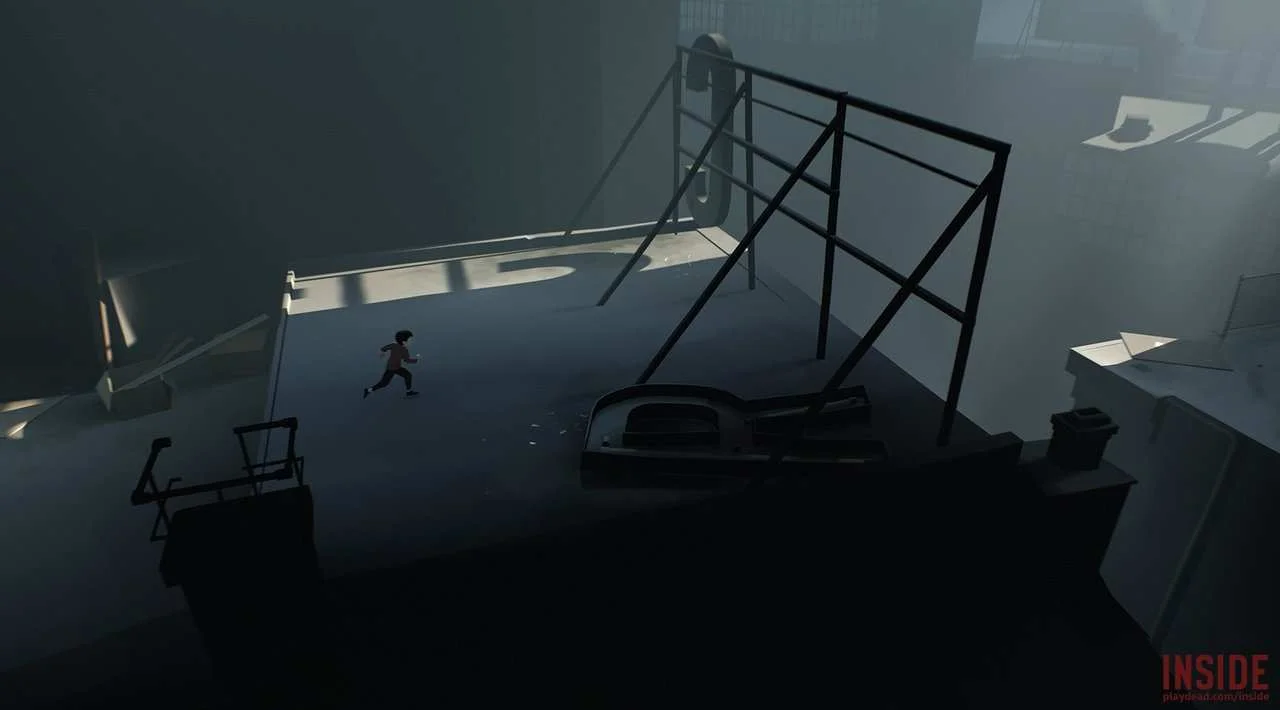
Trailer/Gameplay
Download
INSIDE (2016), 1.02GB
ElAmigos release, game is already cracked after installation (crack by 3DM or Codex or GOG/DRM Free).

Updated till 23.11.2016.

1. Extract files.
2. Burn or mount the image.
3. Install the game.
4. ElAmigos release, game is already cracked after installation.
5. Play the game. If you like this game, BUY IT!
INSIDE Download
🔒 Premium access required
To see and use the download links, you must be logged in and have an active PREMIUM account.
* Unlock downloads via Torrent and TeraBox.
Torrent Download
The best torrent download speeds are with qBittorrent!