Reus
- Category:
- Release date:
- Game Genre:Strategy, Economic, RTS, 2D, Playing god, indie games
- Developer:
- Release:ElAmigos
- Platform:PC
- Languages (subtitles):English, French, Italian, German, Spanish, Portuguese-Brazil, Dutch, Russian, Simplified Chinese
- Dubbing/Audio:English
- Crack:3DM, Ali213, Codex
- Game size:0.32GB
Game Description
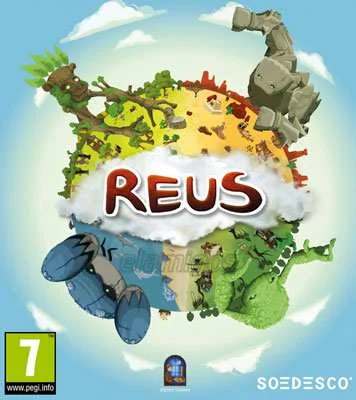
Reus PC is a 2D god game and strategy simulation from Abbey Games where four giants reshape a barren planet, establish biomes, and provide the resources humanity needs to develop. The original game is still listed as Reus on current PC storefronts; Reus 2 is a separate sequel, not a rebrand or replacement edition.
Shape the planet through giant powers
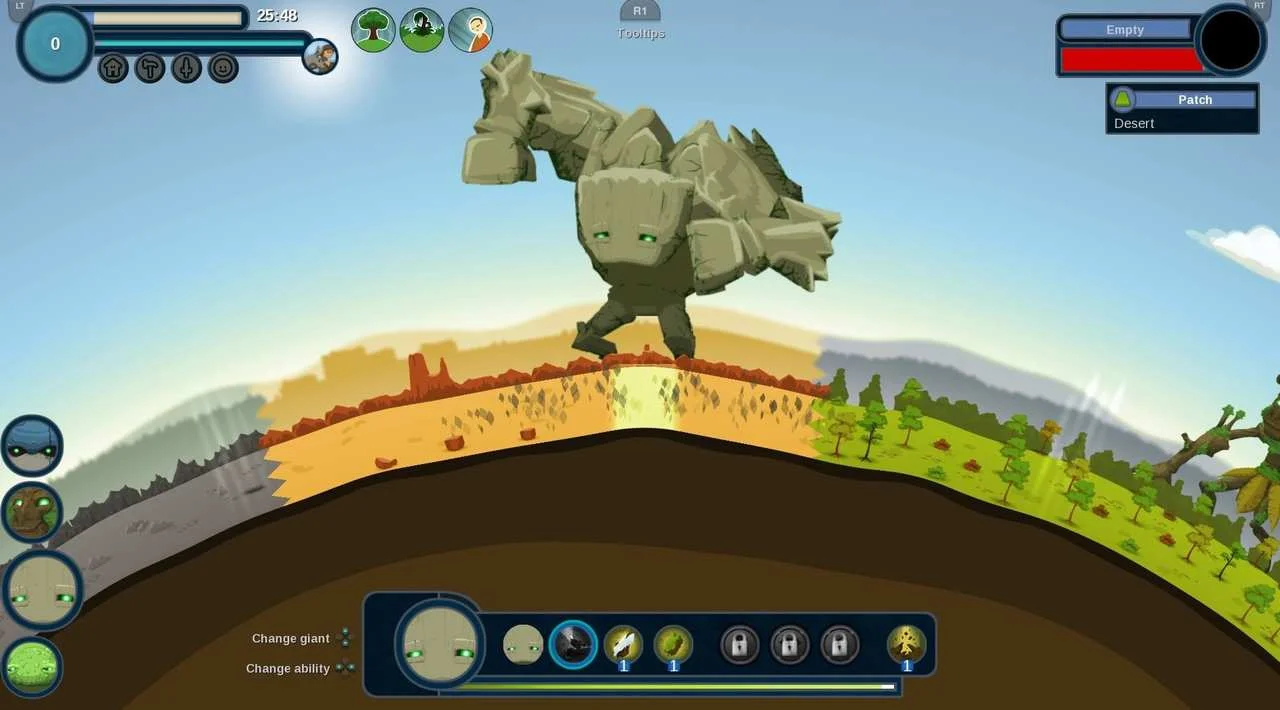
Reus gives you control over four elemental giants, each with a different role in transforming the world. You move them around a circular planet and use their abilities to create terrain, place natural resources, and influence the settlements that appear around them.
The main loop begins with terraforming. Create forests, oceans, deserts, mountains, and swamps, then enrich those environments with plants, animals, and minerals. Humanity does not obey direct commands, so your influence is indirect: create a productive world, place resources near settlements, and watch villages decide how to grow.
The viewpoint is a distinctive side-on 2D perspective rather than a conventional overhead city-builder camera. That presentation keeps the planet readable while making each biome feel like a narrow strategic workspace filled with placement decisions.
Resource placement and symbiosis
Reus is built around resource management and adjacency-based planning. A plant, animal, or mineral is not simply valuable on its own. Its position can improve nearby resources, satisfy settlement demands, unlock new options, or create a chain of bonuses that supports a particular development path.
The game’s symbiosis system is the central puzzle. Different natural objects interact through upgrades, tags, proximity, and biome context. The best layouts are not necessarily the ones with the most resources; they are the ones that combine a few carefully selected elements into a stronger ecosystem.
That makes every placement consequential. A resource that looks useful in isolation may block a more productive arrangement later, while an apparently modest upgrade can become powerful when surrounded by compatible plants, animals, or minerals.
- Food-focused setups help settlements expand and support population growth.
- Gold-oriented arrangements improve economic development and commercial projects.
- Science-producing ecosystems help villages pursue more advanced developments.
- Defensive or aggressive choices can change how humanity responds to prosperity and scarcity.
Advanced tooltips make the system easier to read by showing potential yields and symbioses before you commit to a transmutation. Even with that information, Reus expects experimentation rather than a single solved build order.
Humanity is the unpredictable system
Your giants control nature, but they do not directly control human behavior. Settlements can prosper when their needs are met, yet excessive abundance may encourage greed and overdevelopment. This tension gives Reus more structure than a pure sandbox: the goal is not merely to create a beautiful planet, but to maintain a balance between human ambition and natural power.
Villages generate projects and developments based on their surroundings. Their progress unlocks additional natural content, which expands the range of available combinations and gives later sessions more room for experimentation. The result is a gradual mastery loop built around learning which resources work together and when to introduce them.
Reus also includes situations where humanity can threaten the balance you created. Giants may praise or punish human settlements, but direct intervention is a limited tool rather than a substitute for planning. The strongest solutions usually come from shaping the ecosystem before problems become severe.
Modes, progression, and content model
Reus is primarily a single-player strategy experience. The current PC listing includes Steam Achievements, Steam Trading Cards, and Family Sharing, while the core game remains focused on solo planet-building rather than cooperative or competitive play.
Progression comes from completing developments and discovering new combinations of natural resources. Repeated play is about improving your understanding of upgrade paths, biome roles, and settlement demands rather than leveling a permanent character or managing a traditional campaign map.
The base game is a paid release rather than a free-to-play product. The current Steam content listing shows Reus - Original Soundtrack as a separate add-on, while the gameplay itself is not divided into a season pass or a long list of paid expansion packs. Storefront bundles may also pair the original with Reus 2, but those are separate games.
Who Reus suits on PC
Reus is a strong fit for players who enjoy god games, compact sandbox simulations, resource puzzles, and strategy systems that reward observation. It is especially appealing if you prefer influencing a population through terrain and ecology instead of placing every house, road, or workplace yourself.
The game may frustrate players who want direct control over citizens or a conventional city-building interface. Humanity’s behavior is intentionally indirect, and the original progression system can feel opaque until you understand how natural resources, upgrades, and settlement projects connect.
Players who prefer production chains and settlement logistics may also enjoy fantasy city builders like Factory Town with resource networks and village growth, although Reus replaces factory automation with ecological placement and giant abilities.
PC features and localization
Reus is presented as a PC-first strategy game with a clear 2D visual style, atmospheric audio, and a soundtrack designed to support its nature-focused setting. The current Steam listing identifies the game as an indie simulation and strategy title and provides full audio, interface, and subtitle localization in English, French, Italian, Spanish, Dutch, Brazilian Portuguese, German, Simplified Chinese, and Russian.
The storefront feature set confirms Steam Achievements, Steam Trading Cards, and Family Sharing. It does not list built-in co-op, online multiplayer, split-screen, mod support, or specialized cabinet and multi-monitor modes, so Reus should be approached as a focused solo experience.
For players coming from settlement survival games, procedural city-building strategy such as Against the Storm offers a more explicit expedition and settlement-management structure. Reus is quieter and more abstract: you cultivate the conditions for civilization instead of personally directing every worker.
Similar strategy games on PC
Reus occupies an unusual space between a god game, a puzzle game, and a resource-management simulator. Its closest appeal is not traditional city construction but the satisfaction of arranging systems so that a settlement develops from the environment you designed.
Players looking for another indirect settlement-management experience can compare it with resource-driven colony builders like Planetbase, though Planetbase emphasizes infrastructure and survival while Reus emphasizes nature, symbiosis, and human development.
The key distinction is control. In most city builders, you place buildings and assign workers. In Reus, you place the ecological conditions that make human progress possible, then respond when those conditions produce unexpected consequences.
Reus FAQ
Is Reus still listed under its original name?
Yes. The current PC storefront listing uses Reus. Reus 2 is a separate sequel and is sometimes sold together with the original through a bundle, but the first game has not been renamed or replaced by that sequel.
Is Reus a city builder?
It is better described as a god game and strategy simulation with city-building elements. You do not directly place most human buildings or command individual citizens. Instead, you shape biomes and natural resources that influence where settlements appear and how they develop.
How many giants can you control?
The original game features four giants, each with unique abilities connected to different terrain types and natural systems. Their powers determine which biomes you can create and which resource combinations become available.
Does Reus have multiplayer or co-op?
The current PC feature listing marks Reus as single-player. It does not list built-in online co-op, competitive multiplayer, or split-screen support.
What is the main progression loop?
You guide settlements toward developments, unlock additional natural content, and use the new options to create stronger symbiosis combinations. The long-term challenge is learning how to arrange resources efficiently while keeping human growth under control.
What languages does the PC version support?
The current listing supports full audio, interface, and subtitle localization in English, French, Italian, Spanish, Dutch, Brazilian Portuguese, German, Simplified Chinese, and Russian.
Is Reus sold with gameplay DLC?
The base game is sold separately, and the current storefront content listing shows the original soundtrack as an optional add-on. Reus 2 is a separate sequel rather than a gameplay expansion for the original.
System Requirements
Minimum: |
Processor: Core i5 2.0 GHz Graphics: 1024 MB VRAM Memory: 4 GB RAM Disk space: 400 MB HDD Operating system: Windows XP/Vista/7/8 |
Screenshots



Trailer/Gameplay
Download
Reus (2013), 0.32GB
ElAmigos release, game is already cracked after installation (crack by 3DM or Ali213 or Codex).

Updated to version 1.6.5 (18.05.2018).

1. Extract files.
2. Burn or mount the image.
3. Install the game.
4. ElAmigos release, game is already cracked after installation.
5. Play the game. If you like this game, BUY IT!
Reus Download
 Download from TeraBox
Torrent Download
The best torrent download speeds are with qBittorrent!