Pillars of Eternity
Edit date: 26-05-2026, 00:11
Reason: Updated to version 3.9.4.89183 (20.05.2026).
- Category:
- Release date:
- Game Genre:RPG, fantasy, Isometric view, crowdfunding, classic RPG
- Developer:Obsidian Entertainment Publisher: Paradox Interactive, Versus Evil
- Release:ElAmigos
- Platform:PC
- Languages (subtitles):English, French, Italian, German, Spanish, Russian, Polish, Korean
- Dubbing/Audio:English
- Crack:not necessary
- Game size:5.72GB
Game Description
Pillars of Eternity PC is an isometric party-based CRPG from Obsidian Entertainment, built around dense worldbuilding, reactive dialogue, tactical encounters, and a customizable adventuring group. The base storefront name remains Pillars of Eternity; the current Definitive Edition is a bundle that combines the main game with its major expansion content rather than a full rebrand.
Its latest PC feature set also gives players a meaningful choice between the original real-time-with-pause combat and an official turn-based mode. That flexibility makes the game more approachable for modern CRPG players without removing the systems that defined its classic party-based design.
A reactive isometric CRPG built around party tactics
You play as the Watcher, a character capable of seeing and interacting with souls and memories from past lives. That premise connects the personal role-playing layer to the central mystery of Eora, while also creating dialogue options and scripted interactions that depend on your character's abilities, background, reputation, and previous choices.
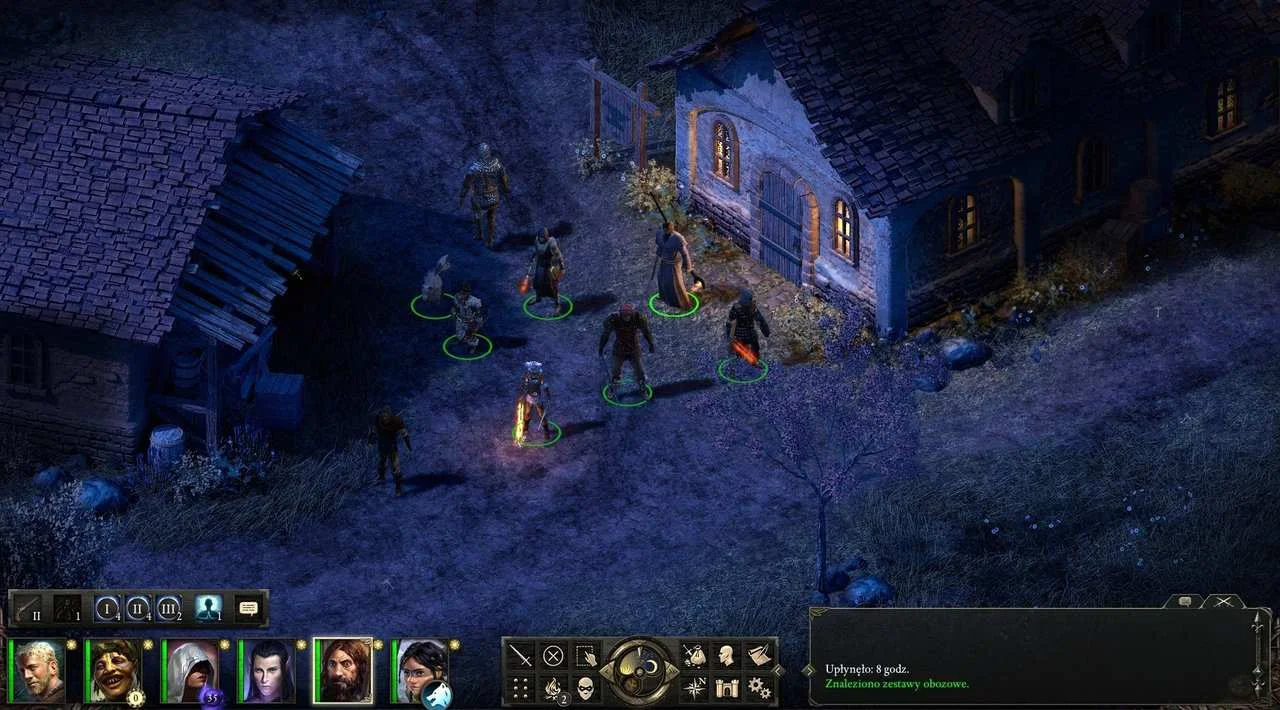
The camera stays in an isometric perspective over hand-crafted, pre-rendered environments. Exploration moves between settlements, wilderness areas, ruins, strongholds, and dungeons, with hidden objects, traps, lore, and optional encounters rewarding players who investigate rather than follow only the main quest.
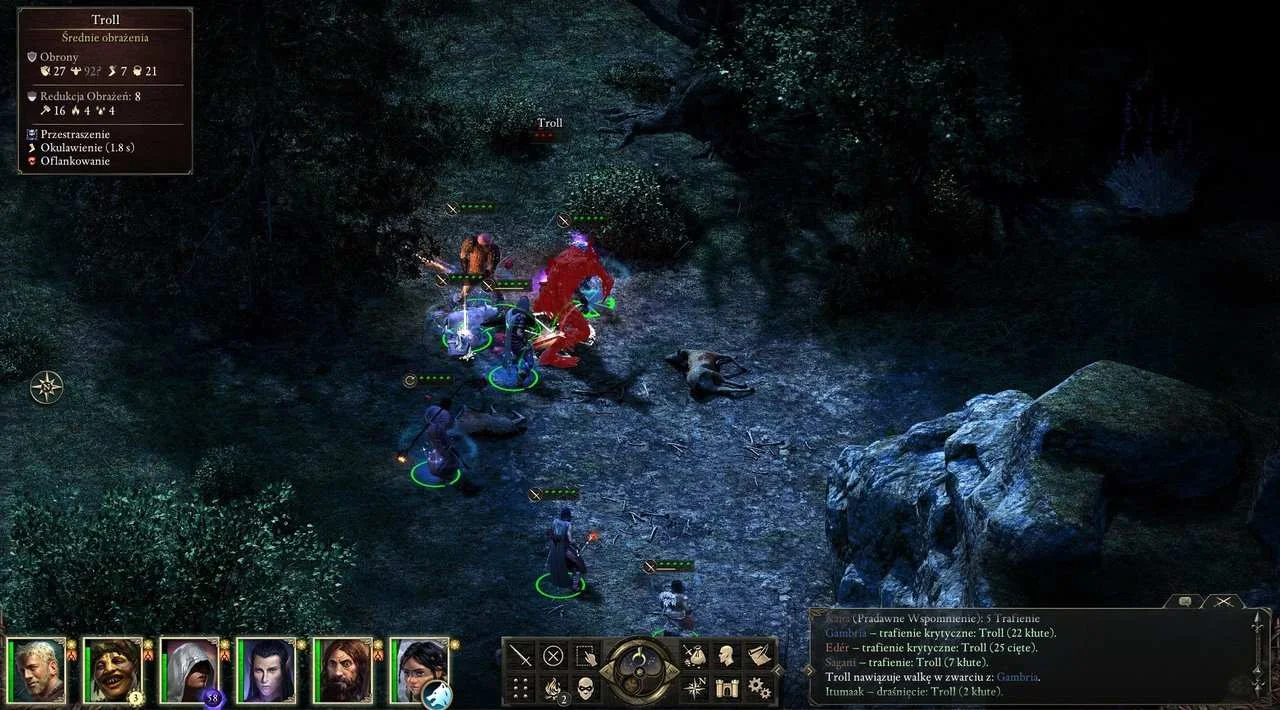
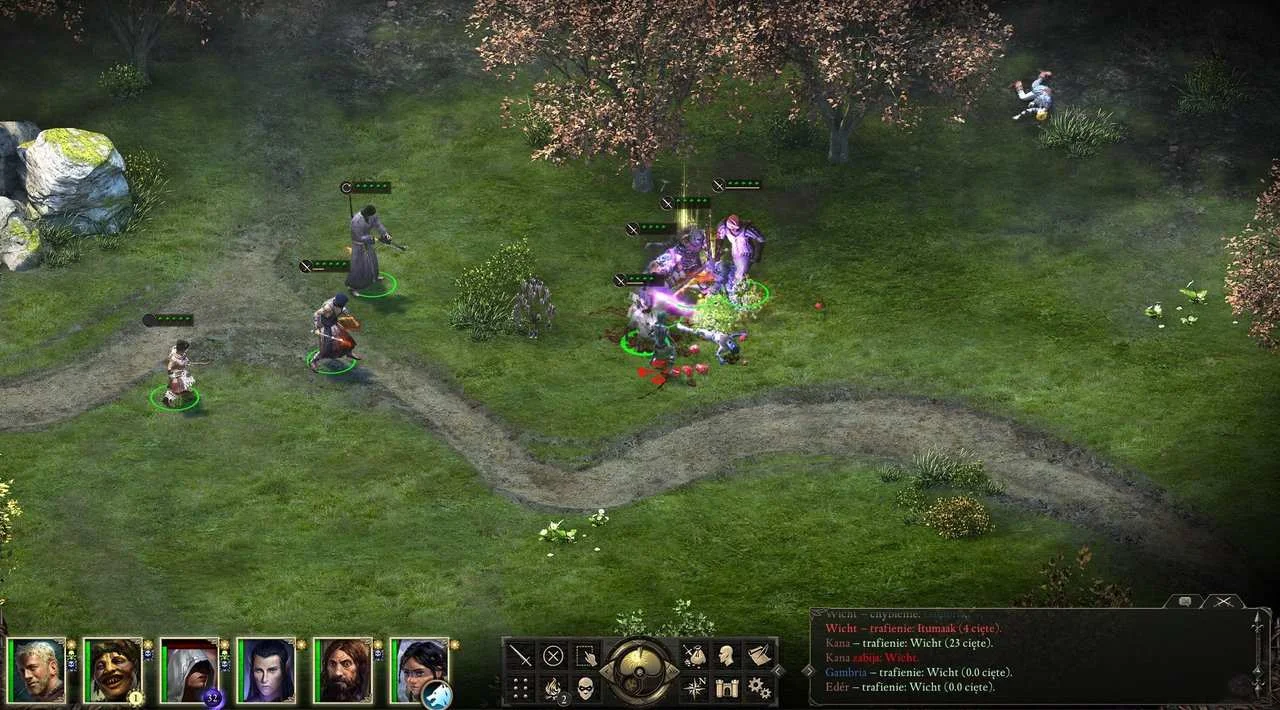
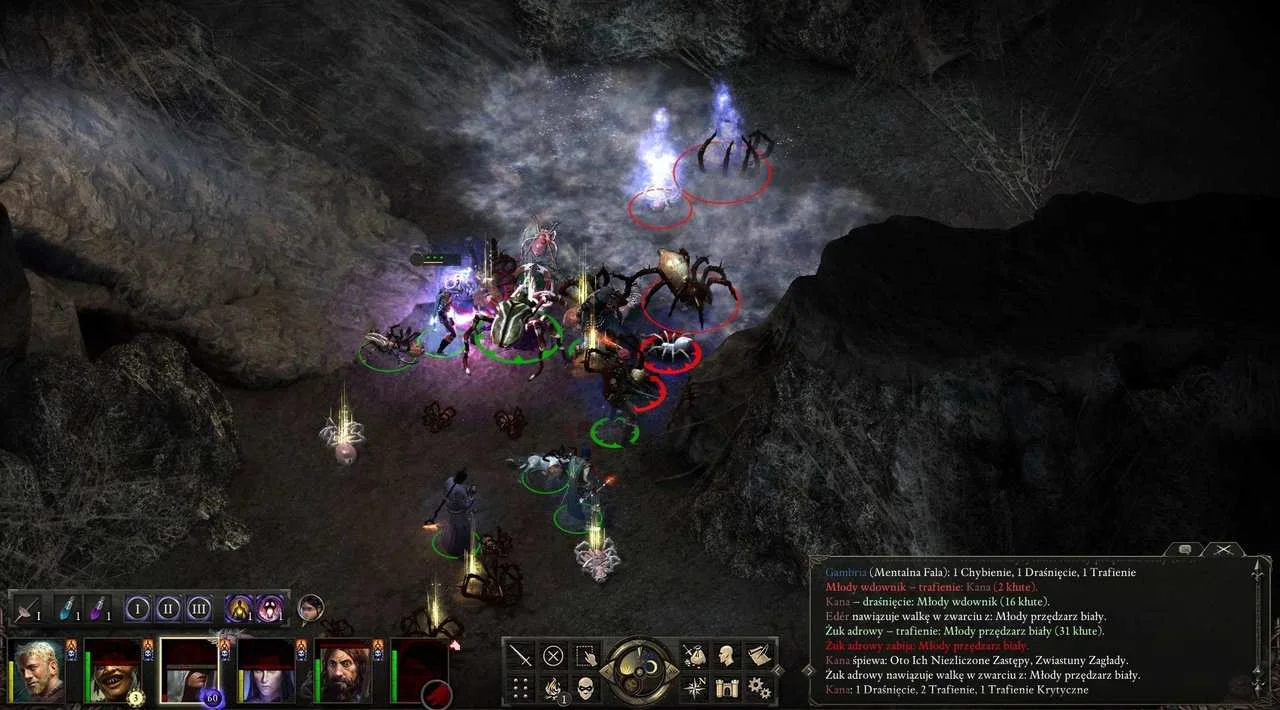
Combat is designed for a full party rather than a single overpowered hero. You position frontline defenders, protect fragile spellcasters, interrupt enemy abilities, manage engagement, and pause frequently to issue precise commands. Battles become less about clicking the strongest attack and more about combining defenses, disables, damage types, recovery timing, and class abilities.
The original combat model is real-time with pause, allowing actions to unfold continuously while giving you complete control over the battlefield. The later official turn-based mode reworks the pacing around initiative, action timing, and limited free actions, so it is not simply a visual toggle over the original rules.
Character creation, classes, and meaningful choices
Character creation gives you six playable races: Human, Aumaua, Dwarf, Elf, Godlike, and Orlan. Each provides a different identity within the setting, while culture, background, attributes, talents, and skills help define how your Watcher approaches conversation, exploration, and combat.
There are eleven classes, including Fighter, Wizard, Rogue, Ranger, Druid, Monk, Paladin, Priest, Barbarian, Chanter, and Cipher. The Chanter and Cipher are especially distinctive. Chanters build effects through phrases and invocations, while Ciphers generate Focus through combat and spend it on powerful mental abilities.
Skills are not limited to combat. Stealth, Athletics, Lore, Mechanics, and Survival can open alternate routes, reveal information, disarm traps, solve scripted interactions, or influence dialogue. This makes party composition matter outside battle, particularly when deciding which companions or custom adventurers to bring.
Choices also affect faction relationships and reputation. The game does not reduce every decision to a simple good-or-evil meter; your behavior can build a reputation for diplomacy, cruelty, honesty, deception, or other tendencies that influence how characters respond to you.
Companions, stronghold management, and exploration
Companions are a major part of the experience. Named party members have personal histories, opinions, quest lines, and reactions to your decisions, so recruiting them is not only a way to fill combat roles. The composition of your party changes the tone of conversations and can expose additional context about the world.
You can also create additional adventurers at inns, which gives you more control over party builds. The trade-off is narrative: custom characters provide mechanical flexibility, while story companions contribute personal dialogue and relationship content.
Later, the party gains access to Caed Nua, a stronghold that expands beyond a simple home base. Upgrades, hirelings, visitors, and the extensive Endless Paths of Od Nua dungeon add a management and exploration layer alongside the main campaign.
That structure gives the game several overlapping loops: follow the central investigation, pursue companion and faction quests, explore optional locations, improve the stronghold, and refine a party that can handle increasingly demanding encounters.
Definitive Edition and included content
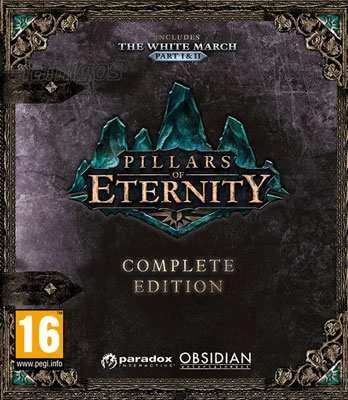
The current premium package is sold as Pillars of Eternity: Definitive Edition. The bundle includes the main game, the Deadfire Pack, the Royal Edition Upgrade Pack, and both parts of The White March expansion.
The White March adds a substantial new region, additional quests, new equipment, challenging encounters, and story content that fits into the main adventure. It also expands the party-building conversation with new abilities and companion-focused material rather than functioning as a disconnected side campaign.
The standard edition and the Definitive Edition should not be treated as different games. The storefront naming varies by package: Steam continues to list the base product as Pillars of Eternity, while the complete bundle is identified as the Definitive Edition.
There is no free-to-play conversion or live-service content model. This is a premium single-player RPG with optional expansion packages and bonus-content upgrades, not a game built around recurring seasons or competitive progression.
Who should play Pillars of Eternity?
Pillars of Eternity is a strong fit for players who enjoy party-based CRPGs, dense dialogue, companion writing, tactical combat, and choices that can change how factions and characters treat the protagonist.
It also suits players who like studying systems. Armor, defenses, status effects, engagement, recovery, spell selection, and party positioning all matter, especially on higher difficulties. The game rewards preparation and experimentation more than reflexes.
Players looking for a fast action RPG, a lightweight fantasy adventure, or a mostly voice-acted presentation may find the experience demanding. The campaign contains a large amount of reading, and the older-school design expects you to inspect tooltips, understand combat feedback, and make deliberate decisions.
For a direct comparison with the genre's roots, classic isometric party RPGs such as Baldur's Gate Enhanced Edition share the same emphasis on exploration, companions, pausing, and tactical positioning.
PC features, storefronts, and input expectations
The PC versions are available through major storefront ecosystems including Steam, Epic Games Store, GOG, and the Xbox PC App. The exact launcher and entitlement depend on where you purchase the game, while the GOG edition is the relevant option for players specifically seeking a storefront centered on DRM-free ownership.
Steam lists Steam Cloud, achievements, trading cards, Family Sharing, commentary, and Remote Play on Tablet. These are platform features rather than additional game modes, but they make the Steam package easier to manage across compatible devices.
The interface and tactical design remain strongly oriented toward mouse-and-keyboard play. Do not assume the same native controller experience as the console editions. Steam Input or community control layouts may help in some setups, but the PC version is best approached as a desktop CRPG first.
Localization includes English audio and interface support for French, Italian, German, Spanish, Russian, and Polish interfaces and subtitles. English is the full-audio option listed for the PC storefront package.
Similar PC games
Players who want another party-focused fantasy RPG with pause-based combat can explore deep classic CRPG adventures like Baldur's Gate II Enhanced Edition. Its rules and setting differ, but the shared appeal lies in party formation, companion interaction, exploration, and tactical encounters.
The game is also a useful bridge between older Infinity Engine design and newer choice-driven RPGs. Its combat is more structured than a conventional action RPG, while its dialogue, faction systems, and companion conflicts give exploration consequences beyond loot collection.
It is less suitable as a direct substitute for a cooperative RPG. The campaign is built for single-player progression, with no conventional online co-op or split-screen party mode at the center of its design.
Pillars of Eternity FAQ
Is Pillars of Eternity the same as the Definitive Edition?
They refer to the same core RPG in different storefront packages. Pillars of Eternity is the base product name, while the Definitive Edition bundles the main game with The White March expansions and additional bonus content.
Does Pillars of Eternity have turn-based combat on PC?
Yes. The PC version now supports both the traditional real-time-with-pause system and an official turn-based mode. The turn-based option changes initiative, pacing, and action rules, so it should be treated as a distinct combat framework rather than a simple pause setting.
Is Pillars of Eternity single-player?
Yes. It is designed as a single-player campaign in which you control the Watcher and a party of companions or custom adventurers. There is no standard online co-op campaign or split-screen mode.
Can you create a custom party?
You can create additional adventurers at inns and use them to fill specific combat or skill roles. However, story companions offer unique conversations, personal quests, and reactions that custom characters do not provide.
Does Pillars of Eternity support controllers on PC?
The PC edition remains primarily designed for mouse and keyboard. Steam Input may provide a workaround for some players, but it should not be marketed as a full native controller-first experience.
What is included in The White March?
The White March is split into two expansion parts and adds a new region, quests, encounters, equipment, abilities, and companion-related content. The Definitive Edition includes both parts alongside the base game.
System Requirements
Minimum: | Recomended: |
| Processor: Intel Core i3 2100T 2.5 GHz/AMD Phenom II X3 2.8 GHz Graphics: 512 MB GeForce 9600 GT/Radeon HD 4850 Memory: 4 GB RAM Disk space: 8 GB HDD Operating system: Windows Vista/7/8 | Processor: Intel Core i5 2400 3.10 GHz/AMD Phenom II X6 3.3 GHz Graphics: 1 GB GeForce GTX 570/Radeon HD 7700 Memory: 8 GB RAM Disk space: 8 GB HDD Operating system: Windows Vista/7/8 |
Screenshots
Trailer/Gameplay
Download
Pillars of Eternity Definitive Edition (2015), 5.72GB
ElAmigos release, unprotected game (crack is not necessary).

Updated to version 3.9.4.89183 (20.05.2026).

1. Extract files.
2. Burn or mount the image.
3. Install the game.
4. Play the game. If you like this game, BUY IT!
Pillars of Eternity Definitive Edition Download
🔒 Premium access required
To see and use the download links, you must be logged in and have an active PREMIUM account.
* Unlock downloads via Torrent and TeraBox.
DLC: The White March Part I, The White March Part II, Deadfire Pack, Pre-order Item and Pet, Champion Edition Upgrade Pack, Owner's Bonus Gaun's Pledge, Royal Edition Content (Soundtrack, Ringtones, Wallpapers, Almanac, Collector's Guidebook, Game Map, Tim's Cook Book).
Torrent Download
The best torrent download speeds are with qBittorrent!