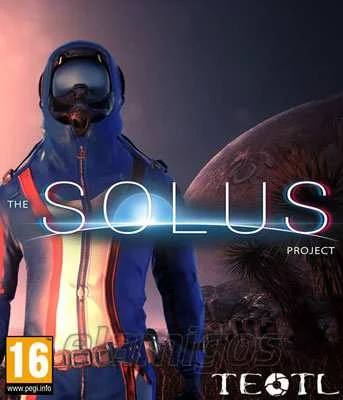
The Solus Project
- Category:
- Release date:
- Game Genre:Adventure, FPP, science fiction, sandbox, logical elements, survival, action adventure
- Developer:Teotl Studios Publisher: Grip Games
- Release:ElAmigos
- Platform:PC
- Languages (subtitles):English, French, Italian, German, Spanish, Polish, Danish, Swedish, Czech, Russian
- Dubbing/Audio:English
- Crack:Codex
- Game size:3.25GB
Game Description
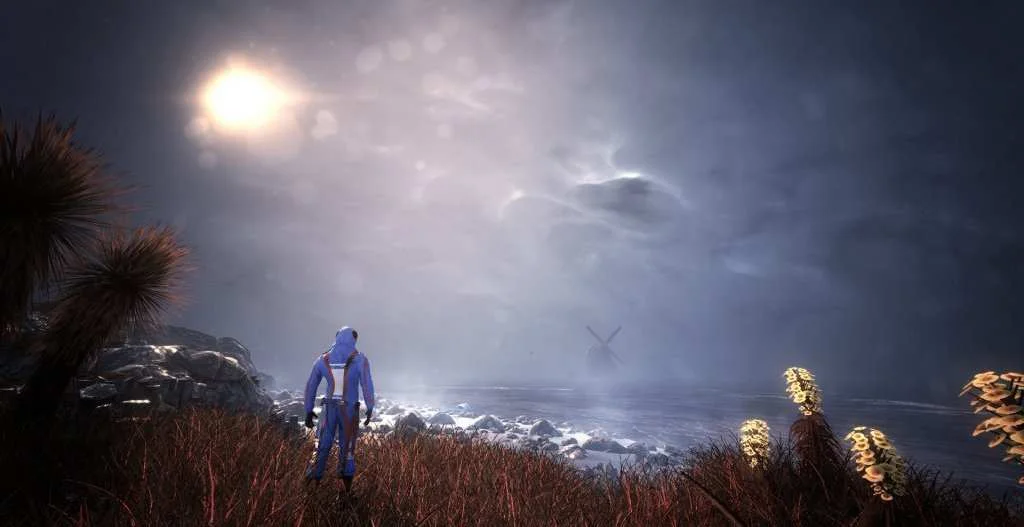
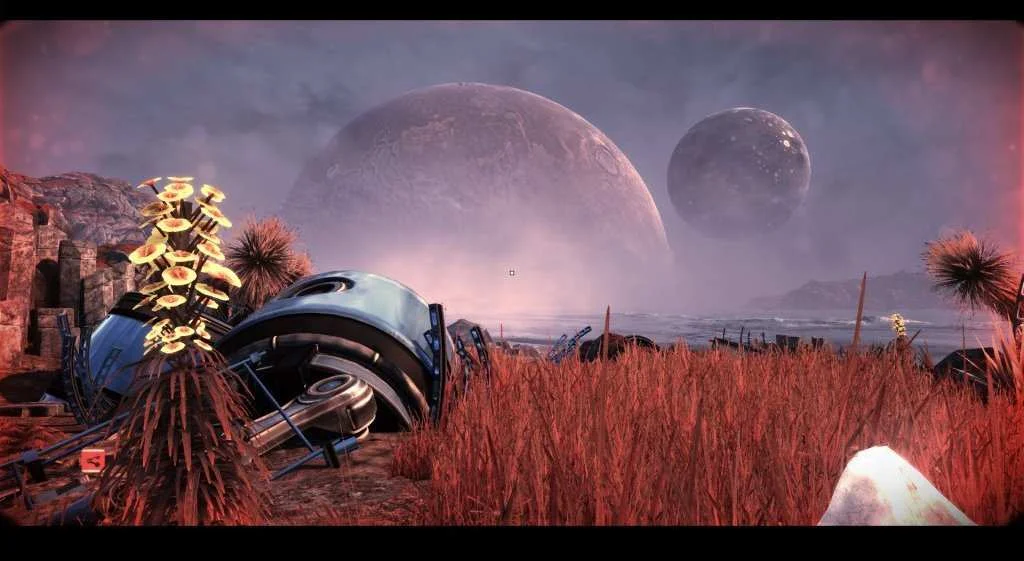
The Solus Project on PC is a first-person sci-fi exploration adventure with survival elements, environmental hazards, puzzle-solving, and atmospheric horror. Current Steam and GOG listings still use the original name, with no verified rebrand or replacement edition. Developed by Hourences and Grip Games and published by Teotl Studios, it follows a stranded astronaut searching an alien planet for a way to contact humanity.
The game is built for solo play. There is no verified co-op, competitive multiplayer, or split-screen mode, and its central tension comes from being isolated on Gliese-6143-C rather than fighting through enemy hordes.
Exploration Across A Handcrafted Alien World
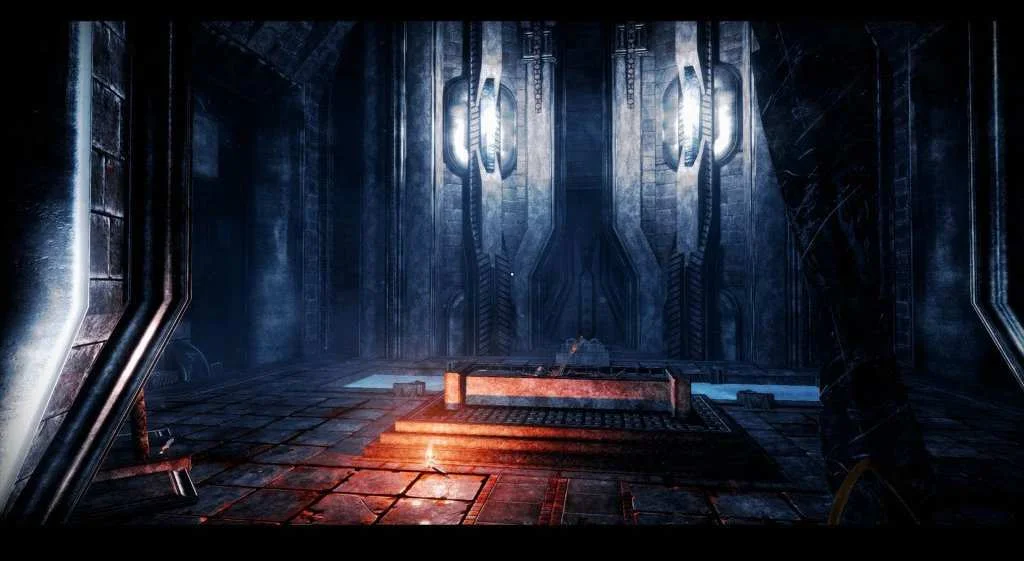
The Solus Project uses a first-person camera and a mostly linear adventure structure divided into large outdoor islands, underground caves, tombs, and enclosed puzzle spaces. The world is handcrafted rather than procedurally generated, so progression depends on learning the layout, locating routes, finding tools, and interpreting environmental clues.
Exploration is the main activity. You search wreckage, beaches, ruins, caves, and abandoned structures for food, water, equipment, upgrades, written records, and hidden secrets. The game gives you a clear beginning and ending, but it leaves many optional discoveries outside the critical path.
Its closest mechanical ancestor is the earlier puzzle-adventure first-person archaeological mystery The Ball, although The Solus Project replaces that game's action-puzzle focus with survival management, environmental storytelling, and alien isolation.
Survival Pressure Without Constant Combat
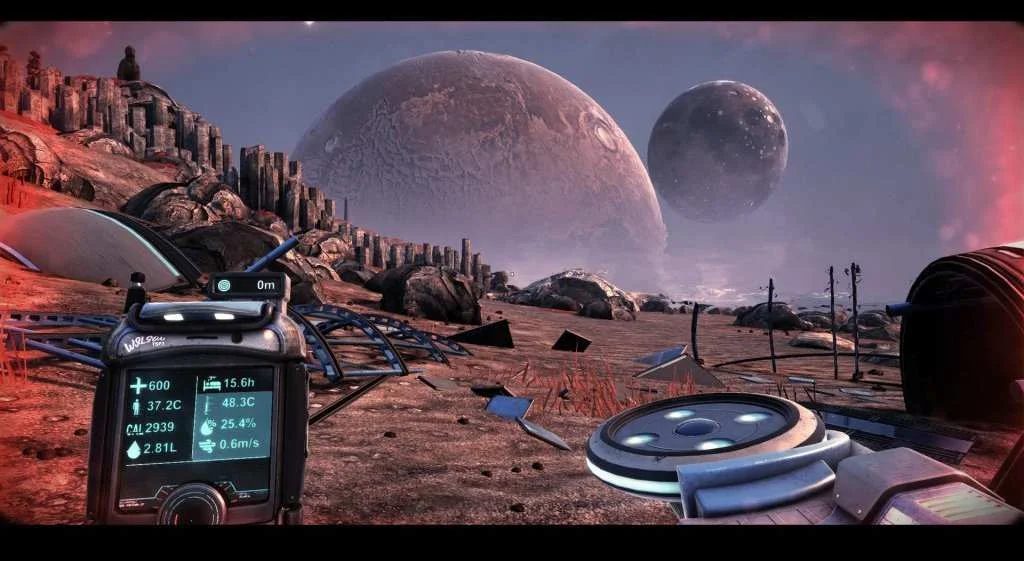
Survival is represented through practical physical conditions rather than a traditional combat loop. Hunger, thirst, fatigue, wetness, body temperature, health, and environmental exposure all influence how safely you can travel. Food and drinks keep the character functioning, while shelter, warmth, sleep, and careful route planning help prevent dangerous conditions.
The game contains little conventional combat. The planet and its weather are the primary threats, while caves and ruins introduce traps, falls, darkness, strange encounters, and puzzle obstacles. That design makes the experience closer to a story-led survival walk than to an action survival sandbox.
A configurable survival scale lets players decide how much attention they want to give these systems. You can increase the pressure for a harsher expedition or reduce it when the mystery, scenery, and environmental storytelling matter more than managing status effects.
Weather, Time, And Environmental Systems
The strongest distinctive feature is the planet's dynamic weather system. Day and night change the character of each area, while temperature, humidity, wind, cloud cover, tides, and storms affect the conditions around you. The planet can shift from calm exploration to dangerous exposure with little warning.
Weather events include tornadoes, lightning, meteor showers, heavy rain, and other climate hazards. These are not merely visual effects: getting wet, becoming too cold or too hot, or remaining outside during a severe event can damage your health and force you to find shelter.
The environment also includes details such as plant growth and decay, moon-influenced ocean tides, and changing atmospheric conditions. These systems are most effective when they turn a familiar route into a different experience at night or during a storm.
Puzzles, Tools, And Hidden Progression
Progression combines straightforward environmental puzzles with scavenged tools. You may need to move objects, activate mechanisms, break through obstructions, manage water, navigate vertical spaces, or use a teleportation device to reach otherwise inaccessible positions.
The game rewards thorough searching with hundreds of secrets, optional areas, collectibles, and upgrades that improve the character's capabilities. Some rewards are practical, while others deepen the mystery of the planet and the fate of the civilization that came before you.
Story information is distributed through translated markings, tablets, audio logs, the protagonist's observations, and discoveries hidden away from the obvious route. Players who rush between objectives will see the main arc, but careful explorers receive a more complete picture of what happened on Gliese-6143-C.
Content Model And PC Versions
The paid PC package is a complete single-player campaign rather than a live-service game or an open-ended multiplayer survival platform. Steam lists one separate downloadable content item, the official soundtrack, and also offers a bundle pairing the game with The Ball. There is no verified season-pass structure or roster of gameplay expansions.
Steam and GOG both list The Solus Project under the same name. GOG provides a DRM-free version with an optional offline installer, while the Steam version includes achievements, trading cards, family sharing, Remote Play on TV, and tracked controller support.
VR And Controller Support On PC
VR is an optional way to play the full adventure rather than a separate short mode. The PC version supports SteamVR-compatible Vive and Oculus setups, room-scale play for Vive, motion controllers, regular locomotion, teleport movement, snap or smooth rotation, and adjustable movement speed.
The game was designed first as a conventional non-VR experience, so a headset is not required. VR adds a stronger sense of scale inside caves and across the alien landscape, but it also changes how information, movement, inventory, and tutorials are presented.
Keyboard and mouse are supported, and the official FAQ confirms that the entire PC game can be played with an Xbox controller. Steam identifies the title as having tracked controller support, while the developer's documentation is more specific about tested Xbox controller functionality.
Who Should Play The Solus Project?
The best audience is players who value atmospheric exploration, environmental storytelling, alien ruins, slow-burn mystery, and survival systems that can be adjusted rather than enforced at maximum difficulty. It also suits PC players looking for a substantial VR exploration experience instead of a short demonstration.
It is a weaker fit for anyone expecting frequent combat, deep base construction, procedural replayability, extensive character progression, or online survival with friends. The adventure has a defined route and conclusion, and much of its appeal comes from mood, discovery, and isolation.
Players who want a more resource-heavy alien survival sandbox may prefer first-person underwater survival exploration like Subnautica. The Solus Project is more compact and story-directed, with less emphasis on building a permanent base or managing a large crafting economy.
Similar PC Experiences
The Solus Project sits between several PC traditions. It shares environmental survival ideas with Subnautica, puzzle-adventure lineage with The Ball, and quiet first-person narrative exploration with minimalist story-driven island journeys such as Dear Esther: Landmark Edition.
Those comparisons should be treated as mechanical reference points rather than exact substitutes. The Solus Project's combination of handcrafted alien environments, adjustable survival pressure, dynamic climate, optional VR, and cryptic archaeology gives it a specific identity.
The Solus Project FAQ
Is The Solus Project still sold under the same name?
Yes. Current Steam and GOG storefront listings use The Solus Project. No verified current rebrand, definitive replacement edition, or alternate storefront title was found.
Is The Solus Project multiplayer or co-op?
No. The game is designed as a strictly single-player adventure. It does not provide verified online co-op, local co-op, split-screen, or competitive multiplayer modes.
Does The Solus Project have VR support on PC?
Yes. PC VR support includes Vive and Oculus platforms, room-scale functionality for Vive, motion controllers, teleportation, regular walking, and multiple rotation options. The entire campaign can also be played without a headset.
Can you turn off or reduce the survival mechanics?
Yes. The survival intensity can be scaled to suit your preferred experience. Lower settings are useful when you want to focus on exploration and story, while higher pressure makes hunger, thirst, fatigue, temperature, and exposure more important.
What languages are supported?
English is the full-audio language. The verified PC storefront listings also show interface and subtitle support for Danish, Swedish, French, German, Spanish from Spain, Russian, Italian, Polish, and Czech.
Is the GOG version DRM-free?
Yes. The official FAQ and GOG listing identify the GOG release as DRM-free, and GOG Galaxy is optional because the game can be installed from an offline installer.
System Requirements
Minimum: | Recomended: |
| Processor: Dual Core 2 GHz Graphics: 1 GB GeForce 460 Memory: 4 GB RAM Disk space: 4 GB HDD Operating system: Windows 7 64-bit | Processor: Quad Core 2 GHz Graphics: 2 GB GeForce GTX 760 Memory: 8 GB RAM Disk space: 4 GB HDD Operating system: Windows 7 64-bit |
Screenshots
Trailer/Gameplay
Download
The Solus Project (2016), 3.25GB
ElAmigos release, game is already cracked after installation (crack by Codex).

Updated to version 1.13 (27.07.2018).
Change language in game options.

1. Extract files.
2. Burn or mount the image.
3. Install the game.
4. ElAmigos release, game is already cracked after installation.
5. Play the game. If you like this game, BUY IT!
The Solus Project Download
🔒 Premium access required
To see and use the download links, you must be logged in and have an active PREMIUM account.
* Unlock downloads via Torrent and TeraBox.
Torrent Download
The best torrent download speeds are with qBittorrent!