Virginia

- Category:
- Release date:
- Game Genre:Adventure, FPP
- Developer:Variable State Publisher: 505 Games
- Release:ElAmigos
- Platform:PC
- Languages (subtitles):English, French, Italian, German, Spanish, Portuguese-Brazil, Norwegian, Swedish, Danish, Russian, Japanese, Korean, Chinese Simplified
- Dubbing/Audio:English
- Crack:Reloaded
- Game size:1.19GB
Game Description
Virginia PC is a first-person interactive drama and mystery thriller from Variable State, published by 505 Games. The current Steam listing still uses the original name, with no verified storefront rebrand or replacement edition. It follows newly graduated FBI agent Anne Tarver as she investigates the disappearance of a boy in the small town of Kingdom, Virginia.
A first-person investigation built around observation
Virginia presents its story through a first-person perspective, placing you directly inside Anne Tarver's investigation. You move through homes, offices, roads, forests, and other carefully staged locations while looking for the visual details that connect one scene to the next.
The core loop is deliberately narrow: walk, observe, interact, and interpret. There is no combat system, inventory management, conventional puzzle tree, or role-playing progression. Instead, the game uses movement and environmental attention to make the player occupy the role of an investigator without turning the case into a traditional detective simulation.
Interaction is generally focused on specific points of interest. You may inspect an object, enter a location, trigger an event, or follow a character through a scene. These actions are simple, but their placement matters because Virginia uses them to control pacing and direct attention toward important evidence.
Players looking for a mechanically light mystery should understand that this is closer to an interactive film than an open-ended investigation. The path through the story is largely fixed, so the challenge comes from reading its images, edits, sounds, and symbols rather than selecting the correct dialogue option or solving a case through multiple systems.
Silent storytelling and unusual editing
Virginia's most distinctive design decision is its dialogue-free presentation. Characters do not deliver conventional spoken conversations, and there is no full voice cast carrying the investigation. Body language, facial expressions, environmental composition, music, and editing communicate the relationships and conflicts that would normally be explained through dialogue.
This approach makes observation essential. A character's reaction, an item left in a room, or a sudden change in location can carry more narrative weight than a written exposition dump. The game expects players to connect those fragments rather than wait for a character to explain every development.
The editing style is intentionally cinematic and often abrupt. Scenes can cut between places and moments without showing every transition, creating a non-linear feeling even when the player's route is not branching. The result is a mystery shaped by juxtaposition, repetition, and omission.
Its visual language draws from 1990s television mystery dramas and surreal crime fiction, including influences associated with Twin Peaks, The X-Files, and The Outer Limits. Virginia does not reproduce those stories, but it uses their mixture of small-town normality, institutional suspicion, and unexplained events as a tonal foundation.
What the gameplay does not include
Virginia is not a choice-driven adventure in the usual sense. The investigation does not split into major player-selected routes, and there are no dialogue menus that let you define Anne Tarver's personality. Your actions help the story progress, but they do not create a collection of radically different endings.
There are also no combat encounters or weapon systems. Tension comes from the subject matter, the uncertainty surrounding the missing-person case, and the way the game withholds context. This makes it a strong fit for players who prefer atmosphere over challenge, but a weak fit for anyone expecting stealth, action, or detailed forensic mechanics.
Exploration still has value. The environments provide clues through layout, animation, props, and recurring visual motifs, while the soundtrack reinforces shifts in mood. The game rewards attention, but it does not turn every observation into a collectible, skill upgrade, or checklist objective.
That design places Virginia near the experimental end of the narrative-adventure spectrum. Its closest relatives are games where environmental storytelling is the main mechanic, such as the reflective island exploration found in first-person narrative experiments like Dear Esther: Landmark Edition.
Story structure and content model
The campaign is a single-player mystery centered on Anne Tarver and her experienced partner, Maria Halperin. Their investigation takes them to Burgess County and the secluded town of Kingdom, where the disappearance of Lucas Fairfax exposes tensions that reach beyond a straightforward missing-person case.
Virginia's structure is episodic in feel, but it is not an anthology. Scenes build a continuous investigation through sharp transitions and carefully selected fragments. The narrative may feel disjointed on a first pass because it does not always preserve chronological order or explain the significance of each event immediately.
The game is sold as a complete paid experience rather than a free-to-play product. The Steam ecosystem also lists a free demo, while the Virginia original soundtrack is offered separately. There is no verified season-pass structure or large expansion program attached to the current PC listing.
Replay value comes primarily from story interpretation, achievement hunting, and revisiting scenes after you understand more of the larger picture. It is not designed around procedural replayability, randomized cases, character builds, or an endgame loop.
Who should play Virginia on PC?
Virginia suits players who enjoy compact narrative games, surreal mysteries, and stories that trust the audience to draw conclusions. It is especially appropriate for people interested in silent protagonists, visual direction, film-inspired editing, and game experiences that minimize traditional mechanics.
It also works well for players who prefer a focused solo session rather than a long-running progression system. The absence of combat and complicated controls keeps attention on the investigation, while the soundtrack gives the journey much of its emotional momentum.
Players seeking branching decisions, extensive puzzle solving, open-world investigation, or action should skip it. Virginia offers linear narrative progression, not a sandbox detective career. Its central question is less about whether you can solve a system-heavy case and more about how you interpret what the game chooses to show.
For a more conversational first-person mystery with radio dialogue and a stronger emphasis on character relationships, the wilderness investigation in story-driven exploration adventures such as Firewatch provides a useful contrast.
PC features, controls, and localization
The PC version is distributed through Steam and supports keyboard and mouse controls as well as full controller support. Steam Input compatibility makes it easier to configure supported gamepads, while Steam Cloud and Steam Remote Play on TV are listed platform features.
Virginia includes Steam achievements and trading cards. It is strictly a single-player experience, with no online multiplayer, local co-op, split-screen, or competitive modes.
The storefront lists interface and subtitle support in 13 languages: English, French, Italian, German, Spanish from Spain, Danish, Japanese, Korean, Norwegian, Brazilian Portuguese, Russian, Simplified Chinese, and Swedish. The game does not provide full audio localization, which is consistent with its dialogue-free presentation.
Accessibility options listed for the PC edition include subtitles, a camera-comfort setting, stereo sound, and the ability to play without quick-time events. These options do not transform the game's structure, but they make its limited interaction model easier to approach with different control preferences.
Related narrative adventures
Virginia shares its first-person exploration foundation with environmental mystery games such as Gone Home, although Gone Home places more emphasis on examining household objects and following written and recorded evidence.
Players interested in the broader lineage of minimalist PC storytelling can also compare it with science-fiction investigation adventures like Tacoma. Tacoma offers more direct interaction with reconstructed conversations, while Virginia communicates through staging, animation, music, and editorial rhythm.
These comparisons clarify Virginia's position: it is not simply a walking simulator with a detective skin. It is a tightly authored cinematic mystery whose primary systems are perspective, pacing, visual inference, and sound.
Virginia FAQ
Is Virginia still the current name on PC?
Yes. The current Steam listing and Variable State's official project page continue to identify the game as Virginia. No verified rebrand, definitive edition, or replacement storefront title was found.
Is Virginia a branching-choice game?
No. Virginia follows a largely fixed route. The story can feel non-linear because of its editing and sequencing, but player decisions do not create a major branching narrative structure.
Does Virginia have combat or traditional puzzles?
No. The game focuses on exploration, observation, environmental interaction, and cinematic story progression. It does not include combat, weapons, character builds, or conventional puzzle rooms.
Is Virginia multiplayer or co-op on PC?
No. Virginia is a single-player-only game. Steam Remote Play on TV is listed as a platform feature, but it does not add multiplayer or cooperative gameplay.
Does Virginia support controllers?
Yes. The Steam edition lists full controller support and Steam Input compatibility, alongside keyboard and mouse play.
What languages does Virginia support?
The PC storefront lists 13 interface and subtitle languages, including English, French, German, Italian, Spanish, Japanese, Korean, Brazilian Portuguese, Russian, Simplified Chinese, Swedish, Danish, and Norwegian. There is no full voice-over localization.
What is the main reason to play Virginia?
Its appeal is the combination of a silent narrative, first-person investigation, surreal small-town mystery, and film-like editing. It is best approached as a concise interactive drama for players who enjoy interpreting a story rather than mastering complex mechanics.
System Requirements
Minimum: | Recomended: |
| Processor: Intel Pentium G4400 3.3 GHz Graphics: 1 GB GeForce GTX 650/Radeon R7 250 Memory: 2 GB RAM Disk space: 2 GB HDD Operating system: Windows 7 | Processor: Intel Core i5-2300 3.1 GHz/AMD FX-6300 3.5 GHz Graphics: 2 GB GeForce 660/Radeon HD 7870 Memory: 2 GB RAM Disk space: 2 GB HDD Operating system: Windows 10 64-bit |
Screenshots
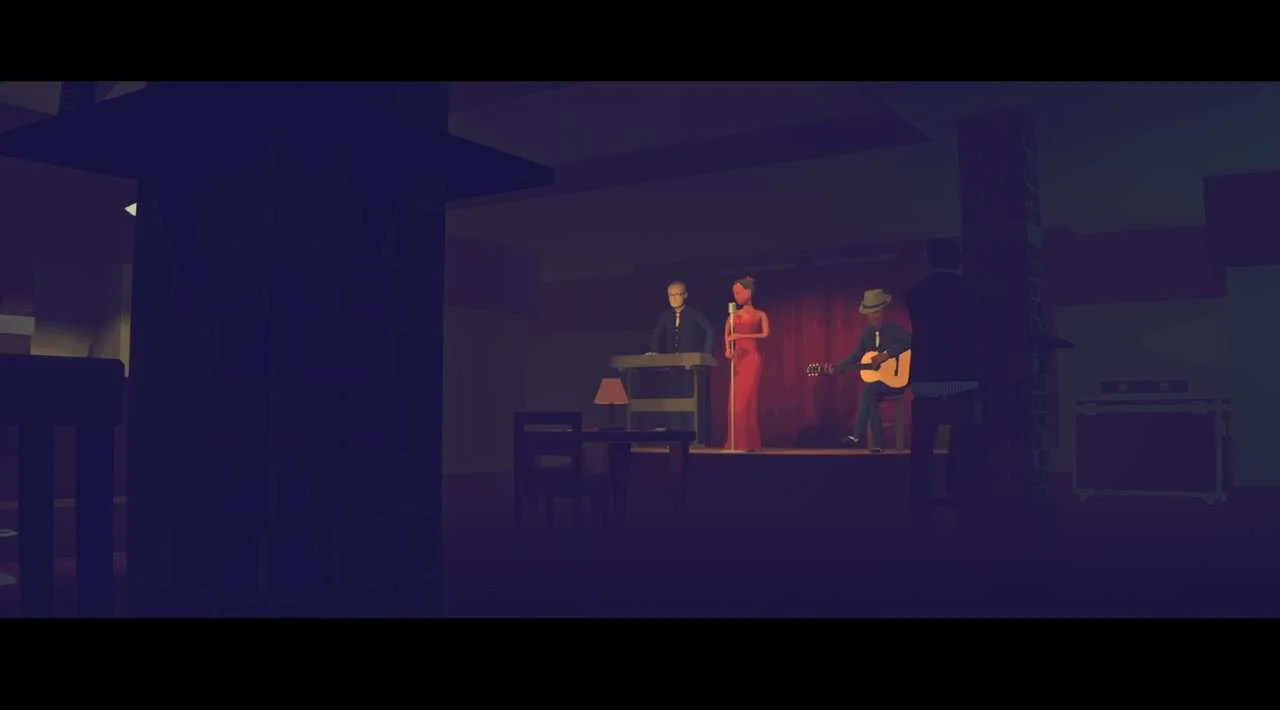

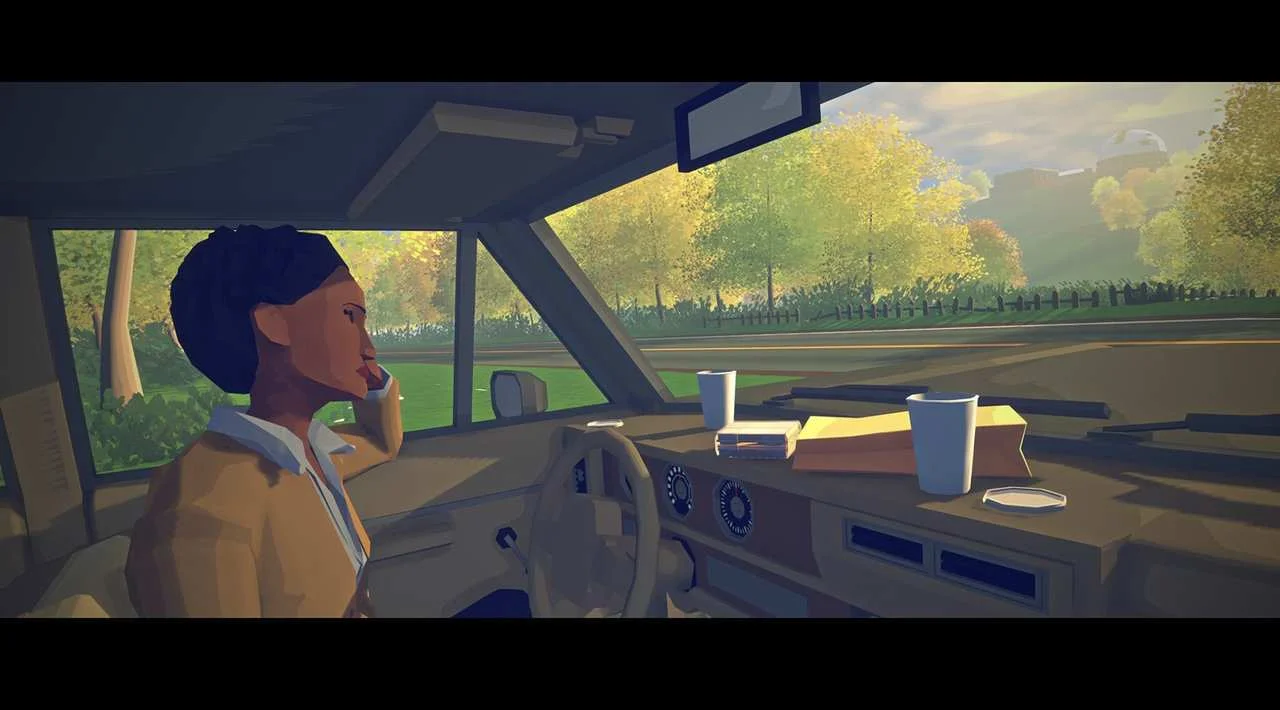

Trailer/Gameplay
Download
Virginia (2016), 1.19GB
ElAmigos release, game is already cracked after installation (crack by Reloaded).

Updated to version 1.02 (03.11.2016).

1. Extract files.
2. Burn or mount the image.
3. Install the game.
4. ElAmigos release, game is already cracked after installation.
5. Play the game. If you like this game, BUY IT!
Virginia Download
🔒 Premium access required
To see and use the download links, you must be logged in and have an active PREMIUM account.
* Unlock downloads via Torrent and TeraBox.
Torrent Download
The best torrent download speeds are with qBittorrent!