Strider
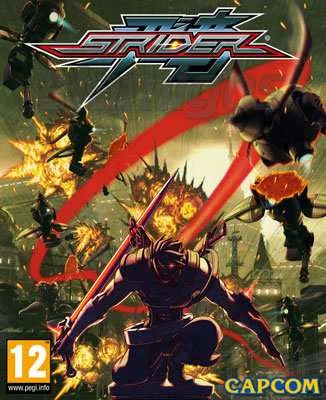
- Category:
- Release date:
- Game Genre:Action, science fiction, platform, ninja, metroidvania, 2.5 D
- Developer:Double Helix Publisher: Capcom
- Release:ElAmigos
- Platform:PC
- Languages (subtitles):English, French, Italian, German, Spanish, Japanese
- Dubbing/Audio:English
- Crack:Ali213, Codex
- Game size:3.31GB
Game Description
Strider on PC is a fast 2.5D action-platformer and Metroidvania-style adventure built around sword combat, wall-running, and ability-gated exploration. Steam still lists the game under its original branding, STRIDER™ / ストライダー飛竜®, with no verified rebrand, definitive replacement, or free-to-play transition.
Developed by Double Helix Games and Capcom and published by Capcom, it reimagines Strider Hiryu as a mobile assassin fighting through the interconnected city of Kazakh. The emphasis is on movement, combat momentum, and discovering upgrades that open previously inaccessible routes.
Fast Movement Defines Strider on PC
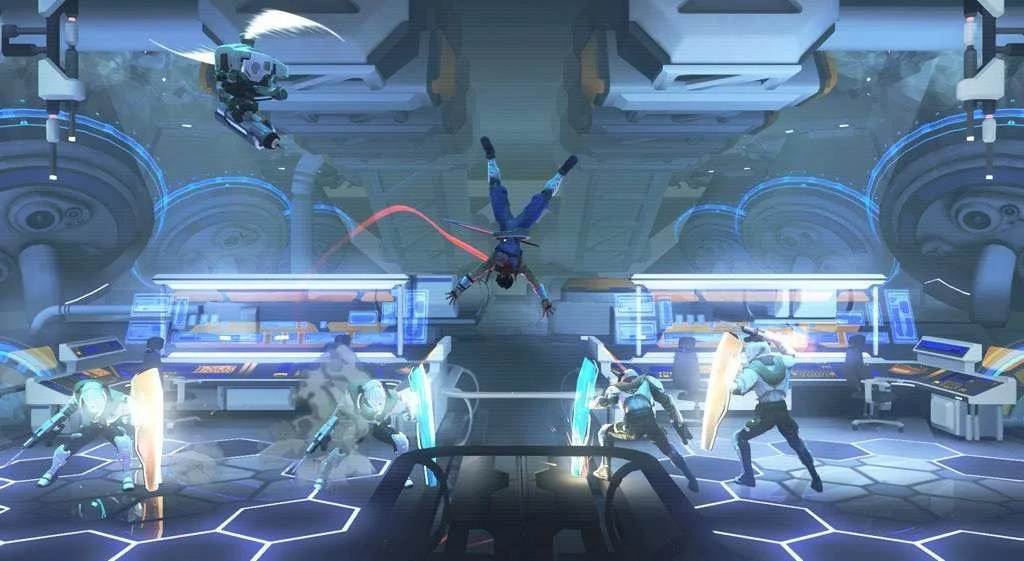
Strider is played from a side-scrolling perspective, but its connected map gives the adventure more structure than a conventional stage-based platformer. Hiryu can sprint through rooms, climb walls, slide beneath hazards, leap across vertical spaces, and attack while moving at high speed.
The core loop is simple: enter a new district, defeat enemies and bosses, locate upgrades, then use those abilities to reach new sections or revisit earlier routes. Wall climbing, double jumping, sliding, and aerial movement make navigation feel unusually fluid, while the map encourages players to search for hidden items and alternate paths.
Combat is based around the Cypher, Hiryu's plasma blade. Basic sword swings are quick and wide, allowing him to cut through groups of soldiers without stopping. Stronger enemies require more deliberate positioning, charged attacks, evasive movement, and the correct plasma ability.
Strider's speed is not only cosmetic. Running into combat, leaping over projectiles, changing direction on walls, and attacking from above are central ways to control encounters. The best fights become short movement puzzles in which the player decides whether to rush through, climb around a threat, or disable it with a specialized tool.
Cyphers, Kunai, and Ability-Gated Routes
The Plasma Cypher has several forms that expand both combat and exploration. The explosive variant sets targets on fire and interacts with matching barriers, the ultra-cold form freezes enemies, the reflective form can redirect projectiles, and the magnetic form creates a returning plasma projectile.
These upgrades are not merely damage bonuses. Color-coded doors and environmental obstacles make the Cypher forms part of the navigation system, so progression depends on remembering where a newly useful ability can be applied. A route that looked decorative earlier may become a shortcut, secret room, or required passage later.
Hiryu also carries Kunai, which can be thrown from the ground or while climbing. Kunai upgrades increase their quantity and range, while enhanced forms add effects such as bouncing, explosions, freezing, or homing behavior. They are useful against enemies positioned outside sword range and can interact with specific locks.
Additional movement tools include the Plasma Catapult, which functions as an aerial dash and helps Hiryu cross traps, gaps, and vertical sections. A charged strike meter also enables a temporary power mode that increases attack reach and strength while slowing the action around Hiryu.
Kazakh, Bosses, and Exploration Progression
Kazakh is presented as one large interconnected setting divided into districts, facilities, rooftops, tunnels, and military areas. The layout supports a measured form of backtracking: new abilities open routes, but the game generally keeps its objectives focused instead of turning the map into an aimless maze.
Exploration rewards players with ability upgrades, collectibles, costumes, character information, and location intel. The map also gives completion-minded players reasons to search beyond the critical path, particularly when a newly acquired movement skill reveals a previously unreachable room.
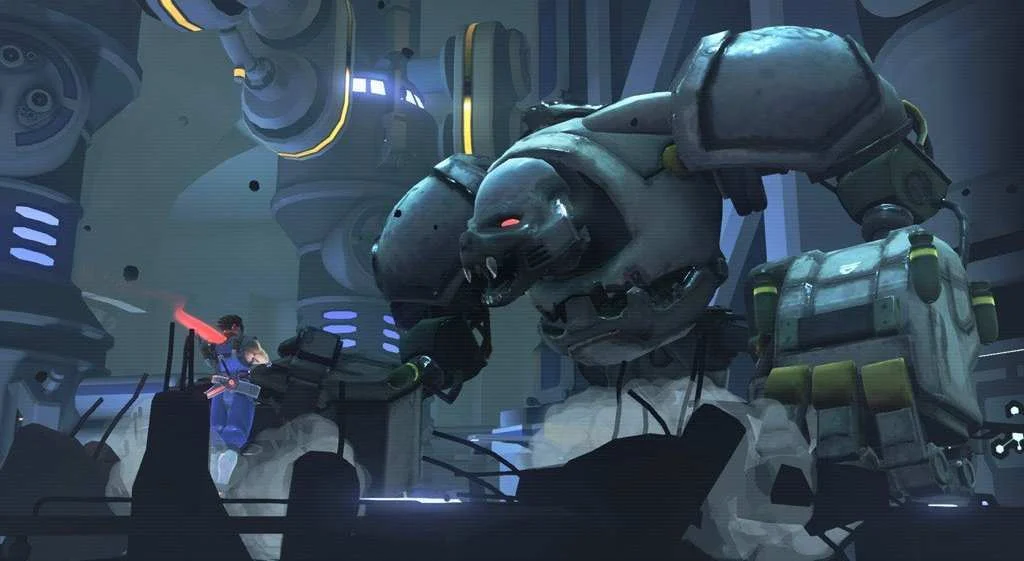
Boss encounters interrupt the normal flow with larger arenas, distinctive attack patterns, and more demanding defensive timing. They are less about clearing groups of enemies and more about recognizing openings while avoiding attacks that can limit Hiryu's movement options.
The campaign includes Easy, Normal, and Hard difficulty choices. After the main adventure, replay value comes from collecting missed items, improving completion, chasing faster clears, and competing on score or time leaderboards rather than from randomized runs or character classes.
Challenge Modes and Long-Term Replay
Strider includes two dedicated Challenge Modes. Beacon Run focuses on speed and route execution, asking players to pass through checkpoints and reach the goal while handling enemies and environmental hazards.
Survival Mode shifts the emphasis toward combat endurance. Players face progressively difficult waves while working with different ability loadouts, making this mode a useful test of enemy control, Cypher selection, and efficient movement.
Both challenge formats support leaderboard competition, while the main Story Mode also tracks performance. That structure gives the PC version a stronger mastery loop than a single campaign completion might suggest, especially for players who enjoy time attacks and score improvement.
Players who want a larger, slower exploration experience may prefer hand-drawn Metroidvania adventures such as Hollow Knight. Strider is more aggressive and mobility-focused, with less emphasis on atmospheric discovery, character builds, or deliberate resource management.
Content Model and PC Edition
Steam presents Strider as a premium single-player game. The current listing does not identify a season pass, recurring subscription, free-to-play structure, or separate paid gameplay expansion. The main purchase covers the Kazakh campaign, the challenge modes, collectibles, upgrades, costumes, and leaderboard features.
The PC edition includes 30 Steam Achievements, Steam Trading Cards, Steam Cloud, Family Sharing, Steam Leaderboards, and Remote Play on TV. Remote Play is a platform feature rather than a native cooperative mode, so it does not turn Strider into a two-player campaign.
Steam also identifies Enigma Protector as third-party DRM and requires agreement to a third-party EULA. No separate publisher launcher is identified in the current Steam listing, and no dedicated competitive anti-cheat system is listed.
Controls, Languages, and PC Features
Strider supports keyboard and mouse input as well as controllers, although the Steam listing specifically recommends a controller. That recommendation fits the game's fast directional movement, wall-climbing transitions, charged attacks, and frequent use of simultaneous movement and combat actions.
The current Steam language table lists English full audio, with English, French, Italian, German, Spanish from Spain, and Japanese available for interface and subtitle support. Spoken audio is not listed for the other five languages.
Steam confirms cloud saves, achievements, leaderboards, trading cards, Family Sharing, and Remote Play on TV. It does not advertise Steam Workshop support, official mod tools, cabinet features, multi-monitor display support, or native ultrawide support, so those should not be treated as standard PC features.
The PC version is therefore best understood as a straightforward solo action-platformer with controller-friendly movement, Steam integration, and a compact set of replay challenges rather than an online service or mod platform.
Who Should Play Strider?
Strider suits players who want high-speed sword combat, vertical platforming, compact ability-gated exploration, and a protagonist who becomes more versatile through movement and weapon upgrades. It is especially well matched to fans of arcade action who want a connected world without a heavy role-playing system.
The game is also a good fit for players who enjoy replaying completed areas to improve routes, collect missed upgrades, or reduce completion times. Its most distinctive pleasure comes from moving through Kazakh with increasing confidence, not from building a party, managing loot, or making branching narrative decisions.
Players seeking online co-op, split-screen multiplayer, procedural levels, extensive equipment builds, or a slow exploration-first Metroidvania should set different expectations. For another fast 2D comparison, run-based action platformers like Dead Cells offer more weapon variety and repeated procedural attempts, while Strider uses a fixed world and authored progression.
Its closest appeal is movement mastery. Hiryu's tools gradually turn ordinary rooms into spaces for chaining slides, wall climbs, aerial dashes, charged strikes, and plasma effects together.
Strider FAQ
Is Strider still called STRIDER on PC?
Yes. The current Steam storefront uses the title STRIDER™ / ストライダー飛竜®. There is no verified PC rebrand, definitive replacement edition, or alternate current storefront name that supersedes it.
Is Strider a Metroidvania?
Strider is best described as a 2.5D action-platformer with Metroidvania-style exploration. It has an interconnected map, ability-gated doors, revisitable districts, hidden upgrades, and movement tools that unlock new routes, but combat speed and arcade-style action remain its main priorities.
Does Strider include co-op or multiplayer on PC?
No. Steam lists Strider as single-player. Remote Play on TV is included as a Steam feature, but the game has no verified online co-op, local co-op, split-screen, or competitive multiplayer mode.
What are Beacon Run and Survival Mode?
Beacon Run is a speed-focused challenge in which players move through checkpoints toward a goal. Survival Mode tests combat against escalating enemy waves with different ability loadouts. Both modes contribute to Strider's leaderboard and replay structure.
Does Strider support controllers on PC?
Yes. The PC version supports controller play, and Steam recommends using a controller. Keyboard and mouse input is also available, but the game's rapid movement, wall interaction, and combat chaining are particularly suited to a gamepad.
Which languages are supported?
Steam lists English, French, Italian, German, Spanish from Spain, and Japanese for interface and subtitle support. English is the only language listed with full audio.
Does Strider have paid DLC?
The current Steam listing does not identify a season pass or separate paid gameplay expansion. It presents the campaign, challenge modes, collectibles, upgrades, costumes, and leaderboard features as part of the main premium game.
System Requirements
Minimum: |
Processor: Core i5 2.5 GHz Graphics: 1 GB VRAM Memory: 2 GB RAM Disk space: 4 GB HDD Operating system: Windows Vista(SP1)/7(SP1)/8 |
Screenshots


Trailer/Gameplay
Download
Strider (2014), 3.31GB
ElAmigos release, game is already cracked after installation (crack by Ali213 or Codex).

Updated till 14.09.2017 (Update 1).

Included bonus content: Soundtrack (mp3), Artbook.

1. Extract files.
2. Burn or mount the image.
3. Install the game.
4. ElAmigos release, game is already cracked after installation.
5. Play the game. If you like this game, BUY IT!
Strider Download
🔒 Premium access required
To see and use the download links, you must be logged in and have an active PREMIUM account.
* Unlock downloads via Torrent and TeraBox.
Torrent Download
The best torrent download speeds are with qBittorrent!