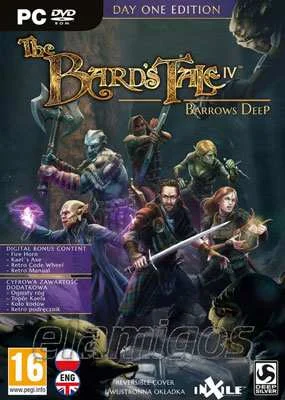
The Bard's Tale IV: Barrows Deep Ultimate Edition
Edit date: 2-01-2023, 14:44
Reason: Updated till 20.02.2020
- Category:
- Release date:
- Game Genre:RPG, FPP, fantasy, turn-based, dungeon-crawler, crowdfunding, classic RPG
- Developer:
- Release:ElAmigos
- Platform:PC
- Languages (subtitles):English, French, German, Spanish, Polish, Russian
- Dubbing/Audio:English
- Crack:Codex
- Game size:18.27GB
Game Description
The Bard's Tale IV: Barrows Deep Ultimate Edition is a first-person, party-based fantasy dungeon crawler built around exploration, environmental puzzles, character builds, and turn-based tactical combat. The name is now mainly associated with a legacy bundle. Current PC storefront listings use The Bard's Tale IV: Director's Cut, the expanded version from inXile Entertainment that replaced the original Barrows Deep release on Steam and GOG.
That distinction matters because the Director's Cut is not just a cosmetic reissue. It adds a free expansion dungeon, new enemies and items, revised interface elements, more customization, rebalanced encounters, and quality-of-life settings that address several limitations of the original edition.
Skara Brae Through a First-Person Lens
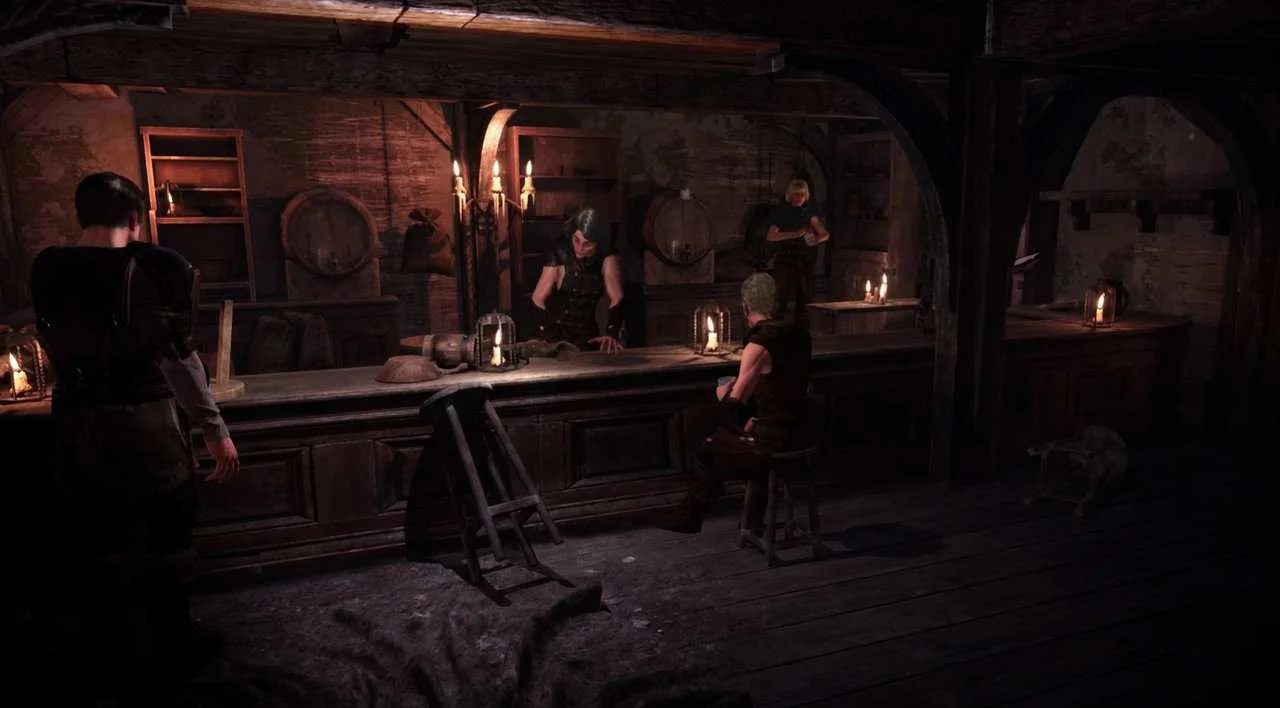
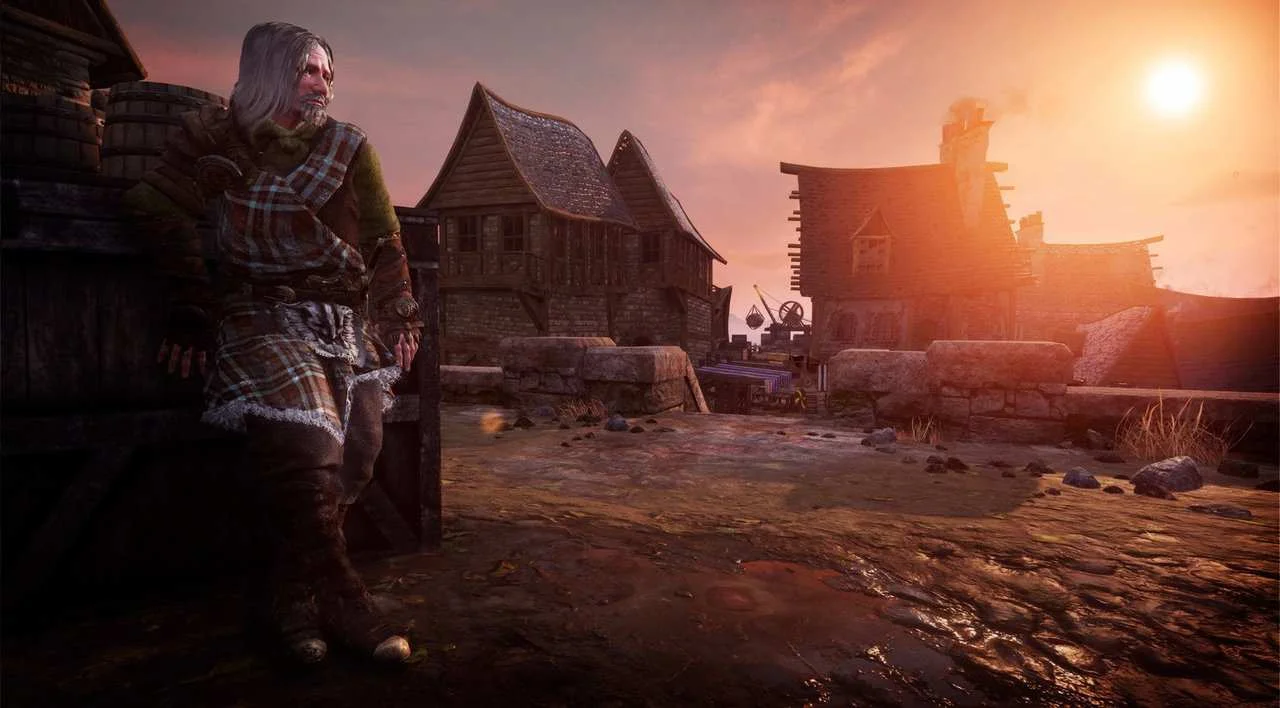
The adventure begins in Skara Brae and expands into the wider land of Caith, including the Baedish lowlands, the Forest of Inshriach, and the Stennish Isles. Movement and investigation take place from a first-person perspective, giving the game the close-quarters feel of a traditional dungeon crawler while still supporting towns, outdoor regions, quests, and story scenes.
Exploration is deliberately interactive. You search rooms, inspect objects, avoid traps, discover hidden routes, and use songs or special abilities to manipulate the environment. The main loop alternates between navigating dangerous locations, solving puzzles, recruiting or creating party members, improving equipment, and preparing for the next tactical encounter.
The tone is more old-school than action-focused. There is no real-time swordplay or conventional shooter loop. Instead, success comes from reading the space around you, understanding party roles, and making careful decisions before committing to a fight.
Combat Built Around Position and Opportunity
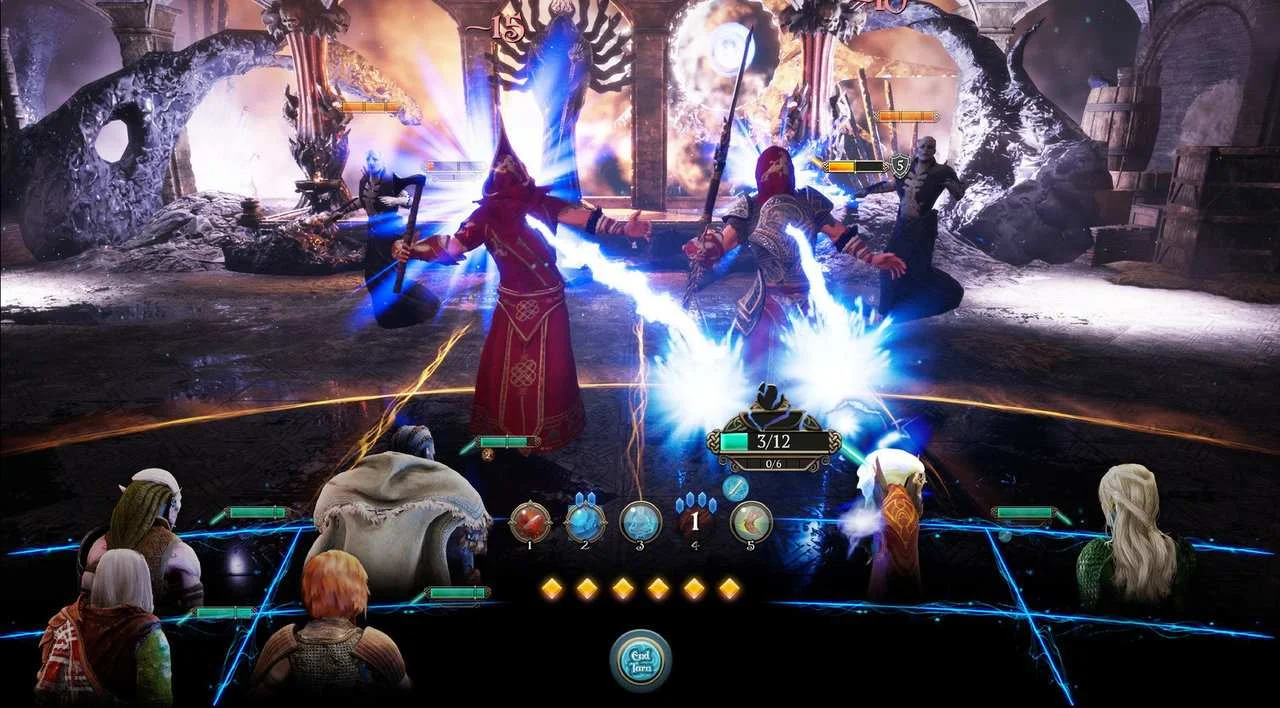
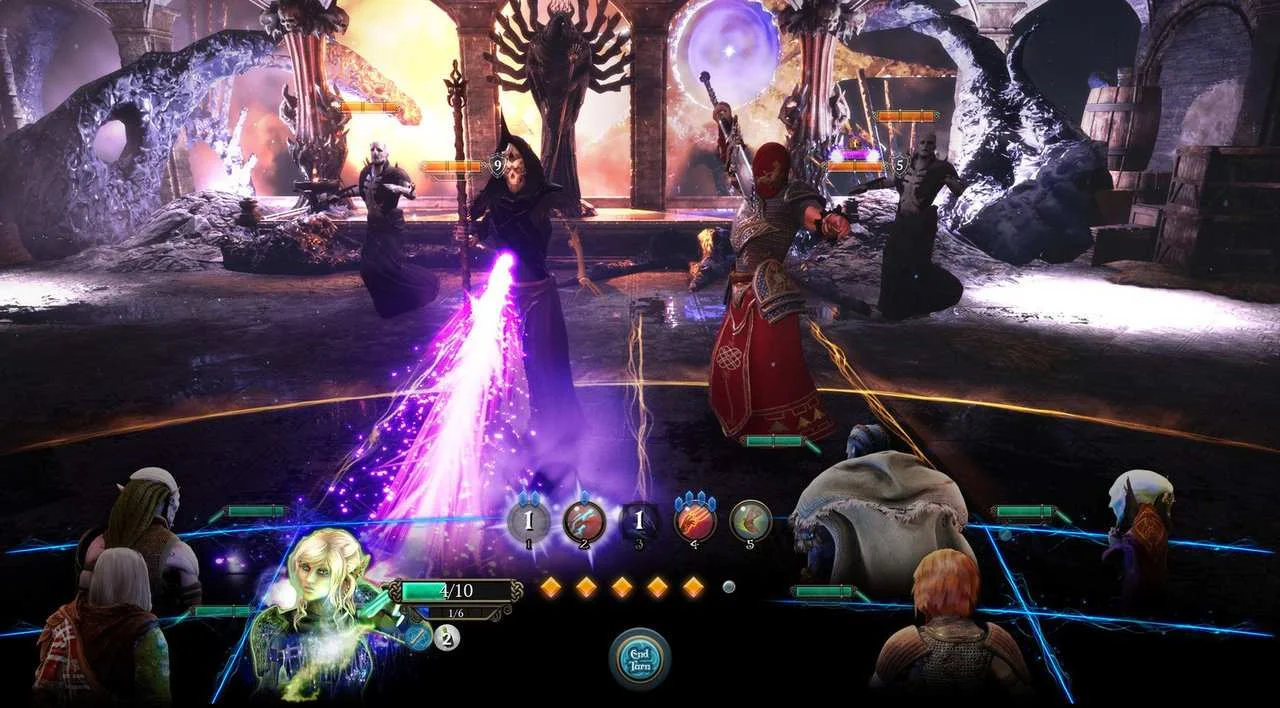
Combat switches to a 4x4 battle grid divided between your party and the enemy formation. Every move, attack, item, or ability competes for a shared pool of Opportunity Points, so the party acts as a coordinated unit rather than a collection of independent turns.
Positioning is central. Front-line fighters can block access to fragile characters, ranged abilities depend on distance, and several attacks gain value from proximity, reach, area of effect, or a target's position. A strong turn may involve moving one hero, opening a gap with a fighter, applying a bard song, and then using a rogue or practitioner ability before the enemy phase begins.
Engagements also reflect how you approach them. Charging an enemy can give your party the initiative, while being spotted first may allow the opposition to act before you. That pre-battle decision is easy to overlook, but it can determine whether your opening formation survives the first exchange.
Damage and defense are not reduced to simple hit-point trading. Physical and mental attacks interact with defenses differently, while enemy behaviors create specific tactical problems. Some opponents revive unless handled quickly, others punish melee attacks, and multi-wave battles test whether you can preserve resources across several encounters.
Players who enjoy classic grid tactics but want a more compact party system may find the combat loop appealing. It shares some of its deliberate, formation-focused DNA with first-person turn-based dungeon crawlers such as Operencia: The Stolen Sun, although The Bard's Tale IV places greater emphasis on shared action resources and environmental puzzle solving.
Classes, Songs, and Party Construction
The four main archetypes are Bard, Fighter, Rogue, and Practitioner. Each has its own skill focus, and the Director's Cut describes the class system as supporting dozens of skills across a wider set of specialized class paths.
The Bard is the most distinctive archetype. Bard abilities use drinking and song mechanics to produce combat effects, turning alcohol consumption into a resource-management system rather than a simple novelty. Fighters provide direct pressure and control, rogues focus on mobility and opportunistic damage, and practitioners supply magical attacks and utility.
You begin with a small group and gradually recruit or create additional adventurers. The maximum active party can reach six characters, with summoned allies also contributing to some encounters. Gear, memorized abilities, trinkets, and class choices let you shape the party around protection, burst damage, control, magic, or more specialized combinations.
Character development is intentionally focused on party synergy. The important question is not only whether one hero is strong, but whether the group can convert limited Opportunity Points, cooldowns, songs, mana, and positioning into an efficient turn.
Puzzles Are Part of the Main Identity
Puzzles are not occasional decoration. They are one of the game's defining systems, appearing in dungeons, towers, ruins, and other locations as mechanisms involving switches, symbols, timing, traps, movable objects, and hidden paths.
Some puzzles reward observation rather than character statistics. You may need to inspect the room, read environmental clues, understand a sequence, or experiment with an object before the correct solution becomes clear. Exploration abilities can reveal useful information, but they do not remove the need to think through every mechanism.
The Director's Cut adds the exploration song Strugglers' Lament, which can skip mandatory puzzles. Optional puzzles remain available for players who want the full challenge and the rewards attached to deeper exploration.
This structure creates a clear dividing line between audiences. Players seeking a pure combat RPG may find the pace interrupted by extended puzzle sections, while fans of classic dungeon crawlers will appreciate that solving a mechanism can be as important as winning a battle.
What the Current Editions Actually Mean
The requested Ultimate Edition is a legacy name from the original storefront lineup. It was associated with a larger bundle that included The Bard's Tale IV and the remastered trilogy, along with higher-tier digital extras depending on the store and edition.
On current Steam and GOG listings, the game is presented as The Bard's Tale IV: Director's Cut, with Standard and Deluxe variants. The Standard Edition contains the game itself and core digital extras, while the Deluxe Edition adds items such as a map, wallpapers, novellas, art materials, a songbook, and the soundtrack.
The gameplay content difference between the original Barrows Deep release and the Director's Cut is more important than the historical bundle label. The newer version includes the Haernhold expansion dungeon, additional content, revised systems, and broader customization and difficulty controls.
Players who own older saves should also understand the version boundary. inXile's support information states that saves from before the Director's Cut update are not compatible with the updated version, so the enhanced edition requires a new game for its revised content.
Who Should Play It on PC?
The Bard's Tale IV suits players who want a single-player CRPG with a fixed first-person viewpoint, party management, tactical battles, and substantial puzzle exploration. It is especially relevant to fans of the original Bard's Tale series and modern revivals of classic dungeon-crawling design.
It is a good fit if you enjoy comparing skill combinations, adjusting formations, searching for secrets, and treating every battle as a small tactical puzzle. The save-anywhere option and adjustable interface settings also make the Director's Cut more flexible for players who prefer control over the pace and presentation.
It is less suitable for players expecting open-world freedom, real-time combat, cooperative multiplayer, or a dialogue-choice RPG in which every character decision dramatically reshapes the story. The experience is structured around authored zones, party optimization, puzzle solving, and combat mastery.
For a more step-by-step classic dungeon format with grid movement and a different fantasy setting, turn-based first-person RPGs like Might & Magic X: Legacy provide a useful comparison point, though The Bard's Tale IV uses real-time exploration and grid battles rather than step-by-step world movement.
PC Features, Input, and Localization
The Steam version is a single-player release with Steam Cloud, achievements, trading cards, Family Sharing, and full controller support. There is no listed co-op, competitive multiplayer, split-screen, or online party mode, so the campaign is designed entirely for solo play.
GOG lists the Director's Cut as DRM-free, with optional GOG Galaxy features rather than a mandatory launcher requirement. Its catalog entry also lists Windows, Linux, and macOS support, making it the more flexible storefront option for players who want an offline installer.
English includes interface, subtitles, and full audio. French, German, Spanish, Polish, and Russian are supported for interface and text localization, while English is the only listed full-audio language on the current storefront data.
The game uses a conventional keyboard-and-mouse interface as well as controller input. A controller is practical for movement and combat, while mouse input can feel more direct when inspecting objects, navigating menus, and managing equipment.
Similar PC Games and Genre Fit
The closest comparisons are other first-person or party-based dungeon crawlers with turn-based combat and deliberate exploration. The Bard's Tale IV is more puzzle-heavy than many modern CRPGs, while its shared action economy gives battles a board-game-like rhythm.
Players interested in older-school dungeon exploration can also compare it with first-person fantasy dungeon adventures such as Underworld Ascendant, although that game is built around real-time immersive-sim mechanics rather than The Bard's Tale IV's turn-based party tactics.
The strongest reason to choose The Bard's Tale IV over a broader role-playing game is its combination of first-person exploration, party-based combat, puzzle rooms, recruitable heroes, and class experimentation. It is a specialized experience rather than a general-purpose fantasy sandbox.
The Bard's Tale IV FAQ
Is The Bard's Tale IV: Barrows Deep Ultimate Edition still the current name?
No. Ultimate Edition is a legacy package name. Current Steam and GOG listings use The Bard's Tale IV: Director's Cut, which is the expanded version with additional content and system improvements.
What does the Director's Cut add?
It adds the Haernhold expansion dungeon, new enemies and items, more character customization, revised interface elements, rebalanced encounters, additional difficulty controls, save-anywhere options, and the Strugglers' Lament song for skipping mandatory puzzles.
Does the game support multiplayer or co-op?
No. The current PC listings identify it as a single-player game, with no co-op, split-screen, or competitive multiplayer mode.
Can you skip the puzzles?
The Director's Cut includes Strugglers' Lament, which can bypass mandatory puzzles. Optional puzzles remain part of the exploration and can still be solved for players who want their rewards and secrets.
Are original Barrows Deep save files compatible with the Director's Cut?
No. The Director's Cut uses a separate save structure, so players moving from the original version must start a new campaign to experience the updated edition.
What languages are supported on PC?
English has full audio and text support. French, German, Spanish, Polish, and Russian provide interface and subtitle localization.
System Requirements
Minimum: | Recomended: |
| Processor: Intel Core i5-2500K 3.3 GHz Graphics: 2 GB GeForce GTX 760 / 3 GB Radeon HD 7970 Memory: 8 GB RAM Disk space: 20 GB HDD Operating system: Windows 7/8/8.1/10 64-bit | Processor: Intel Core i5-4590 3.3 GHz Graphics: 4 GB GeForce GTX 970 / Radeon R9 290 Memory: 8 GB RAM Disk space: 20 GB HDD Operating system: Windows 7/8/8.1/10 64-bit |
Screenshots
Trailer/Gameplay
Download
The Bard's Tale IV: Barrows Deep Ultimate Edition (2018), 18.27GB
ElAmigos release, game is already cracked after installation (crack by Codex).

Updated till 20.02.2020.
Ultimate Edition bonuses are included.

Installation time with 16 threads CPU and SSD - 6 minutes.
Credits to Razor12911.

1. Extract files.
2. Burn or mount the image.
3. Install the game.
4. ElAmigos release, game is already cracked after installation.
5. Play the game. If you like this game, BUY IT!
The Bard's Tale IV: Barrows Deep Download
🔒 Premium access required
To see and use the download links, you must be logged in and have an active PREMIUM account.
* Unlock downloads via Torrent and TeraBox.
Torrent Download
The best torrent download speeds are with qBittorrent!