Quest Hunter
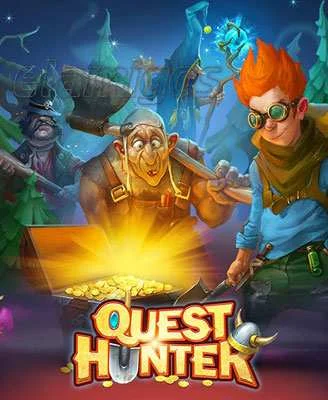
- Category:
- Release date:
- Game Genre:RPG, adventure, action
- Developer:
- Release:ElAmigos
- Platform:PC
- Languages (subtitles):English, French, German, Russian, Simplified Chinese
- Dubbing/Audio:English
- Crack:Codex
- Game size:0.28GB
Game Description
Quest Hunter is an isometric action RPG for PC that combines story-driven exploration, hack-and-slash combat, treasure hunting, puzzles, and cooperative play. Its central premise is unusual but easy to understand: the sun has disappeared, darkness controls the world, and light from your torch is both a practical resource and a defense against certain monsters.
Developed and published by 2 Zombie Games, Quest Hunter is still listed under its original name on the major PC storefronts. There is no verified Steam or Epic rebrand replacing the base game. Players will find the standard game, the separate Strangewood story add-on, and a Deluxe Edition that bundles the main game with the expansion and digital extras.
A story-driven dungeon crawler with a clear gameplay loop
Quest Hunter follows a straightforward adventure rhythm. Accept quests, travel through handcrafted story locations, enter dangerous dungeons, defeat enemies, search for hidden treasure, solve environmental puzzles, and return to camp with materials for stronger equipment. The structure is accessible, but it is not simply a sequence of combat arenas.
The isometric camera gives the game a familiar top-down action RPG perspective. Movement, attacks, abilities, interaction, and exploration all happen from that view, making it easy to read enemy groups and locate objects in the environment. Combat is built around direct character control rather than turn-based commands, with weapons, skills, consumables, and equipment shaping how each encounter is approached.
Light is one of the game’s defining mechanics. The official storefront descriptions emphasize that the player is safest near the torch, while certain creatures from the darkness scatter when exposed to it. That makes illumination part of exploration and combat rather than a decorative effect. Players must also watch for environmental hazards, enemy ambushes, hidden stashes, and routes that are only revealed through careful searching.
Choices, camp building, and treasure hunting
Quest Hunter presents its campaign as a choice-driven RPG. Dialogue uses non-linear answers, allowing players to influence conversations and steer parts of the storyline. The game does not present itself as a large branching narrative simulation, but dialogue choices are an important part of how quests and character interactions are framed.
Exploration is supported by a broad collection of activities: digging for buried treasure, collecting trophies from defeated enemies, finding stashes, following treasure maps, and solving mechanisms that require players to move, turn, light, switch, or dig. The shovel is more than a novelty. It is one of the tools that gives Quest Hunter its treasure-hunt identity and encourages players to inspect areas instead of rushing directly toward the next objective.
Between expeditions, players can claim and develop a place in the Dark World. The camp building layer provides a home base for progression, equipment preparation, and supporting characters. The official descriptions also refer to assembling a team of friends and helpers and protecting the camp, giving the campaign a stronger sense of continuity than a purely menu-driven loot game.
Progression revolves around character attributes, skills, weapons, armor, items, and consumables. Equipment can be found, created, and upgraded. Potions and bombs add additional preparation choices, while new abilities and super powers provide a reason to keep exploring optional areas and completing quests.
Generated dungeons inside a structured campaign
One of the most important distinctions for PC players is that Quest Hunter is not presented as a pure run-based roguelike. It has a continuing story, named locations, dialogue, quests, camp progression, and bosses, while selected dungeons use random generation to vary layouts and encounters.
That combination creates a hybrid structure. Story locations provide direction and narrative context, while generated dungeons add uncertainty and replay value to treasure runs. Players who want a heavily system-driven loot experience may find the mechanics lighter than in a complex build-focused action RPG. Those who prefer a readable campaign with optional exploration will find the format easier to follow.
Bosses are designed around finding the right approach rather than applying one universal tactic. The storefront description specifically highlights different enemy behaviors, including beasts affected by torchlight and bandits with their own interaction rules. Puzzles and combat therefore share the same overall goal: observe the situation, use the tools available, and choose an efficient response.
Base game, Strangewood, and the Deluxe Edition
The PC base game is sold as a conventional paid title on Steam and Epic Games Store. It is not a free-to-play PC release, although the mobile versions use a free opening section followed by an in-app purchase for the full game. That distinction matters when comparing storefront listings or looking for the correct PC edition.
The main paid expansion is Quest Hunter: Strangewood. It adds a continuation of the story set in a western woodland affected by a strange blue mist. The expansion introduces new locations, quests, enemies, characters, equipment, skills, puzzle mechanics, and generated dungeons. It requires the base game rather than functioning as a standalone PC title.
Players who want the complete digital package can choose the Deluxe Edition. The bundle includes Quest Hunter, Strangewood, the Original Soundtrack, and the Original Artbook. The soundtrack and artbook are extras rather than gameplay expansions, so the meaningful content decision is whether to buy the base game alone or include the Strangewood story addition.
Who Quest Hunter suits on PC
Quest Hunter is a good fit for players who want four-player co-op, approachable action RPG systems, light puzzle solving, and a campaign that can be enjoyed without studying a complicated endgame meta. Its colorful presentation, humorous tone, and direct objectives also make it a reasonable choice for relaxed group play or players who are new to the isometric RPG genre.
The game is less suitable for anyone looking for deep class theory, highly technical combat, competitive multiplayer, or an endless live-service progression model. The strongest appeal is its combination of exploration, loot, dialogue choices, and cooperative adventure rather than extreme build complexity.
It also shares some of its loot-driven dungeon-crawling DNA with classic isometric hack-and-slash adventures such as Torchlight II, although Quest Hunter places more emphasis on puzzles, camp development, and couch co-op.
PC controls, multiplayer, and storefront features
Steam lists full controller support, while the developer has also confirmed full mouse-and-keyboard play. The couch co-op setup supports up to four gamepads, or one keyboard-and-mouse player alongside up to three gamepad users. That mixed-input arrangement is particularly useful for a shared-screen PC session.
Multiplayer includes online co-op, shared or split-screen co-op, cross-platform multiplayer, and Steam Remote Play Together. The game can therefore work for players in the same room as well as groups connecting across supported platforms. The practical focus is cooperative campaign play, not player-versus-player competition.
Steam also lists cloud saves, achievements, leaderboards, trading cards, Remote Play on TV, Family Sharing, and Steam Deck compatibility metadata. Epic Games Store lists cloud saves, controller support, cross-platform play, and single-player functionality. No official mod toolkit or named anti-cheat system is advertised in the current storefront information, so players should not assume that Quest Hunter has a formal modding ecosystem or competitive anti-cheat framework.
Text and interface localization is listed for English, Russian, German, French, Simplified Chinese, Japanese, Brazilian Portuguese, Traditional Chinese, and Spanish from Spain. The PC storefront listings do not advertise full voice-over localization; the supported languages are presented as interface and subtitle options.
Comparable PC action RPGs
For a more traditional loot-and-leveling structure with classes, pets, randomized dungeons, and a broader hack-and-slash focus, colorful co-op action RPGs like Torchlight III are a natural comparison. Quest Hunter is more compact and puzzle-oriented, while Torchlight III leans harder into class abilities and conventional action RPG equipment progression.
Players looking for a shorter, more focused top-down fantasy adventure can also compare its direct combat and shared-screen structure with compact hack-and-slash RPGs such as R.A.W. Realms of Ancient War. Quest Hunter stands apart through its torchlight rules, buried treasure, camp construction, and choice-based quest presentation.
Quest Hunter FAQ
Has Quest Hunter been renamed on PC?
No verified rebrand has replaced Quest Hunter on Steam or Epic Games Store. The base game remains listed as Quest Hunter, with Strangewood appearing as its story expansion and the Deluxe Edition as a bundle.
Is Quest Hunter free to play on PC?
No. The PC version is sold as a paid base game. The free-opening-section model applies to the mobile release, where the full game is unlocked through an in-app purchase.
Does Quest Hunter support four-player co-op?
Yes. The game supports single-player, online cooperative play, and couch co-op for up to four players. Steam also lists shared or split-screen co-op, cross-platform multiplayer, and Remote Play Together.
Is Quest Hunter a roguelike?
It contains randomly generated dungeons, but its main structure is a story-driven action RPG with quests, named locations, dialogue choices, camp progression, and bosses. It is better described as a cooperative isometric dungeon crawler with procedural dungeon elements than as a pure roguelike.
Can PC players use a controller?
Yes. Steam lists full controller support, and the developer confirms mouse-and-keyboard support as well. Local sessions can use up to four gamepads or combine one keyboard-and-mouse player with up to three controllers.
What does Strangewood add?
Strangewood continues the story with a new woodland setting, quests, enemies, characters, weapons, equipment, skills, puzzle mechanics, and generated dungeons. It requires the Quest Hunter base game.
Which languages are supported?
The PC listings include English, Russian, German, French, Simplified Chinese, Japanese, Brazilian Portuguese, Traditional Chinese, and Spanish from Spain for interface and subtitles. Full audio localization is not listed.
System Requirements
Minimum: |
Processor: 1.4GHz Graphics: 256 MB VRAM Memory: 2 GB RAM Disk space: 1 GB HDD Operating system: Microsoft Windows XP SP2 |
Screenshots


Trailer/Gameplay
Download
Quest Hunter (2019), 0.28GB
ElAmigos release, game is already cracked after installation (crack by Codex).

Updated to version 1.0.9 (06.06.2019).

1. Extract files.
2. Burn or mount the image.
3. Install the game.
4. ElAmigos release, game is already cracked after installation.
5. Play the game. If you like this game, BUY IT!
Quest Hunter Download
 Download from TeraBox
Torrent Download
The best torrent download speeds are with qBittorrent!