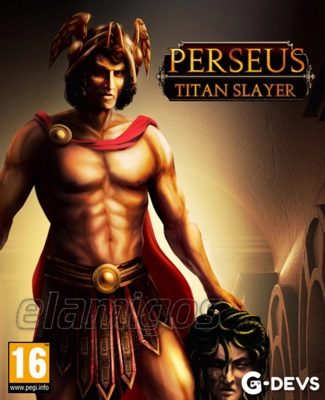
Perseus Titan Slayer
Edit date: 3-03-2023, 11:39
Reason: + update 15.02.2023 - 27.02.2023
- Category:
- Release date:
- Game Genre:Action, Indie, Action Roguelike, Roguelite, RPG, Adventure, Roguelike, Action RPG, Action-Adventure, Dungeon Crawler, Hack and Slash, 3D, Mythology, Singleplayer, Isometric, Atmospheric, Perma Death, Difficult, Procedural Generation, Bullet Hell
- Developer:Sicarius
- Release:ElAmigos
- Platform:PC
- Languages (subtitles):English, French, Italian, German, Spanish, Spanish (Mexico), Polish, Russian, Portuguese, Portuguese-Brazil, Turkish, Japanese, Korean, Simplified Chinese, Traditional Chinese
- Dubbing/Audio:English
- Crack:Codex, FLT
- Game size:4.71GB
Game Description
Perseus: Titan Slayer is a PC action roguelike and isometric hack-and-slash dungeon crawler from Sicarius and G-DEVS.com. The current Steam product keeps the original name, with no verified rebrand or replacement edition found. Its focus is straightforward: choose a weapon, fight through Tartarus, combine Olympian upgrades, and build a stronger run before Chaos and the Titans stop you.
The game is designed for single-player runs, not an online service or cooperative campaign. It combines fast melee combat, ranged attacks, procedural encounters, permanent progression, and branching choices that change how each attempt develops.
How the combat loop works
Perseus enters a run with one of four primary weapons: sword, daggers, bow, or katana. Each weapon has its own attack behavior and special abilities, so the opening choice defines the basic rhythm of the entire attempt. The sword favors direct close-range pressure, while the bow creates more space and rewards players who manage enemy positioning.
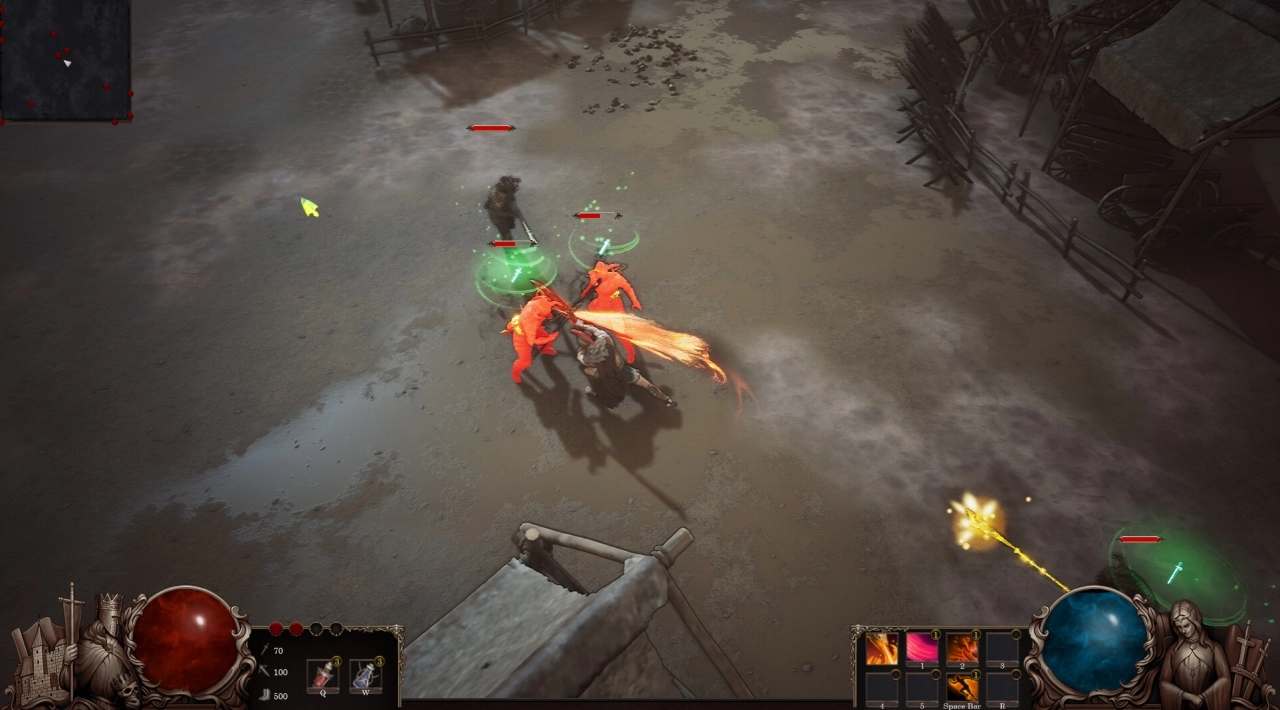
Combat takes place from an isometric viewpoint as enemy groups surround the hero in compact dungeon arenas. Movement, attacks, dodges, and special skills must be combined rather than used separately. The dodge is particularly important because it can also push through enemies, giving Perseus a way to escape pressure while creating an opening for another attack.
Runs are built around procedural generation and branching decisions. Room rewards, encounters, shops, and upgrade opportunities can change between attempts, encouraging players to adapt instead of following one fixed build path. The result is a mastery loop based less on memorizing a campaign and more on learning which upgrades work with the weapon and abilities currently available.
Players looking for a related but more exploration-heavy roguelike can compare that structure with top-down dungeon crawlers such as UnderMine. UnderMine places more emphasis on mining, secrets, and persistent discoveries, while Perseus concentrates on combat arenas and Greek-mythology encounters.
Weapons, gods, and build decisions
The main source of variety comes from combining the selected weapon with Olympian powers. Zeus, Hades, Poseidon, and other gods provide legendary upgrades that can push a run toward different damage and defense profiles. These choices are not simply cosmetic bonuses; they determine whether Perseus becomes a durable tank, an agile fighter, a high-damage attacker, or a spell-focused character.
A shopkeeper system expands the build layer between battles. Gold and available purchases can improve health, mana, damage, attack speed, and other useful attributes. Because the shop presents a limited selection rather than every possible upgrade at once, players must decide whether to reinforce a reliable build or spend resources on a more specialized strategy.
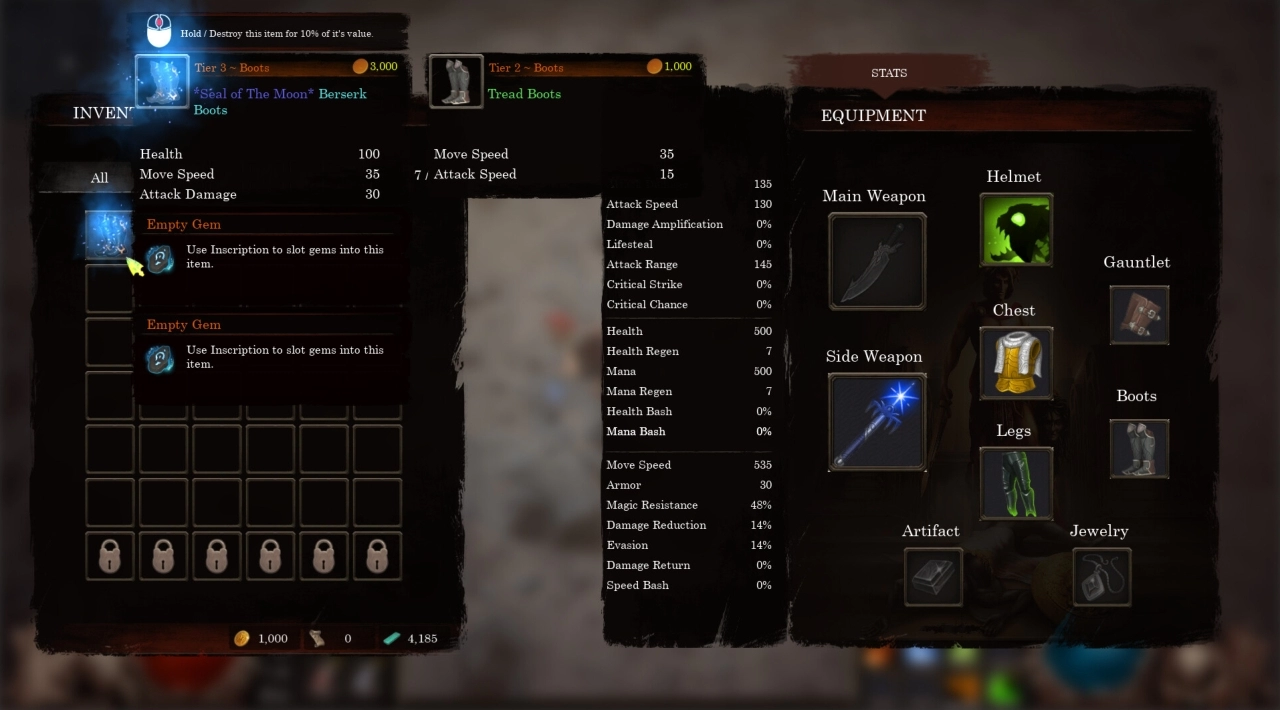
The game also includes special attacks, magical abilities, equipment improvements, and upgrade materials. These systems give each run a clear short-term objective: survive the next sequence of rooms, earn enough resources to strengthen the current setup, and reach the next major encounter before the build falls behind.
That structure makes Perseus closer to an action-focused roguelite than a traditional loot RPG. You are not managing a large party or exploring a persistent open world. You are refining one demigod through repeated attempts, with each run testing your ability to combine weapon reach, mobility, damage effects, and defensive upgrades.
Modes and progression structure
The core experience is organized around complete runs through Tartarus rather than a conventional save-anywhere campaign. Death ends the current attempt, so progress depends on improving your decisions and learning how encounters behave. This creates a demanding loop in which a promising build can still collapse if movement, positioning, or resource spending goes wrong.
Available gameplay variants include a more story-oriented Hardcore mode and a focused Arcade mode. Hardcore follows the broader journey through successive areas, while Arcade emphasizes combat and survival in a more concentrated format. The modes appeal to different priorities: one provides more context for the mythological quest, while the other puts the repeatable action loop first.
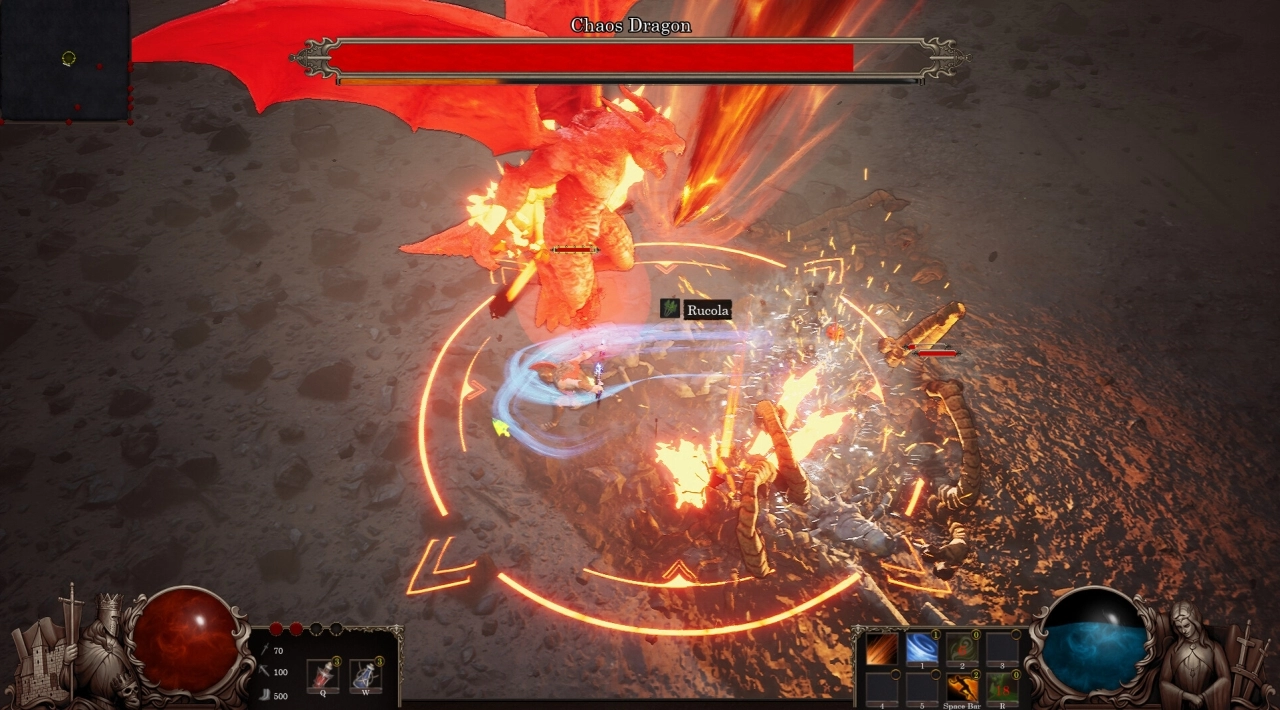
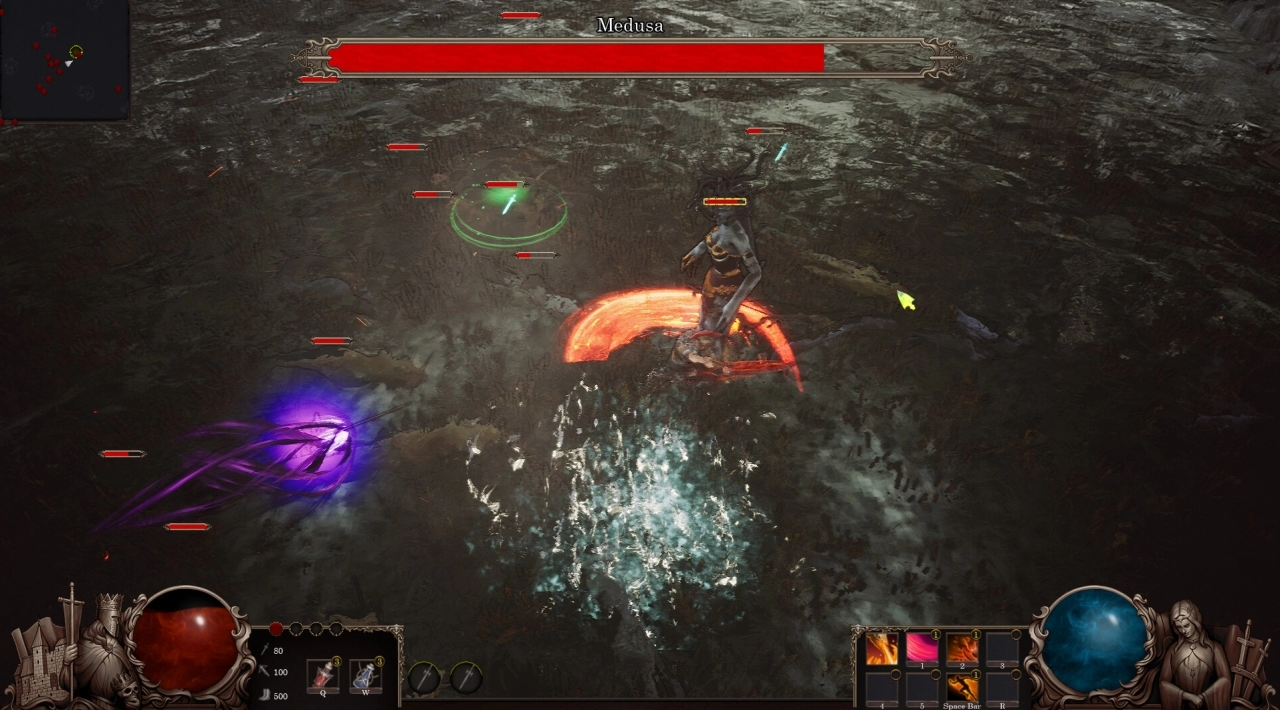
Additional Ascension difficulty increases the challenge for players who want to continue testing familiar weapons and builds. This is where the game's replay value becomes most apparent. The goal is not to unlock a lengthy list of unrelated activities, but to discover combinations that can withstand tougher encounters and boss fights.
Content model and storefront status
The verified PC product is a paid base game on Steam. The storefront lists Perseus: Titan Slayer as a standalone title from Sicarius, published by G-DEVS.com. A separate Steam app exists for a free trial, but it is distinct from the full product and does not represent a renamed edition.
No verified season pass, expansion catalog, or large collection of licensed add-ons was identified in the current storefront information. The content model is therefore centered on the base game's weapons, gods, dungeon runs, shops, modes, and escalating difficulty rather than a continuing DLC program.
Players searching for “Perseus Titan Slayer free trial” should distinguish the trial app from the full game. The punctuation also matters for catalog searches: the official product name is Perseus: Titan Slayer, while “Perseus Titan Slayer” is a common search variation.
Who should play it?
Perseus: Titan Slayer is best suited to PC players who enjoy action roguelikes, isometric dungeon crawlers, Greek mythology, and repeated attempts built around weapon experimentation. It works particularly well for players who prefer active combat over turn-based planning and want several distinct starting weapons instead of a large roster of characters.
The game may also appeal to players who enjoy tuning a build during a run. The combination of Olympian upgrades, shop purchases, special skills, and weapon-specific attacks creates enough room to test different approaches, especially when a run offers an unexpected combination of bonuses.
It is a weaker fit for anyone seeking online multiplayer, local co-op, a deep narrative RPG, or a highly expansive endgame. The campaign is mainly a framework for combat progression, and the replay loop depends on whether you enjoy repeating runs to improve execution and discover stronger synergies.
For a more story-driven action roguelike comparison, Dreamscaper offers another isometric roguelike with build experimentation, but its surreal dream setting and narrative structure give it a different emphasis from Perseus's mythological dungeon assault.
PC features, controls, and localization
The verified storefront identifies Steam as the PC distribution platform and lists Steam Achievements and Family Sharing. The game is primarily designed around keyboard and mouse input, with remappable controls available through its options. The developer has also indicated that players can use WASD and adjust the bindings rather than being locked to the default mouse-oriented scheme.
Gamepad input is recognized, but controller support should be approached with caution. Steam Deck compatibility data marks the game as playable while noting that some functionality may require touchscreen input, a virtual keyboard, or a community configuration. That makes keyboard and mouse the safer choice for players who want reliable access to every menu and inventory function.
The game uses an isometric 3D presentation and supports English full audio with additional interface and subtitle localization. The listed languages include German, Russian, Simplified Chinese, French, Italian, Spanish, Japanese, Korean, Polish, Brazilian Portuguese, European Portuguese, Latin American Spanish, Turkish, and Traditional Chinese.
No separate launcher, multiplayer infrastructure, mod workshop, dedicated-server tool, or anti-cheat system is identified in the available product information. Perseus is fundamentally a self-contained single-player PC game launched through Steam.
Comparable PC roguelikes
Perseus occupies a narrow space between a combat-heavy roguelite and a compact action RPG. Players who want more persistent discovery and a mining-based dungeon loop should consider procedural action roguelikes like UnderMine, while those looking for a more psychological and turn-based expedition structure may prefer stress-driven dungeon RPGs such as Darkest Dungeon.
For a closer mythology comparison, Achilles: Survivor shares Greek-mythology themes, isometric action, and roguelite progression, although its arena-survival design differs from Perseus's dungeon-crawling route. Perseus is the more weapon-centric option, with four starting weapon identities and a greater emphasis on active melee, dodging, and room-by-room advancement.
These comparisons clarify the game's niche. Perseus: Titan Slayer is not a card roguelike, a party-management RPG, or an arena-only survival game. It is a solo isometric action game built around repeated Tartarus runs, rapid combat decisions, and build adaptation under pressure.
Perseus: Titan Slayer FAQ
Has Perseus: Titan Slayer been renamed?
No verified rebrand was found. The current Steam product uses the name Perseus: Titan Slayer. The separate “Free Trial” listing is a different app, not a new name for the full game.
What type of game is Perseus: Titan Slayer?
It is a single-player, isometric action roguelike with hack-and-slash combat, procedural dungeon encounters, RPG upgrades, branching choices, and Greek-mythology themes.
Which weapons can Perseus use?
The four primary weapon choices are the sword, daggers, bow, and katana. Each weapon has its own attack style and special abilities, making the opening selection an important part of build planning.
Does Perseus: Titan Slayer have multiplayer or co-op?
No. The verified Steam listing identifies the game as single-player. No online co-op, split-screen mode, or competitive multiplayer feature is listed.
Is controller support reliable on PC?
Gamepad input is available, but controller-focused Steam Deck data reports limitations with some functionality. Keyboard and mouse, with remapped bindings where needed, are the safer control option.
What languages are supported?
Steam lists English full audio plus interface and subtitle support across fourteen additional languages, including German, French, Italian, Spanish, Japanese, Korean, Polish, Portuguese, Russian, Chinese, and Turkish.
System Requirements
Minimum: | Recomended: |
| Processor: Core i3 Graphics: GeForce GTX 1050 Memory: 8 GB RAM Disk space: 10 GB available space Operating system: Windows 10 | Processor: Core i5 Graphics: GeForce GTX 1080 Memory: 8 GB RAM Disk space: 10 GB available space Operating system: Windows 10 |
Screenshots
Trailer/Gameplay
Download
Perseus Titan Slayer (2023), 4.71GB
ElAmigos release, game is already cracked after installation (crack by Codex or FLT).

Updated till 15.02.2023.

1. Extract files.
2. Burn or mount the image.
3. Install the game.
4. ElAmigos release, game is already cracked after installation.
5. Play the game. If you like this game, BUY IT!
Perseus Titan Slayer Download
🔒 Premium access required
To see and use the download links, you must be logged in and have an active PREMIUM account.
* Unlock downloads via Torrent and TeraBox.
+ update 15.02.2023 - 27.02.2023 & crack (by Codex or FLT), 29MB
🔒 Premium access required
To see and use the download links, you must be logged in and have an active PREMIUM account.
* Unlock downloads via Torrent and TeraBox.
Torrent Download
The best torrent download speeds are with qBittorrent!