Bastion
Edit date: 6-01-2023, 11:31
Reason: Updated to version 1.50436 (18.06.2018)
- Category:
- Release date:
- Game Genre:RPG, fantasy, hack'and'slash, Post Apocalypse, Isometric view, 2D, indie games, action RPG
- Developer:
- Release:ElAmigos
- Platform:PC
- Languages (subtitles):English, French, Italian, German, Spanish, Simplified Chinese, Polish (unofficial)
- Dubbing/Audio:English
- Crack:not necessary
- Game size:1.12GB
Game Description
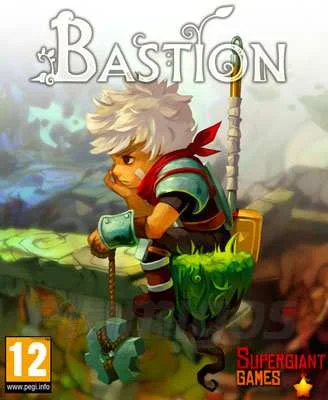
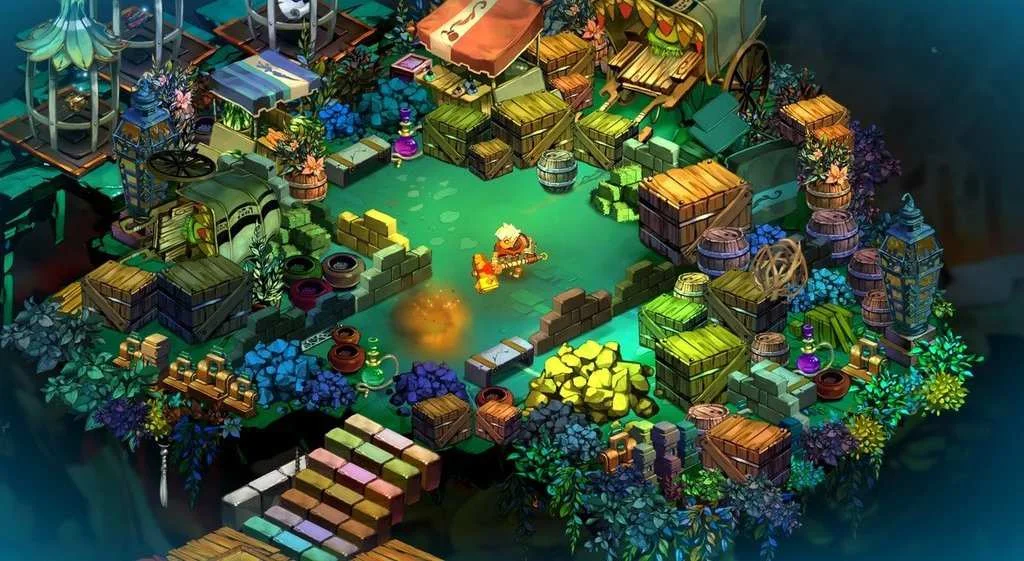
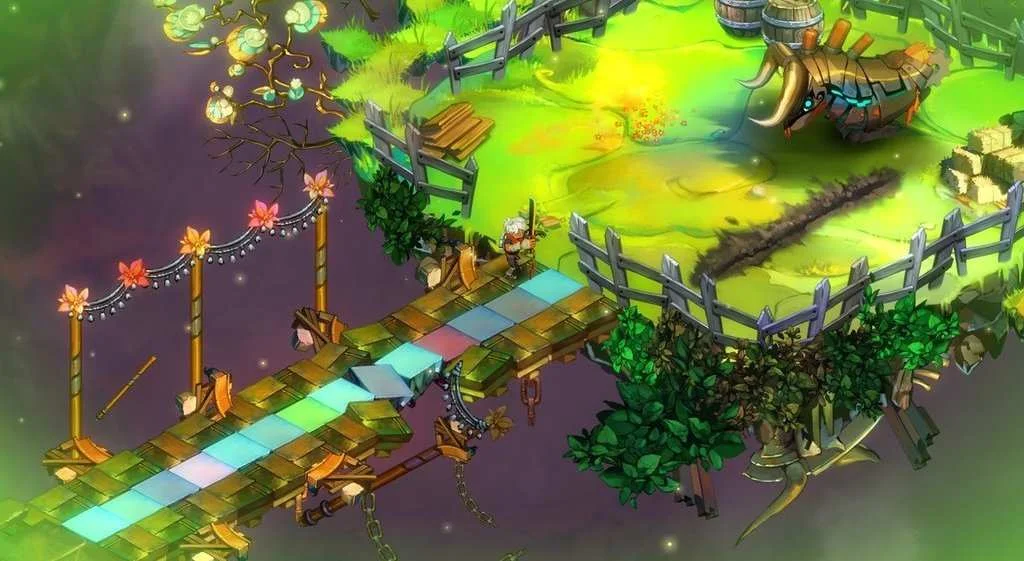
Bastion on PC is a top-down action role-playing game from Supergiant Games, set in the ruins of Caelondia after the Calamity shatters the world. The current Steam listing still uses the original name Bastion; no verified rebrand, renamed edition, or successor storefront title replaces it. Its defining combination is direct combat, hand-painted 2D environments, flexible weapon builds, and a reactive narrator who comments on the player's progress.
The game is built for single-player play rather than co-op or competitive sessions. It is a focused story adventure with optional challenge content and replay modes, not a live-service title or loot-driven RPG.
How Bastion plays on PC
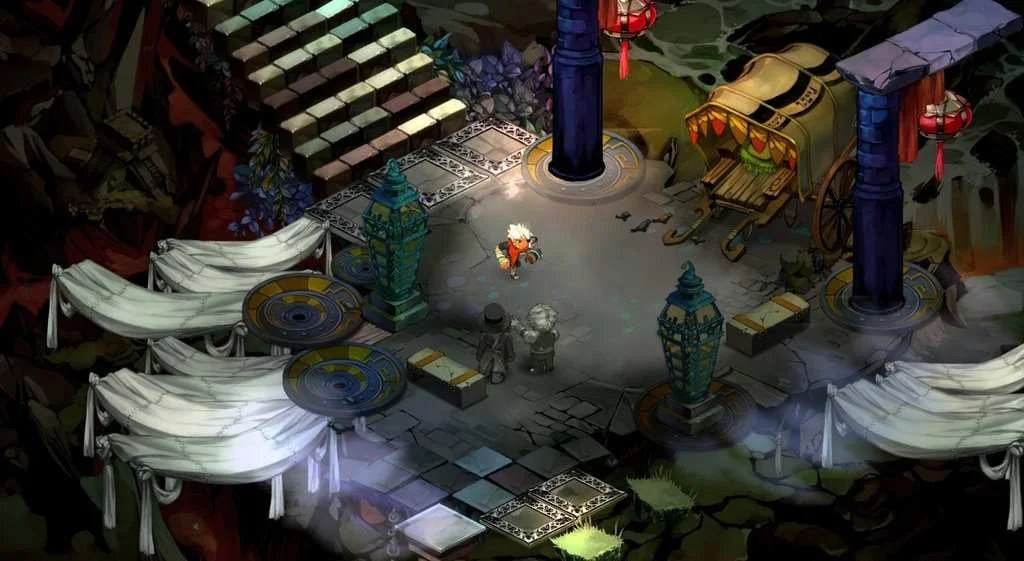
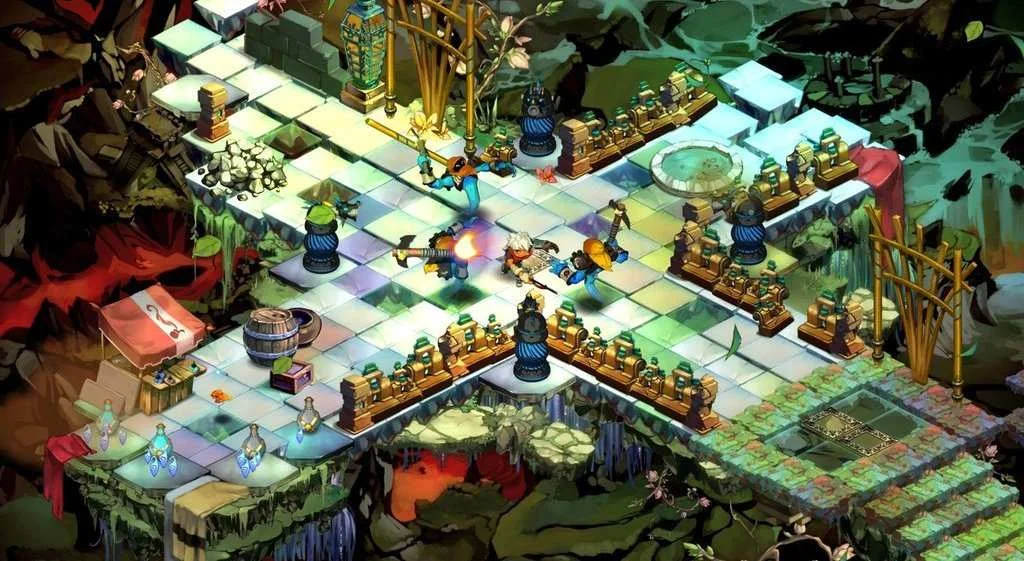
Bastion uses an isometric, top-down perspective that keeps enemies, hazards, and traversable platforms visible while giving the player room to move around encounters. The Kid explores separated areas of the shattered world, fights creatures adapted to the Calamity, gathers materials, and returns to the Bastion hub as the settlement gradually takes shape.
Combat rewards active positioning instead of passive stat comparison. The Kid can move, roll, block, counter, and attack, while the surrounding terrain often affects how safely a fight can be approached. Ranged weapons benefit from the precision of mouse aiming, while a gamepad provides a natural alternative for players who prefer analog movement and direct action controls.
Each expedition is structured around a practical loadout decision. You take two weapons, one secret technique, and the shield, then adapt your approach to the enemies and spaces ahead. A fast melee weapon can handle close pressure, while a bow, rifle, pistol, or other ranged option gives you a way to control distance.
The narrator is not a menu voice or occasional cutscene device. Rucks reacts to discoveries, combat behavior, environmental interactions, and story events in real time. Supergiant Games recorded roughly 3,000 lines for the role, and the narration varies according to how the player moves through the game's areas, meaning a single playthrough does not expose every piece of commentary.
Builds without disposable loot
Bastion's progression is deliberately different from a conventional equipment treadmill. Weapons are not arranged as simple weak-to-strong replacements. The game's arsenal remains useful across the adventure, so the meaningful choice is which weapon fits the situation and how you want to modify it.
At the Forge, each weapon can receive multiple upgrade choices. The player selects between alternatives that change the weapon's behavior, such as improving damage, speed, critical-hit potential, spread, or other weapon-specific properties. These decisions are not permanent mistakes: returning to the Forge lets you switch the active upgrade path and test a different configuration.
Character customization expands through the Bastion's buildings. The Distillery provides passive tonics that adjust the Kid's capabilities, while the Shrine lets players invoke gods whose effects raise the challenge and increase the potential rewards. This makes difficulty partly self-directed rather than limited to a conventional fixed setting.
Optional character challenge stages add a second use for the arsenal. These encounters focus on a particular weapon or survivor and reward mastery of its attacks. They also deliver additional world and character context through narration, giving completion-minded players a reason to revisit the Bastion between story missions.
Story structure and replay modes
The main journey follows the Kid as he searches for the materials needed to restore the Bastion and uncover the truth behind the Calamity. The game reveals its setting through exploration, dialogue, environmental details, and Rucks's running account of what happened to Caelondia and its people.
The Bastion itself is a progression hub rather than a decorative base. Finding Cores and Shards allows new structures to be established, including the Arsenal, Forge, Distillery, Shrine, Memorial, and other facilities that support equipment, passive bonuses, challenge content, and story progression.
After completing the central story, New Game Plus allows the player to continue with accumulated weapons and experience. Score Attack shifts attention toward efficient combat and high-score play, while No-Sweat Mode offers a lower-pressure way to experience the story for players who do not want the combat difficulty to become a barrier.
That structure gives Bastion two distinct completion paths. One is a compact narrative adventure built around discovering the world and its characters. The other is a mastery loop based on weapon experimentation, Shrine modifiers, challenge stages, New Game Plus, and score-focused runs.
What the PC edition includes
The current PC storefront presents Bastion as a paid base game from Supergiant Games, with the original soundtrack sold separately as an optional add-on. There is no season-pass structure, recurring content model, or large collection of licensed expansion packs attached to the PC edition.
The core purchase centers on the complete single-player adventure, its weapon and Bastion upgrade systems, challenge stages, and post-story modes. The soundtrack is separate commercial content rather than a gameplay expansion, so players should not expect additional campaign chapters or multiplayer content from the add-on.
The game also includes Steam Achievements, Steam Cloud, Steam Trading Cards, leaderboards, Family Sharing, and Steam Remote Play support for phone, tablet, and TV. These features complement the solo design but do not change the underlying multiplayer reality: Bastion has no campaign co-op or split-screen mode.
Who should play Bastion?
Bastion suits PC players who want a story-led action game with concise levels, clear combat feedback, and meaningful but manageable customization. It is especially well matched to players who enjoy isometric combat, hand-painted art, strong music, and narration that remains present during ordinary gameplay rather than appearing only in exposition scenes.
It is also a good choice for players who dislike endless gear replacement. The weapon system asks you to understand a small set of distinct tools and combine them intelligently instead of constantly sorting through statistically higher drops.
Players looking for procedural runs, a persistent online community, co-op progression, or a massive open world should look elsewhere. Bastion's environments are authored, its campaign is finite, and its replay value comes from alternate builds, optional challenges, difficulty modifiers, and post-story modes.
PC controls, languages, and platform features
The PC version has controls custom-tailored for keyboard and mouse as well as gamepad support. Mouse aiming is particularly useful with ranged weapons, while a controller can make rolling, blocking, and directional movement feel more immediate for players accustomed to action-console controls.
Steam currently lists English interface, full audio, and subtitles, with French, German, Italian, Spanish, and Simplified Chinese available for interface and subtitle localization. English is the only listed full-audio language, matching the performance-led design of Rucks's narration.
The storefront identifies Bastion as a single-player action, indie, and RPG title. It lists no anti-cheat, dedicated-server, or mod-support feature, and the PC catalog presence is centered on Steam rather than a separate required publisher launcher advertised alongside the game.
Players interested in the lineage of Supergiant's action design can compare Bastion's direct combat and story integration with stylish isometric action RPGs such as Transistor, although Transistor replaces Bastion's weapon-focused adventure structure with its own planning-based combat systems.
Similar PC games with genuine overlap
Isometric pixel-art action games like Hyper Light Drifter share Bastion's emphasis on deliberate movement, readable arenas, melee-and-ranged combat, and a world that expects the player to learn through play. The two games differ in tone and narrative delivery, but both place precision and exploration ahead of equipment grinding.
Transistor is the closer comparison for players who value Supergiant's combination of authored worldbuilding, distinctive art direction, music, and combat experimentation. Bastion remains more immediately action-focused, while Transistor adds a stronger tactical planning layer to its encounters.
These comparisons should not be read as evidence that Bastion is a roguelike. Its main progression follows an authored campaign with optional replay modes; it does not use the repeated procedural escape-run structure associated with later Supergiant games.
Bastion FAQ
Is Bastion still called Bastion on PC?
Yes. The current Steam storefront and Supergiant Games' official support information use Bastion. No verified PC storefront rebrand or replacement title was found.
Is Bastion a roguelike?
No. Bastion is an authored top-down action RPG. It has optional challenge content, New Game Plus, Score Attack, and Shrine-based difficulty customization, but its main adventure is not built from procedurally generated runs.
Does Bastion have co-op or multiplayer?
No. Bastion is a single-player-only game. It does not offer campaign co-op, local split-screen, competitive multiplayer, or dedicated multiplayer servers.
What can be upgraded in Bastion?
You can upgrade the Kid's weapons at the Forge, equip passive tonics through the Distillery, and adjust challenge and reward conditions through the Shrine. Weapons remain viable throughout the game, so upgrades change playstyle rather than simply replacing obsolete equipment.
Does the PC version support controllers?
Yes. The PC edition supports both keyboard and mouse controls and gamepads. Mouse aiming gives ranged weapons precise manual targeting, while controller support covers the full action set.
What languages does Bastion support?
Steam lists English full audio and interface support, plus French, German, Italian, Spanish, and Simplified Chinese interface and subtitle localization. The official voice performance is in English.
What happens after finishing the Bastion story?
Completing the story unlocks New Game Plus and Score Attack. Players can also pursue weapon challenge stages, experiment with Shrine modifiers, collect missed upgrades, and hear narration variations that were not triggered during the first playthrough.
System Requirements
Minimum: |
Processor: Core 2 Duo 1.7 GHz Graphics: 512 MB VRAM Memory: 2 GB RAM Disk space: 1 GB HDD Operating system: Windows XP/Vista/7 |
Screenshots
Trailer/Gameplay
Download
Bastion (2011), 1.12GB
ElAmigos release, unprotected game (crack is not necessary).

Updated to version 1.50436 (18.06.2018).

Included bonus content: Soundtrack (mp3).

1. Extract files.
2. Burn or mount the image.
3. Install the game.
4. Play the game. If you like this game, BUY IT!
Bastion Download
🔒 Premium access required
To see and use the download links, you must be logged in and have an active PREMIUM account.
* Unlock downloads via Torrent and TeraBox.
Torrent Download
The best torrent download speeds are with qBittorrent!