Sweet Transit
Edit date: 12-09-2024, 12:24
Reason: Updated to version 1.1.17 (10.09.2024)
- Category:
- Release date:
- Game Genre:Strategy, Economic, trains, indie games, city builder
- Developer:Ernestas Norvaišas
- Release:ElAmigos
- Platform:PC
- Languages (subtitles):English, French, Italian, German, Spanish, Russian, Japanese, Korean, Traditional Chinese, Simplified Chinese
- Crack:Codex/Rune, FLT
- Game size:2.52GB
Game Description
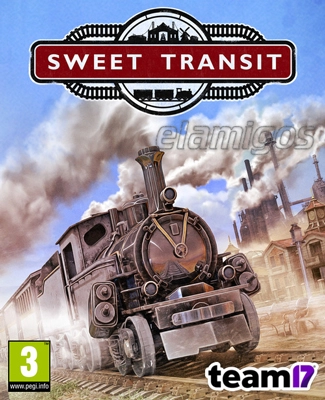
Sweet Transit is a PC city builder and railway logistics simulation from developer Ernestas Norvaišas and publisher Team17. The current storefront name remains Sweet Transit, with no verified rebrand, renamed successor, or replacement PC edition identified. Its central idea is straightforward but demanding: every settlement, worker, resource, and industrial expansion depends on a carefully planned train network.
This is not a conventional transport tycoon focused mainly on fares, competing companies, or historical route maps. Sweet Transit combines isometric city building, production-chain management, and railway signalling into one real-time system where a poorly planned junction can affect an entire economy.
Railway-first city building
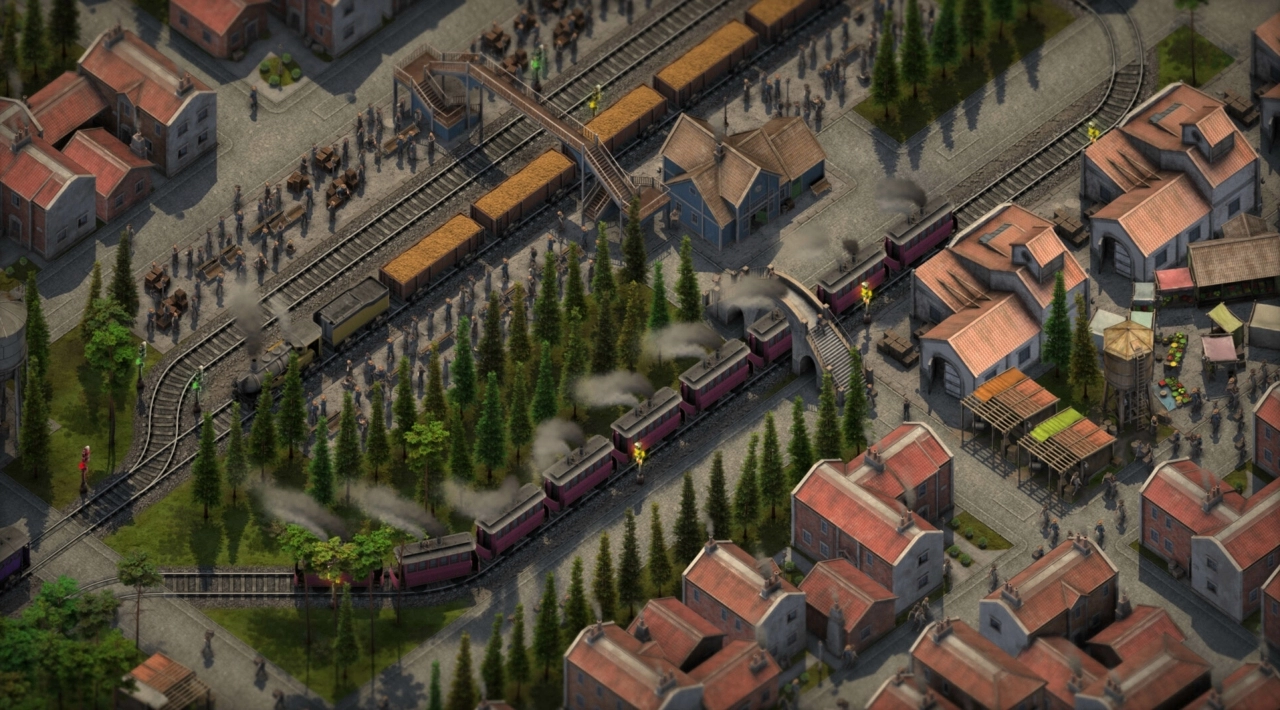
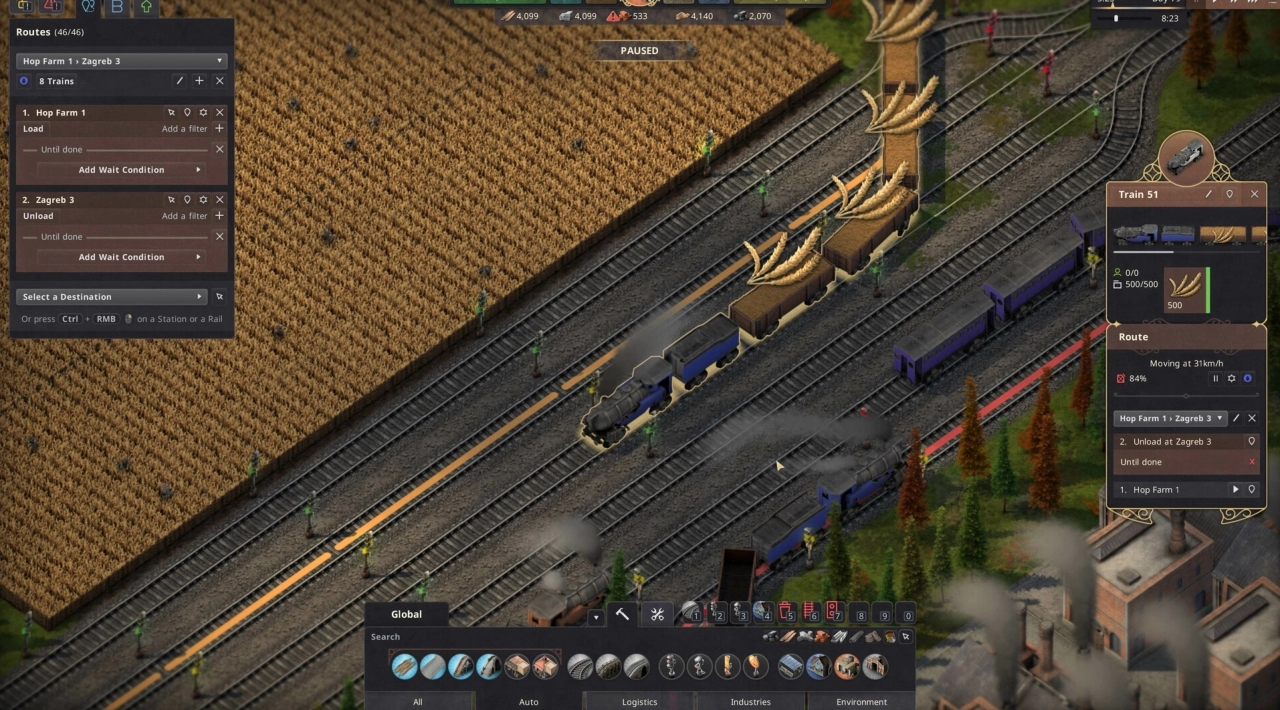
The core loop begins with a warehouse, a small settlement, and access to basic resources. You place extraction buildings, storage, stations, platforms, and tracks, then assign trains to move workers and materials between connected locations. As the network becomes reliable, the settlement can support more residents, more industries, and more advanced goods.
Trains are not simply a convenient transport option. They are the backbone of expansion. Workers travel by rail, raw materials move between production sites, and finished goods must reach settlements to satisfy citizen needs. This creates a constant relationship between urban planning and railway design: a town placed near one resource may be badly positioned for another, while a compact industrial district can become difficult to serve once traffic increases.
The perspective is an overhead, isometric view designed for reading the whole network rather than driving individual locomotives. You can zoom out to understand the shape of your railway and zoom in when placing buildings, platforms, signals, and connections.
Production chains, workers, and settlement needs
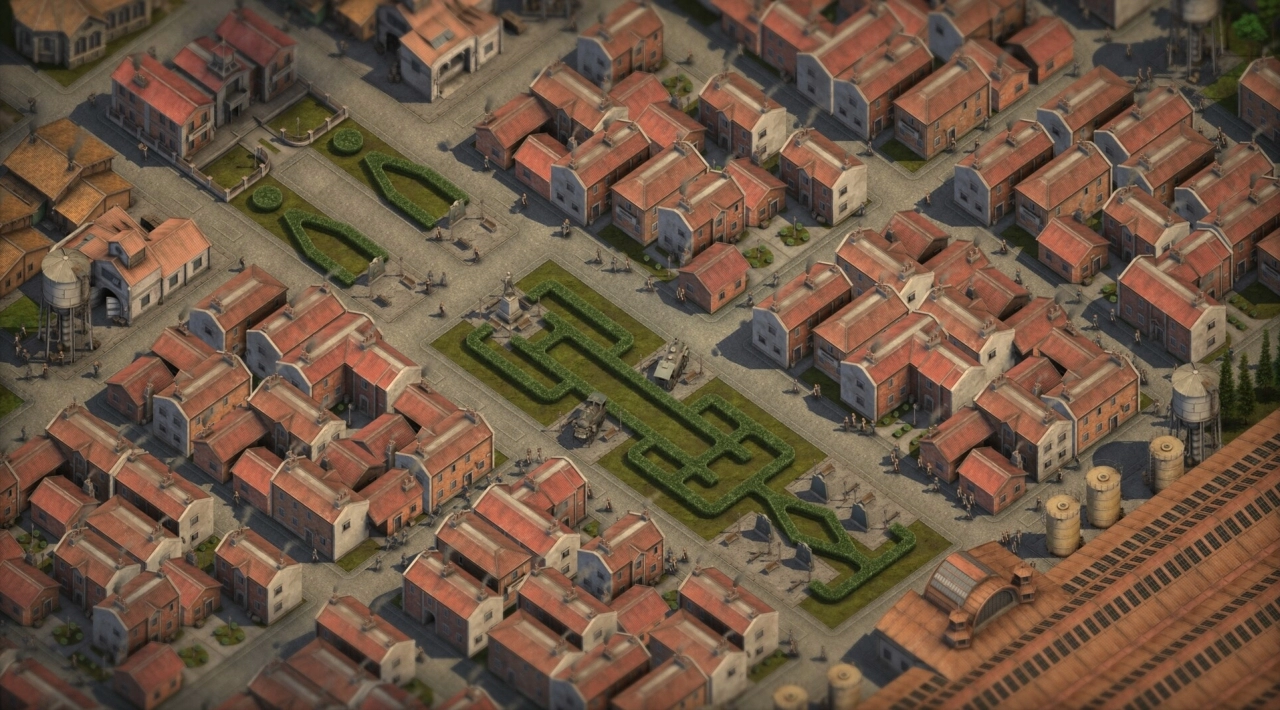
Sweet Transit treats population growth as an operational problem. Citizens need accommodation, water, food, and services, while workers become tired and less productive if their needs are neglected. A settlement that grows faster than its supply network can support may look successful on the map while quietly undermining every connected production line.
Resource progression starts with relatively simple industries and expands into more involved chains. Mines, quarries, sawmills, farms, storage buildings, factories, and distribution points must be arranged so that materials arrive in the right quantities and sequence. The challenge is not only producing an item, but also ensuring that trains, stations, workers, and storage capacity can keep up with demand.
The game rewards players who diagnose bottlenecks instead of simply adding more buildings. Storage placement, station access, route length, train capacity, and signal blocks all influence how efficiently a chain operates. A shortage may come from insufficient production, a missing connection, poor station placement, or a rail segment that prevents trains from reaching their destination.
Players who enjoy the factory-planning side of logistics may recognize some of the same optimization appeal found in automation-heavy industrial sandboxes like Factorio, although Sweet Transit shifts the emphasis away from conveyor-belt factories and toward settlements, passengers, and railway traffic.
Signals and network design
Building a track from one station to another is only the beginning. As multiple trains share the same railway, you need signals, junctions, platforms, and route priorities to keep traffic moving. A network that works with two trains may become unreliable when a new mine, passenger service, or industrial branch is added.
Signals divide the railway into controlled blocks and make it possible for trains to share infrastructure without constantly blocking one another. The important skill is learning to design routes that are understandable at a glance. Overlapping paths, badly placed junctions, and insufficient platform access can create delays that spread through the network.
Sweet Transit therefore has a strong engineering character. Expansion is not just a matter of placing more buildings; it often means rebuilding the railway so that future growth has room to breathe. Bridges and carefully separated lines can reduce conflicts, while a well-planned station can serve several industries without forcing every train through the same narrow approach.
Worlds, scenarios, and progression
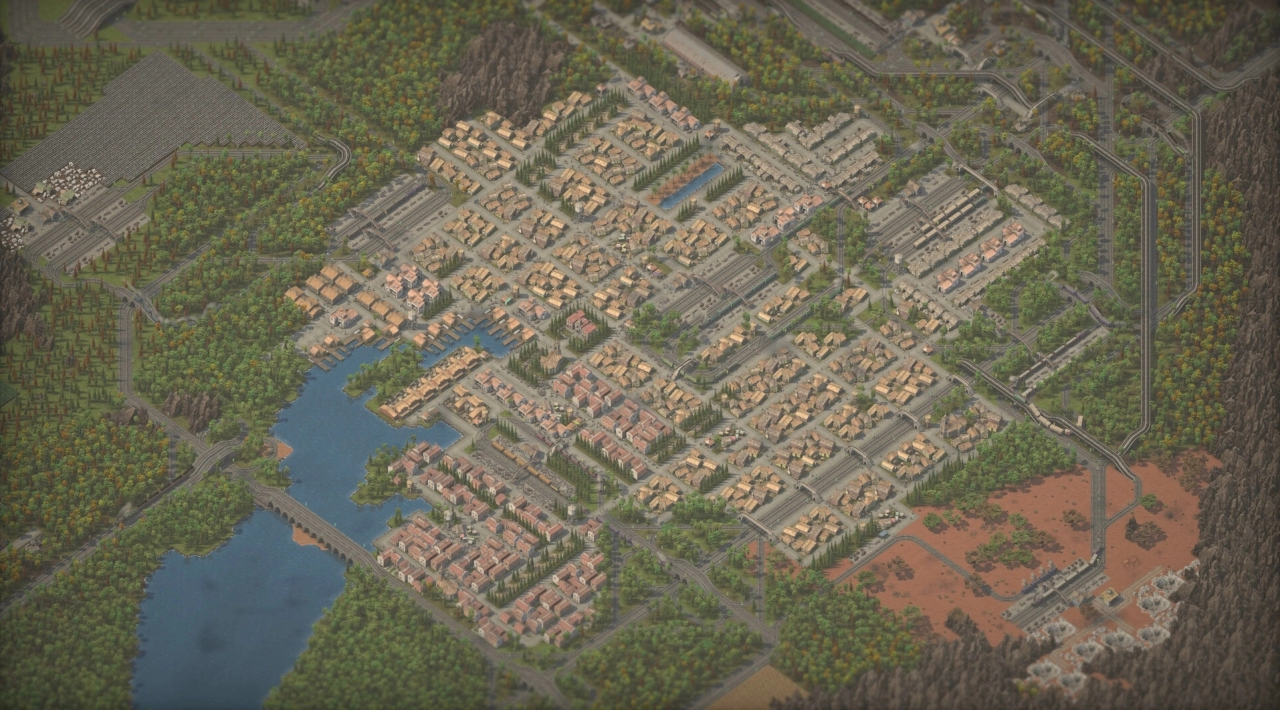
The game supports more than one way to play. New World provides a procedural sandbox structure in which you establish settlements and industries on generated terrain. Map settings can change the scale and the distribution of obstacles such as water, mountains, and resource deposits, making the opening layout part of the strategic problem.
Sweet Transit also includes named scenario and sandbox-style maps, including locations associated with Paris, Ottawa, and Rome. These provide more structured starting conditions than a blank generated world and can be useful when you want to study an existing network or begin with a defined railway challenge.
Progression is tied to settlement development, population requirements, production milestones, and technology unlocks. The technological arc moves from steam locomotives toward diesel power, while the wider economy introduces more buildings and more demanding chains. The progression loop is about mastering a growing system rather than completing a traditional narrative campaign.
Scenario content adds more focused objectives, while sandbox play is better suited to players who want to keep expanding, redesigning, and optimizing one railway world. That distinction matters: Sweet Transit is strongest when you enjoy long-term infrastructure planning rather than short, self-contained transport puzzles.
Content model and PC features
The base game is a paid, single-player PC title rather than a free-to-play service. The current Steam catalog lists optional content including the Locomotive Pack and an official soundtrack, with a Deluxe Edition bundle combining the base game and locomotive add-on. The core city-building and railway systems are part of the main game.
Steam Workshop support is a major part of the PC ecosystem. The game advertises full mod support and integrated Workshop access, allowing community-created content to extend the experience beyond the official scenarios and sandbox maps. Steam Cloud, Steam Achievements, and Family Sharing are also listed for the PC version.
The documented PC distribution is through Steam. The storefront identifies the game as single-player and does not list online co-op, split-screen multiplayer, or competitive multiplayer. It also does not identify a separate launcher or anti-cheat system. The interface is clearly designed around mouse-and-keyboard network planning; general Steam Input remapping may be available, but the storefront does not present dedicated full controller support as a headline feature.
Interface and subtitle localization is listed for English, French, Italian, German, Spanish, Simplified Chinese, Japanese, Korean, Traditional Chinese, and Russian. No full-audio language track is listed in the storefront language table.
Who should play Sweet Transit?
Sweet Transit suits PC players who enjoy railway engineering, economic city builders, logistics simulations, and production systems that become more complex over time. It is particularly appealing if you like watching a network operate, finding the weak point, and rebuilding the layout until resources and workers flow smoothly.
The game is less suitable for players looking for relaxed decorative city building, direct train driving, or a simple transport tycoon with easily readable objectives. Its most interesting decisions happen in the connections between systems, and those connections can require careful inspection when a network stops behaving as expected.
Players who prefer compact, clearly bounded railway challenges may find a more puzzle-focused alternative in level-based industrial rail logistics such as Railgrade. Sweet Transit offers a broader settlement simulation, but it also asks you to manage more dependencies at once.
Sweet Transit FAQ
Is Sweet Transit still called Sweet Transit?
Yes. The current PC storefront listing uses Sweet Transit. No verified rebrand, renamed edition, or successor title replacing that name was identified.
Is Sweet Transit multiplayer or co-op?
No official multiplayer, online co-op, or split-screen mode is listed for the current PC version. Sweet Transit is presented as a single-player city-building and railway management game.
What is the main gameplay loop?
You establish settlements, extract resources, build production chains, connect locations with tracks, assign trains to routes, manage signals, and satisfy the needs of a growing population. Progress comes from making the whole railway economy more reliable and efficient.
Does Sweet Transit support mods?
Yes. The game includes Steam Workshop integration and advertises full mod support, giving players access to community-created additions and custom content.
Does the game include a campaign?
Sweet Transit combines scenario content with sandbox play rather than relying on a conventional story campaign. New World maps provide procedural expansion, while named maps and scenarios offer more structured starting conditions and objectives.
What does the Deluxe Edition include?
The current Steam catalog lists a Deluxe Edition bundle containing the base game and Sweet Transit - Locomotive Pack. The soundtrack is listed separately through another bundle and catalog item.
System Requirements
Minimum: | Recommended: |
| Processor: Intel Core i3-540, 3.07 GHz or AMD FX-4350, 4.2 GHz Graphics: NVIDIA GeForce 8800 GT, 512 MB or AMD Radeon HD 6670, 1 GB Memory: 6 GB RAM Disk space: 3 GB available space Operating system: Windows 10 64 Bit | Processor: Intel Core i5-3470, 3.2 GHz or AMD Ryzen 3 1200, 3.1 GHz Graphics: NVIDIA GeForce GTX 660, 2 GB or AMD Radeon HD 7850, 2 GB Memory: 8 GB RAM Disk space: 3 GB available space Operating system: Windows 10 64 Bit |
Screenshots
Trailer/Gameplay
Download
Sweet Transit (2024), 2.52GB
ElAmigos release, game is already cracked after installation (crack by Codex/Rune or FLT).

Updated to version 1.1.17 (10.09.2024)

1. Extract files.
2. Burn or mount the image.
3. Install the game.
4. ElAmigos release, game is already cracked after installation.
5. Play the game. If you like this game, BUY IT!
Sweet Transit Download
🔒 Premium access required
To see and use the download links, you must be logged in and have an active PREMIUM account.
* Unlock downloads via Torrent and TeraBox.
DLC: Locomotive Pack.
Torrent Download
The best torrent download speeds are with qBittorrent!