Nobody Wants to Die

- Category:
- Release date:
- Game Genre:Adventure, FPP, noir, science fiction, thriller, Detective, dystopia, Polish, time manipulation
- Developer:Critical Hit Games
- Release:ElAmigos
- Platform:PC
- Languages (subtitles):English, French, Italian, German, Spanish, Polish, Russian, Portuguese-Brazil, Japanese, Korean, Simplified Chinese, Traditional Chinese
- Dubbing/Audio:English
- Crack:Codex/Rune, FLT
- Game size:23.34GB
Game Description
Nobody Wants to Die on PC is a first-person sci-fi noir detective adventure set in a dystopian New York where consciousness can be stored, transferred, and monetized. The current Steam and Epic storefront listings use the same name, with no verified rebrand, renamed edition, or separate definitive version to identify. Developed by Critical Hit Games and published by PLAION, it is a single-player investigation built around time reconstruction, forensic tools, dialogue choices, and questions about immortality.
The game is closer to an interactive detective story than an action title. There is no combat-focused progression loop, character class system, or open-world police sandbox. Instead, its structure moves between crime-scene exploration, evidence analysis, conversations, deductions, and story decisions that can alter later events and the ending.
Investigating New York in 2329
You play as Detective James Karra of the Mortality Department. After a near-death experience, Karra accepts an unofficial case from his superior and works with the young police liaison Sara Kai. Their investigation follows a serial killer targeting the wealthy elite of New York, a city where death has become something the richest citizens can delay or avoid.
The setting is built around a single speculative change: consciousness transfer is possible. People can preserve their minds in memory banks or move them into new bodies, but access depends on money and subscription-style protection. That premise gives the murder investigation a wider social context, linking personal crimes to class inequality, identity, corporate power, and the value assigned to a human life.
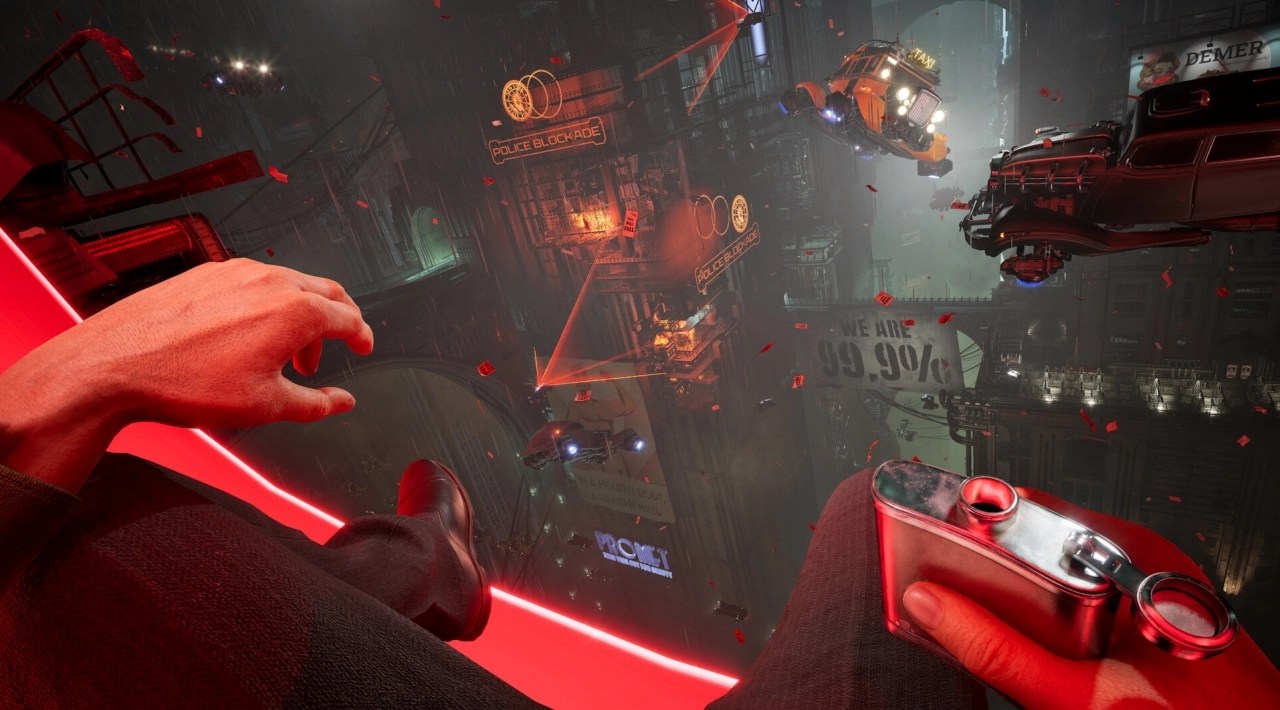
Presentation is deliberately cinematic, but the PC version remains interactive throughout. You walk through crime scenes in first person, inspect objects, speak with characters, make dialogue selections, and decide how much attention to give optional environmental details. The game rewards players who enjoy atmosphere and narrative discovery more than those looking for demanding mechanical challenges.
Time Reconstruction and Forensic Tools
The defining mechanic is Karra's Reconstructor, a time-manipulation device that lets you examine recorded events surrounding a crime. Rather than simply watching a fixed flashback, you can move through fragments of a reconstructed timeline, identify anomalies, and study moments that reveal how a victim died or how evidence was moved.
Crime scenes are supported by a compact set of investigative tools. The UV lamp exposes traces on surfaces, while the handheld X-ray device reveals hidden evidence, internal details, electrical paths, and bullet trajectories. You also use a camera and close inspection prompts to document objects and connect physical clues with the larger case.
The central loop is methodical: arrive at a location, search for relevant evidence, rewind or advance the reconstruction, scan hidden details, and return to the investigation board with new information. Some discoveries are optional, but the main path is clearly signposted. Players who want authentic deduction with minimal assistance may find the structure heavily guided; players who prefer story momentum will appreciate not being blocked by obscure pixel hunting.
At key moments, Karra organizes the case through evidence boards and deduction sequences. These scenes turn collected clues into a broader interpretation of what happened. The game is less interested in letting you accuse the wrong suspect than in presenting a controlled narrative in which your attention, dialogue choices, and moral decisions influence the way the investigation unfolds.
Choices, Consequences, and Narrative Structure
Dialogue is not filler between crime scenes. Conversations with Sara, Karra's chief, witnesses, and other characters create opportunities to challenge statements, pursue different lines of questioning, or respond according to Karra's increasingly strained judgment.
Important decisions are marked in the interface, making it clear when a choice can affect the story. The game includes multiple endings and decision-based variations, although it remains a linear narrative adventure rather than a fully branching role-playing game. The main investigation, locations, and sequence of major events are authored, while specific exchanges and outcomes can change.
There are no preset difficulty levels. The challenge comes from noticing clues, following reconstructed events, and deciding what kind of detective Karra should be. Settings include adjustable sensitivity, crosshair size and color, subtitles, dialogue-skip behavior, and an option to limit excessive flashing.
The mature story deals with violence, blood, gore, nudity, sexual material, depression, trauma, and the psychological consequences of treating human consciousness as a transferable commodity. Its noir tone is not limited to costumes and rain-soaked streets; the investigation is designed around moral discomfort and the instability of identity.
What Is Included on PC
The standard PC purchase contains the complete single-player game. Current storefront listings identify one separate paid add-on: the Nobody Wants to Die Soundtrack. There are no verified gameplay expansion packs, season passes, multiplayer upgrades, or character-content bundles attached to the base game.
Steam lists 26 achievements, Steam Cloud support, Family Sharing, and full controller support. Epic Games Store lists cloud saves, controller support, single-player functionality, and the same achievement count. The game was built with Unreal Engine 5, which supports its highly detailed environments and cinematic presentation.
English is the full-audio language on the PC storefront listings. Interface and subtitle support is also listed for French, Italian, German, Spanish from Spain, Japanese, Korean, Polish, Brazilian Portuguese, Russian, Simplified Chinese, and Traditional Chinese.
There is no co-op, split-screen mode, competitive multiplayer, or shared campaign. This is a focused solo experience from beginning to end, and its pacing depends on uninterrupted conversations, investigation sequences, and story decisions.
Who Should Play Nobody Wants to Die?
Nobody Wants to Die is a strong match for PC players who enjoy first-person investigations, speculative fiction, dystopian world-building, and narrative games where the main reward is understanding the setting. It suits players who liked examining evidence in detective adventures but want a more futuristic premise and a heavier emphasis on cinematic presentation.
Players seeking demanding deduction systems should set expectations carefully. The game provides clear objectives and often indicates which tool or object matters next. The investigation is about following a designed chain of evidence rather than freely building and testing competing theories.
It is also a poor fit for anyone expecting gunplay, stealth sandboxes, open-world exploration, skill trees, or a long-form RPG. The experience is compact and story-led, with repeated use of a small investigative toolkit. Its appeal depends on whether the atmosphere, characters, and transhumanist mystery are enough to carry a deliberately guided adventure.
For a different kind of cyberpunk detective game built around dialogue, evidence, and virtual crime scenes, compare it with isometric cyberpunk investigations like Gamedec. That game is more role-playing focused, while Nobody Wants to Die uses a first-person viewpoint and a tighter cinematic structure.
Comparable PC Detective Experiences
Players drawn to the game's oppressive future and neural technology may also enjoy first-person cyberpunk detective horror such as Observer: System Redux. Both games place investigation inside a damaged society where technology affects memory, identity, and the body, but Observer adds stronger psychological horror and stealth-oriented sequences.
For a more traditional noir investigation with interrogation, clue collection, and crime-solving pressure, point-and-click detective adventures such as Blacksad: Under the Skin offer a useful contrast. Blacksad is more openly structured around classic detective fiction, while Nobody Wants to Die replaces period crime drama with futuristic mortality politics and time reconstruction.
These comparisons also clarify what makes Nobody Wants to Die distinct. It is not a sandbox detective simulator, not a combat-heavy cyberpunk RPG, and not a pure walking simulator. Its identity sits between interactive fiction, first-person adventure, forensic exploration, and branching noir drama.
Nobody Wants to Die FAQ
Is Nobody Wants to Die available under another name on PC?
No verified PC storefront rebrand was found. Steam and Epic Games Store currently list the game as Nobody Wants to Die. There is no separate legacy name or definitive-edition label that PC players need to distinguish from the standard release.
What type of game is Nobody Wants to Die?
It is a first-person narrative adventure with detective, noir, science-fiction, thriller, and investigation elements. The main activities are exploring crime scenes, reconstructing events with the Reconstructor, scanning evidence, examining objects, speaking with characters, and making choices that affect the story.
Does Nobody Wants to Die have combat?
Combat is not the focus of the game. The PC experience is built around investigation, dialogue, environmental interaction, and time manipulation rather than weapons, enemy encounters, or an action-combat progression system.
Does the PC version support a controller?
Yes. Official support information lists full controller support, and the game also supports mouse and keyboard input. Controls cover movement, scanning, gadget use, interaction, dialogue, and investigation menus.
Is Nobody Wants to Die multiplayer or co-op?
No. It is a single-player-only game with no online co-op, split-screen, competitive mode, or shared story campaign.
How does progression work?
Progression follows a linear investigation divided into story scenes and crime-scene sequences. You advance by finding evidence, using the correct investigative tools, completing deduction boards, and making dialogue or moral choices. There are no character levels, equipment builds, or difficulty settings.
What languages are available on PC?
English has full voice audio, interface, and subtitles. The PC storefront listings also provide interface and subtitle localization in French, Italian, German, Spanish from Spain, Japanese, Korean, Polish, Brazilian Portuguese, Russian, Simplified Chinese, and Traditional Chinese.
System Requirements
Minimum: | Recommended: |
| Processor: Intel Core I3-8100 or AMD Ryzen 5 2600X Graphics: NVIDIA GeForce GTX 1660 Super or AMD Radeon RX VEGA 56 or Intel Arc A750 Memory: 8 GB RAM Disk space: 30 GB available space Operating system: Windows 10 64bit | Processor: Intel Core i5-10400 or AMD Ryzen 5 3600 Graphics: NVIDIA GeForce RTX 3070 Ti or AMD Radeon RX 6750 XT or Intel Arc A770 Memory: 16 GB RAM Disk space: 30 GB available space Operating system: Windows 10 64bit |
Screenshots

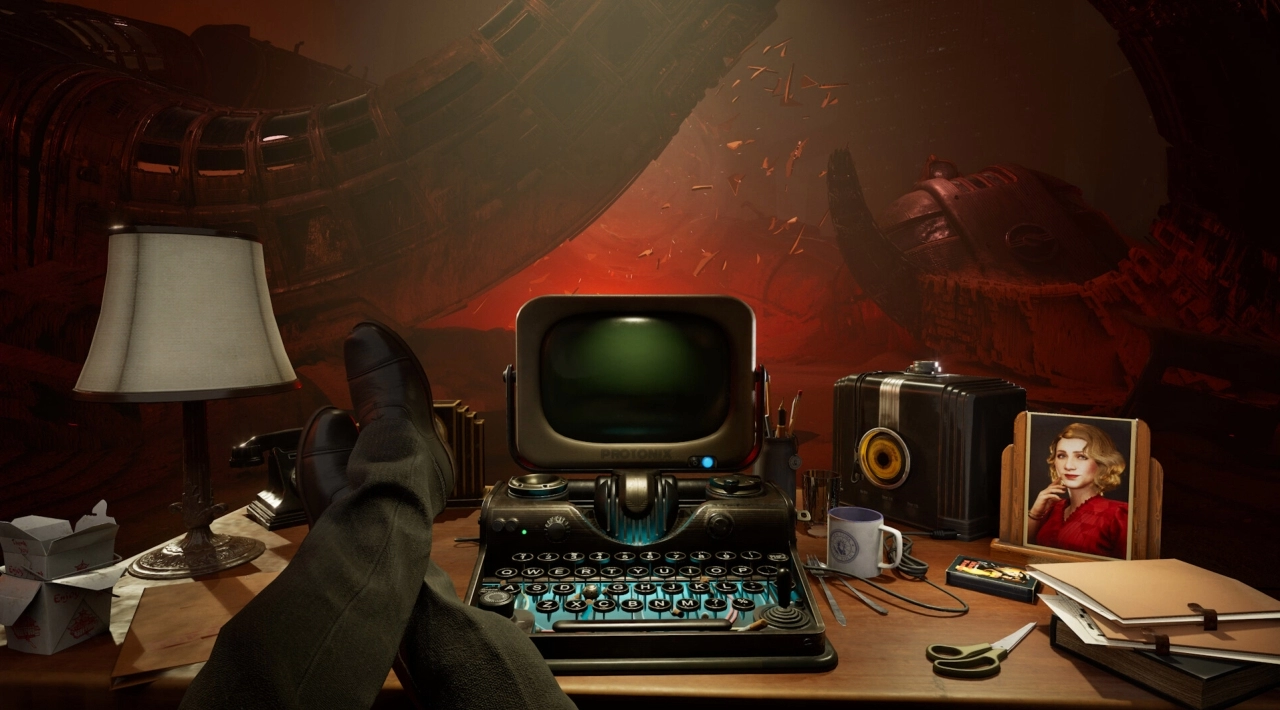
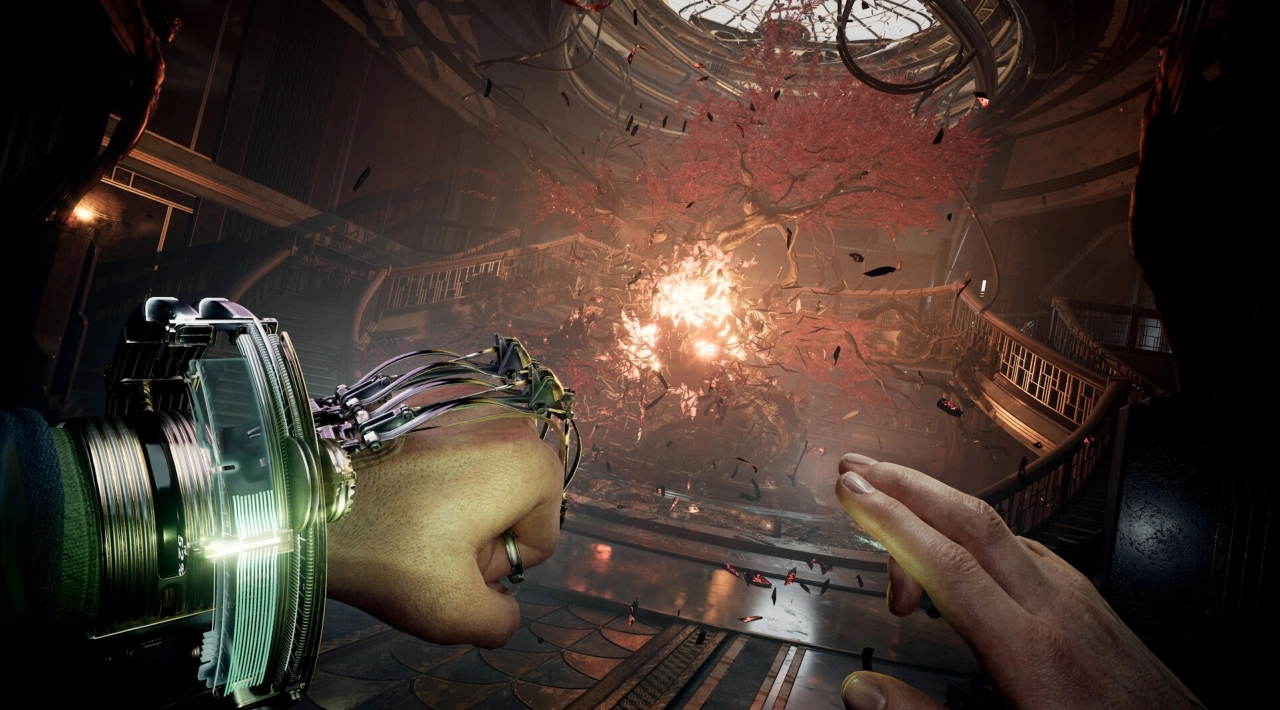
Trailer/Gameplay
Download
Nobody Wants to Die (2024), 23.34GB
ElAmigos release, game is already cracked after installation (crack by Codex/Rune or FLT).

1. Extract files.
2. Burn or mount the image.
3. Install the game.
4. ElAmigos release, game is already cracked after installation.
5. Play the game. If you like this game, BUY IT!
Nobody Wants to Die Download
🔒 Premium access required
To see and use the download links, you must be logged in and have an active PREMIUM account.
* Unlock downloads via Torrent and TeraBox.
Torrent Download
The best torrent download speeds are with qBittorrent!