Kenshi
Edit date: 8-03-2024, 10:33
Reason: Updated to version 1.0.60 (22.03.2023)

- Category:
- Release date:
- Game Genre:RPG, TPP, sandbox, survival, elements of strategy, crafting
- Developer:
- Release:ElAmigos
- Platform:PC
- Languages (subtitles):English, French, German, Spanish, Portuguese-Brazil, Russian, Japanese, Korean, Chinese Simplified
- Dubbing/Audio:English
- Crack:Codex
- Game size:4.45GB
Game Description
Kenshi is a PC open-world sandbox RPG built around squad management, survival, exploration, and player-made stories rather than a scripted hero journey. The current Steam storefront still lists the game simply as Kenshi, with no verified rebrand or replacement edition. Developed and published by Lo-Fi Games, it combines real-time squad tactics, base building, crafting, faction politics, stealth, trading, and harsh character injuries in a single-player world that does not scale itself to your power.
A squad RPG where survival comes first
Kenshi begins with ordinary people, weak equipment, and very little protection from the world. You can travel alone, recruit companions, or build a larger group with specialists for combat, farming, research, trade, and production. The game does not place one character above every other person in the world. Strength comes from training skills through use, improving equipment, learning the terrain, and surviving enough encounters to become capable.
The camera uses a zoomable, elevated third-person perspective suited to controlling several characters at once. Combat runs in real time and can be paused while you issue orders, change formations, manage targets, or redirect a squad. Individual characters can be assigned jobs and automated routines, making the experience gradually shift from desperate wandering to real-time party management and settlement administration.
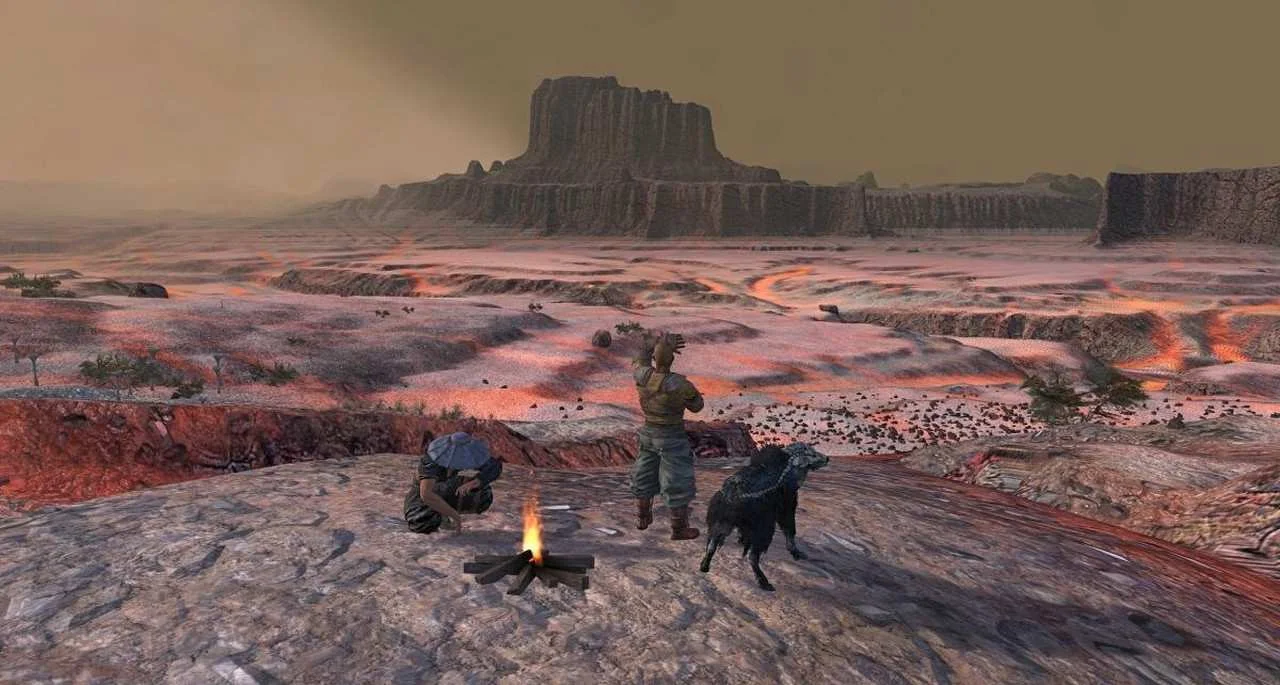
There is no conventional campaign path that tells you where to go next. You may escort caravans, hunt bounties, search ruins, steal supplies, recruit unusual companions, work for a faction, oppose one, or simply try to establish a reliable source of food and income. The absence of a fixed objective is central to Kenshi, not a missing feature.
Injuries, hunger, and a world that does not wait
Kenshi’s most distinctive system is its localized injury model. Damage to a leg can slow a character or force them to crawl. Injuries to the arms can affect weapon use, while blood loss and unconsciousness can turn a minor skirmish into a rescue operation. Serious damage may lead to amputation and the need for prosthetic limbs, changing how a character performs and how the squad protects them.
Defeat is often a setback rather than an immediate game over. A wounded character may recover, be captured, enslaved, robbed, or left behind depending on who wins the encounter and what happens afterward. Hunger, encumbrance, equipment, medical condition, and training all influence performance. Kenshi rewards players who prepare escape routes, carry food, watch patrol patterns, and accept that retreat is often the correct tactical decision.
The world also avoids traditional level scaling. Strong enemies remain strong, dangerous regions stay dangerous, and valuable equipment is not automatically reserved for a character of a particular level. That creates a clear progression loop: build basic skills, improve mobility and survivability, recruit more capable allies, research better technology, and return to places that once forced you to flee.
From scavenger camp to fortified settlement
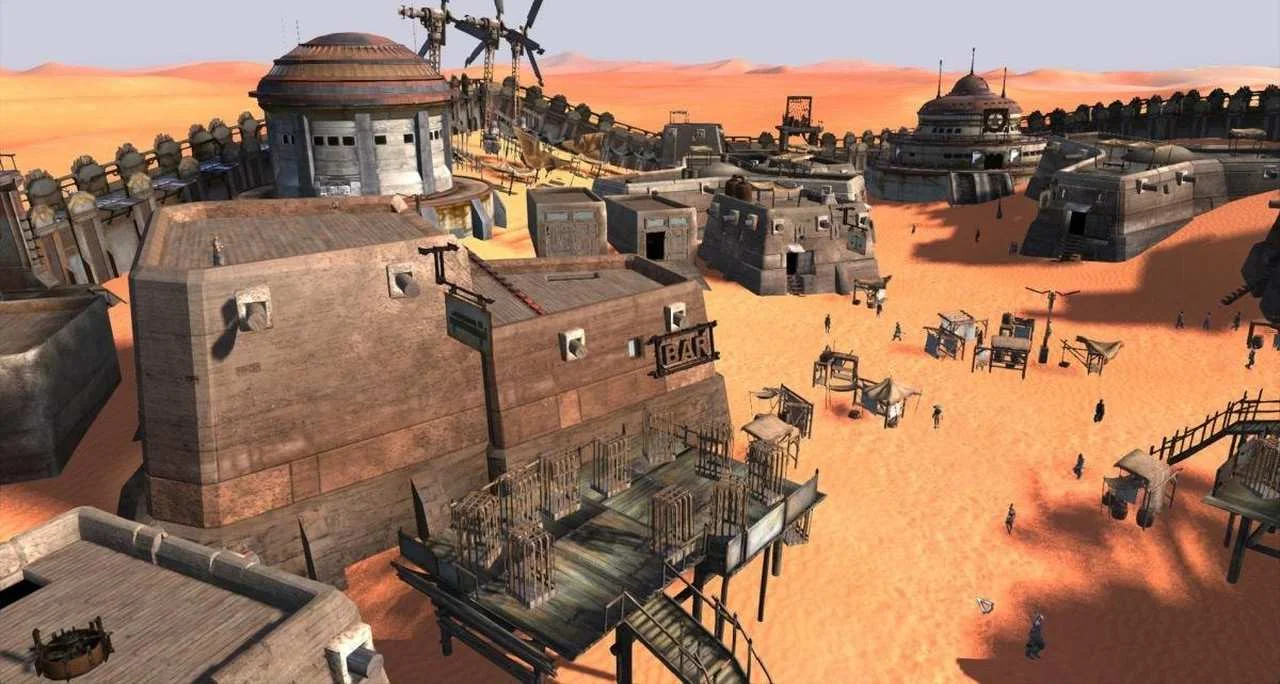
Exploration can eventually lead to base construction. You can purchase and improve buildings in existing settlements or establish a more ambitious outpost where your faction controls production, storage, training, and defense. Research unlocks new technologies, while crafting chains allow your characters to produce food, materials, weapons, armor, and other equipment.
A settlement is not simply a decorative home. It creates new responsibilities. Workers need assigned tasks, supply lines need protection, and the location can expose you to raids, taxation, wildlife, or hostile faction rules. A successful base therefore depends on logistics as much as walls. Players who enjoy colony management will recognize the appeal of turning a fragile group into an organized community, while players focused on adventure can keep their operation smaller and mobile.
The combination of exploration and settlement management gives Kenshi a broader strategic rhythm than a conventional action RPG. You may send one squad to mine or trade, another to scout ruins, and a third to defend a base. The same world continues operating while you move between these responsibilities, creating stories through systems rather than scripted mission chains.
Factions, races, and player-created stories
Kenshi includes competing factions, settlements, species, and regional power structures that shape how safe different parts of the map feel. Your group can support or antagonize these powers, and reputation can affect access, hostility, and the kinds of encounters you face. The game’s setting mixes post-apocalyptic desolation with feudal, martial, and science-fiction elements without relying on conventional fantasy magic.
Character creation lets you build custom squad members, while recruitment adds named and unnamed personalities from across the world. Different races and equipment choices influence how a group handles travel, combat, work, and survival. The result is less about selecting an optimal protagonist and more about assembling a group whose weaknesses create interesting problems to solve.
Players looking for another settlement-focused sandbox can compare Kenshi’s squad logistics with open-world survival builders such as Medieval Dynasty, although Kenshi is more combat-driven, more factional, and less focused on living through a single character’s daily routine.
Content model and PC edition
The current Steam listing presents Kenshi as a paid single-player game with the core experience sold as one package. The storefront lists one optional soundtrack add-on rather than a season-pass structure or a large collection of gameplay expansions. There is no verified alternate edition name currently replacing the standard Kenshi listing.
Its content scale comes from the world simulation, recruitment possibilities, factions, equipment, research, construction systems, and open-ended starting conditions. A playthrough can focus on trade, stealth, combat, slavery, anti-slavery activity, bounty hunting, settlement building, exploration, or a mixture of several approaches. There is no need to follow one intended route to reach the meaningful parts of the game.
Steam Workshop, editing tools, and controls
Kenshi’s PC ecosystem includes Steam Workshop support and the Forgotten Construction Set, an included level and content editing tool used to create or modify many aspects of the game. This gives the community room to adjust starts, factions, dialogue, items, buildings, balance, and broader world content. Mods can substantially change the experience, so new players may want to understand the unmodified systems before adding large overhauls.
The game is designed primarily for keyboard and mouse. The official store feature list does not identify native controller support, and community discussion consistently describes controller play as dependent on custom Steam Input mappings rather than a dedicated in-game layout. Players who prefer mouse-driven squad control, extensive menus, camera movement, and hotkeys will find the control model more natural than those seeking a controller-first RPG.
The Steam listing identifies Kenshi as single-player only. There is no native online multiplayer, co-op, LAN mode, split-screen mode, or Steam Remote Play Together feature. Community multiplayer projects and input workarounds should not be confused with official support.
The storefront lists interface, full audio, and subtitles in English, Spanish from Spain, Brazilian Portuguese, Japanese, German, Russian, French, Simplified Chinese, and Korean. That makes the PC version more accessible than its deliberately harsh onboarding might suggest, although the game still expects players to learn through experimentation.
Who should play Kenshi?
Kenshi suits players who enjoy emergent storytelling, difficult survival systems, open-ended progression, party management, and games that allow failure to become part of the narrative. It is especially strong for players who want to decide what their group is for instead of receiving a checklist of mandatory objectives. The most rewarding goals are often self-imposed: create a trading company, liberate prisoners, build a fortified city, train a martial-arts squad, or make a living without joining any major power.
It is a poor fit for anyone expecting polished action combat, constant quest guidance, cinematic storytelling, or a fast route to power. Menus, travel, inventory management, and early survival can feel demanding. The game also asks for patience because many of its systems only become legible after several failures.
For a closer comparison with a harsher character-focused survival RPG, open-world survival adventures such as Outward share Kenshi’s emphasis on preparation and dangerous travel, but Outward is built around direct character control and optional co-op rather than Kenshi’s large-scale squad command.
Kenshi FAQ
Is Kenshi still called Kenshi on PC?
Yes. The current Steam storefront lists the game as Kenshi, and no verified rebrand or replacement edition has been identified for the standard PC release.
Is Kenshi multiplayer or co-op?
No. Kenshi is officially a single-player game without native online multiplayer, co-op, LAN, split-screen, or Steam Remote Play Together support.
Does Kenshi have controller support?
Kenshi is built for keyboard and mouse. Controller use is possible through custom Steam Input mappings, but the game does not provide a dedicated native controller interface.
Can you build a base in Kenshi?
Yes. You can purchase and upgrade buildings or establish your own settlement with research, production, storage, farming, crafting, defenses, and assigned worker routines.
Does Kenshi have quests and a main story?
Kenshi does not center on a linear campaign or a required hero storyline. It contains factions, locations, lore, encounters, bounties, and world-state interactions, but your main direction comes from the goals you choose.
Does Kenshi support mods?
Yes. The PC version supports Steam Workshop content and includes the Forgotten Construction Set for creating or editing many game systems and world elements.
System Requirements
Minimum: | Recomended: |
| Processor: Dual Core Graphics: 1 GB GeForce GTX 460 Memory: 6 GB RAM Disk space: 14 GB HDD Operating system: Windows 7 64-bit | Processor: Quad Core Graphics: 2 GB GeForce GTX 660 Memory: 16 GB RAM Disk space: 14 GB HDD Operating system: Windows 7 64-bit |
Screenshots


Trailer/Gameplay
Download
Kenshi (2018), 4.45GB
ElAmigos release, game is already cracked after installation (crack by Codex).

Updated to version 1.0.60 (22.03.2023).

1. Extract files.
2. Burn or mount the image.
3. Install the game.
4. ElAmigos release, game is already cracked after installation.
5. Play the game. If you like this game, BUY IT!
Kenshi Download
🔒 Premium access required
To see and use the download links, you must be logged in and have an active PREMIUM account.
* Unlock downloads via Torrent and TeraBox.
+ update 1.0.60 - 1.0.65 (22.02.2024) & crack (by Codex), 20MB
🔒 Premium access required
To see and use the download links, you must be logged in and have an active PREMIUM account.
* Unlock downloads via Torrent and TeraBox.
Torrent Download
The best torrent download speeds are with qBittorrent!