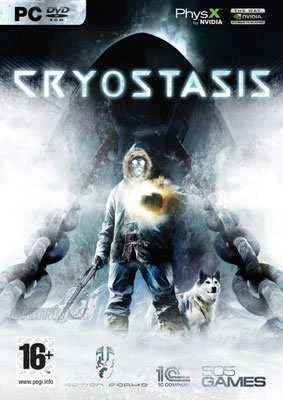
Cryostasis: Sleep of Reason
- Category:
- Release date:
- Game Genre:Action, FPP, horror
- Developer:Action Forms Publisher: 1C / Cenega
- Release:ElAmigos
- Platform:PC
- Languages (subtitles):English, French, Italian, German, Spanish, Czech, Hungarian, Polish, Russian
- Dubbing/Audio:English, French, Italian, German, Spanish
- Crack:not necessary
- Game size:2.90GB
Game Description
Cryostasis: Sleep of Reason on PC is a first-person psychological survival-horror game set aboard the icebound nuclear icebreaker North Wind. Steam’s current app metadata shortens the name to Cryostasis, while the full catalog title remains Cryostasis: Sleep of Reason. In Russian markets, it is also known as Anabiosis: Sleep of Reason. The game was developed by Action Forms and published across different territories by companies including 1C, Aspyr, and 505 Games.
This is a single-player horror adventure built around cold, isolation, memory, and moral intervention. It is not structured like a conventional action shooter. Exploration, environmental puzzles, tense encounters, and story-driven flashbacks carry equal weight, with the frozen ship providing a tightly connected setting rather than a series of unrelated combat arenas.
Exploring the North Wind
You play as Alexander Nesterov, a meteorologist who enters the abandoned North Wind after becoming stranded in the Arctic. The vessel is a maze of frozen corridors, machinery rooms, flooded sections, maintenance areas, and exposed exterior spaces. Progress depends on searching the ship carefully, locating usable equipment, interpreting environmental clues, and surviving hostile creatures altered by the extreme conditions.
The perspective stays in first person, making the ship’s narrow passageways and damaged interiors feel immediate. Movement is deliberate rather than highly agile, and fights are generally more dangerous when treated as routine. Ammunition and safe opportunities matter, while close-range weapons can become essential when the environment leaves little room to maneuver.
Players who enjoy atmospheric underwater horror such as first-person survival horror games like SOMA will recognize the emphasis on environmental storytelling, isolation, and unsettling discovery, although Cryostasis places much more direct pressure on body temperature and physical survival.
Mental Echo and the changing past
The defining system is Mental Echo, an ability that lets Nesterov enter the memories of dead crew members. Touching a corpse can transport the player into a past event, where the viewpoint shifts into the body of the person who died. These sequences are not simple cutscenes. They are playable episodes with hazards, objectives, and situations that can be changed through player action.
Solving a crew member’s final crisis can alter the present-day ship. A repaired mechanism, changed sequence of events, or prevented death may remove an obstacle or open a new route after the memory ends. This creates a distinctive loop: investigate the frozen present, enter a playable memory, change the past, then return to a world affected by that intervention.
Mental Echo also gives the story a fragmented structure. Instead of explaining the North Wind’s disaster through a single linear exposition dump, the game presents the crew’s experiences as connected incidents involving fear, responsibility, sacrifice, and failure. The flashbacks are therefore both narrative evidence and practical puzzle spaces.
Cold as a health system
Cryostasis treats body heat as health. Exposure to freezing areas steadily reduces Nesterov’s ability to survive, so heat sources become part of the core exploration route. Stoves, lamps, machinery, and other warm areas are not merely decorative details; they determine where the player can pause, recover, and prepare for the next section.
This system changes how the ship is read. A dark room may contain a useful item but also become a dangerous place to linger. Exterior sections and supercooled interiors demand faster movement, while heated spaces act as temporary refuges. The result is a survival loop based less on inventory crafting and more on route planning, timing, and recognizing which parts of the environment can restore warmth.
The game also uses environmental physics as part of its presentation. Water, ice, frost, lighting, and destruction effects were central technical features of the AtmosFear 2.0 engine and its Nvidia PhysX integration. These effects support the setting, but they do not turn Cryostasis into a physics sandbox. The important gameplay consequence is the way frozen machinery, water hazards, blocked paths, and unstable rooms reinforce the ship’s physical decay.
Combat, puzzles, and progression
Combat is functional and tense rather than fast or combo-driven. Nesterov uses firearms and heavy close-range weapons against hostile creatures, but the game’s pacing leaves room for exploration and puzzle solving between encounters. Fights are often framed by low visibility, limited space, environmental hazards, or the need to preserve resources.
Environmental puzzles frequently overlap with survival pressure. A memory sequence may require the player to operate machinery while avoiding smoke or rising water, while a present-day section may demand careful movement through frozen areas before body heat becomes critical. Failure can result from both obvious enemies and seemingly ordinary hazards.
There is no character class system, skill tree, crafting grid, or branching multiplayer progression. Advancement comes through moving deeper into the ship, understanding the crew’s connected tragedies, completing Mental Echo episodes, and using the consequences of those memories to reach previously inaccessible areas.
Content model and current PC status
Cryostasis is a single-player campaign rather than a service game or repeatable multiplayer platform. Its content is contained in the main story, with no modern season-pass structure or documented live-service model. The meaningful variation comes from how the campaign combines exploration, combat, environmental hazards, and playable flashbacks.
The game has appeared under several regional and storefront names. The English-language forms include Cryostasis and Cryostasis: The Sleep of Reason, while the Russian title is Anabiosis: Sleep of Reason. Steam’s app record currently identifies the product as Cryostasis, which explains why searches for the complete title can produce inconsistent results. GOG no longer lists the game in its active catalog, so older references to a DRM-free GOG edition should be treated as historical storefront information rather than a current listing.
Who should play Cryostasis?
Cryostasis suits players who want slow-burning psychological horror, unusual story mechanics, and a setting built around environmental hostility. It is a strong fit for anyone interested in haunted ships, Arctic isolation, memory-based storytelling, and survival systems that directly affect movement through the world.
It is less suitable for players looking for highly responsive modern gunplay, frequent enemy variety, open-world freedom, or a large upgrade system. The campaign is deliberately linear, the pacing can be measured, and the technology shows its age. Its strongest qualities are atmosphere and structure, not mechanical polish or competitive replayability.
PC features, controls, and localization
The PC version is designed around keyboard and mouse controls according to the original documentation. Players should not assume modern native controller support without checking the specific edition they own. The game was built for Windows and uses a dedicated PC executable rather than a console-style control scheme.
Its notable PC technology includes PhysX-enabled water and ice effects, dynamic environmental presentation, and the AtmosFear 2.0 engine. These features are historically important to the game’s identity, but compatibility can vary between retail, digital, and patched builds. Community fixes and unofficial patches exist, although they are separate from the original official game package.
Localization varies by edition and territory. English, Russian, French, German, Italian, Polish, Spanish, Czech, Hungarian, and Traditional Chinese versions are documented across regional releases, but not every language is guaranteed in every storefront build. Audio and interface availability should therefore be confirmed against the specific copy being used.
Similar PC horror experiences
For a more investigation-focused first-person horror game with sanity, dialogue, and Lovecraftian mystery, story-driven occult investigations like Call of Cthulhu provide a useful comparison. The two games differ in setting and structure, but both prioritize atmosphere, mystery, and psychological tension over constant action.
Players seeking a harsher survival shooter with scarce resources and claustrophobic environments may also look toward Metro 2033, although its combat and progression are more conventional. Cryostasis remains the more unusual choice when the priority is memory-driven storytelling, body-heat management, and a single haunted location whose history changes how the present can be explored.
Cryostasis: Sleep of Reason FAQ
Is Cryostasis: Sleep of Reason still called that on Steam?
Steam’s current app metadata uses the shorter name Cryostasis. Cryostasis: Sleep of Reason remains the full catalog title used by many databases, reviews, and regional references. Anabiosis: Sleep of Reason is the Russian-market name.
Is Cryostasis a survival-horror game or an FPS?
It uses a first-person perspective and includes firearms, but its broader design is psychological survival horror with adventure and puzzle elements. Combat is only one part of the experience; body heat, exploration, Mental Echo memories, and environmental hazards are equally important.
Does Cryostasis have multiplayer or co-op?
No. Cryostasis is a single-player campaign with no documented co-op, competitive multiplayer, or split-screen mode.
What is Mental Echo in Cryostasis?
Mental Echo allows Alexander Nesterov to enter the memories of dead crew members. These playable flashbacks let the player intervene in past events, and successful actions can change routes, obstacles, or conditions in the present-day ship.
How does the cold work in Cryostasis?
Body heat functions as the player’s survival resource. Cold areas reduce it over time, while heat sources such as working machinery and fires restore it. Planning movement between warm and exposed areas is a central part of progressing through the North Wind.
Does the PC version support modern controllers?
The original PC documentation specifies keyboard and mouse controls. Native modern controller support is not consistently documented across editions, so controller users should verify the exact build rather than assume full support.
System Requirements
Minimum: |
Processor: Pentium 4 2 GHz Graphics: 256 MB VRAM Memory: 1 GB RAM Disk space: 3 GB HDD Operating system: Windows XP/Vista |
Screenshots


Trailer/Gameplay
Download
Cryostasis: Sleep of Reason (2008), 2.90GB
ElAmigos release, unprotected game (serial or crack is not necessary).

Updated to version 1.02.

1. Extract files.
2. Burn or mount the image.
3. Install the game.
4. Play the game. If you like this game, BUY IT!
Cryostasis: Sleep of Reason Download
🔒 Premium access required
To see and use the download links, you must be logged in and have an active PREMIUM account.
* Unlock downloads via Torrent and TeraBox.
Torrent Download
The best torrent download speeds are with qBittorrent!