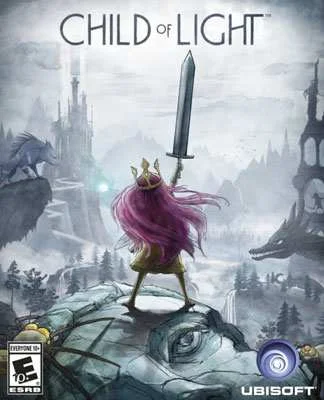
Child of Light
- Category:
- Release date:
- Game Genre:RPG, fantasy, turn-based, platform, 2D, for 2 people, co-op, classic RPG, splitscreen
- Developer:
- Release:ElAmigos
- Platform:PC
- Languages (subtitles):English, French, Italian, German, Spanish, Portuguese-Brazil, Russian, Japanese, Czech (unofficial)
- Dubbing/Audio:English, French, Italian, German, Spanish, Portuguese-Brazil, Russian, Japanese
- Crack:Reloaded
- Game size:2.24GB
Game Description
Child of Light on PC is a fairy-tale RPG from Ubisoft Montréal that combines side-scrolling exploration, light platforming, and Active-Time battles. The current Steam and Ubisoft listings still use the original name, with no verified rebrand or replacement edition. Aurora's journey through Lemuria is built around party management, poetic storytelling, and a firefly companion who is useful both in combat and during exploration.
A Side-Scrolling RPG Built Around Exploration
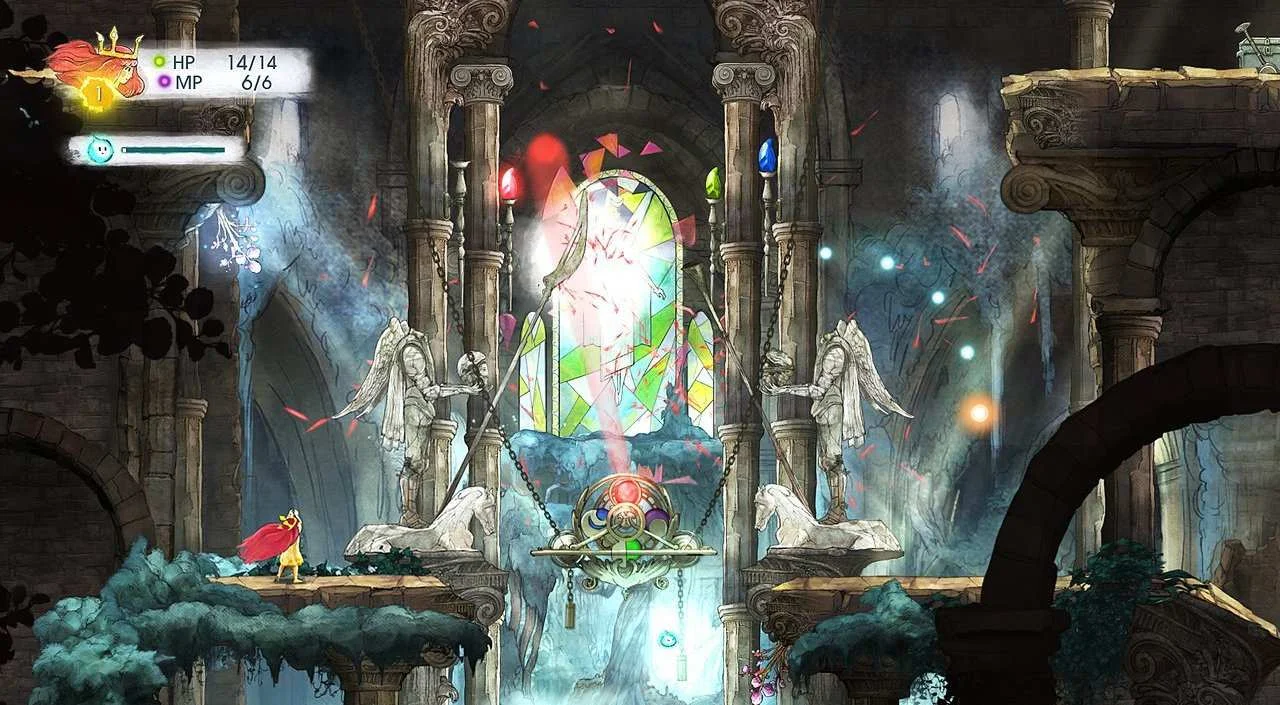
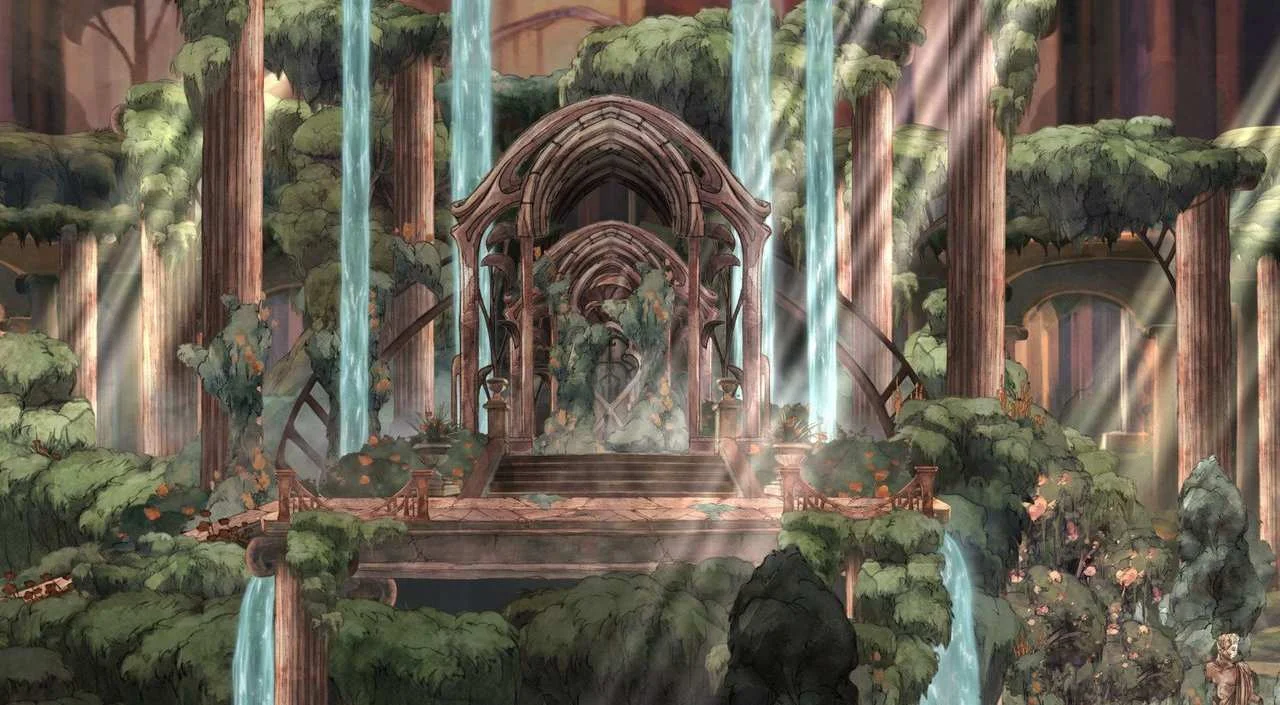
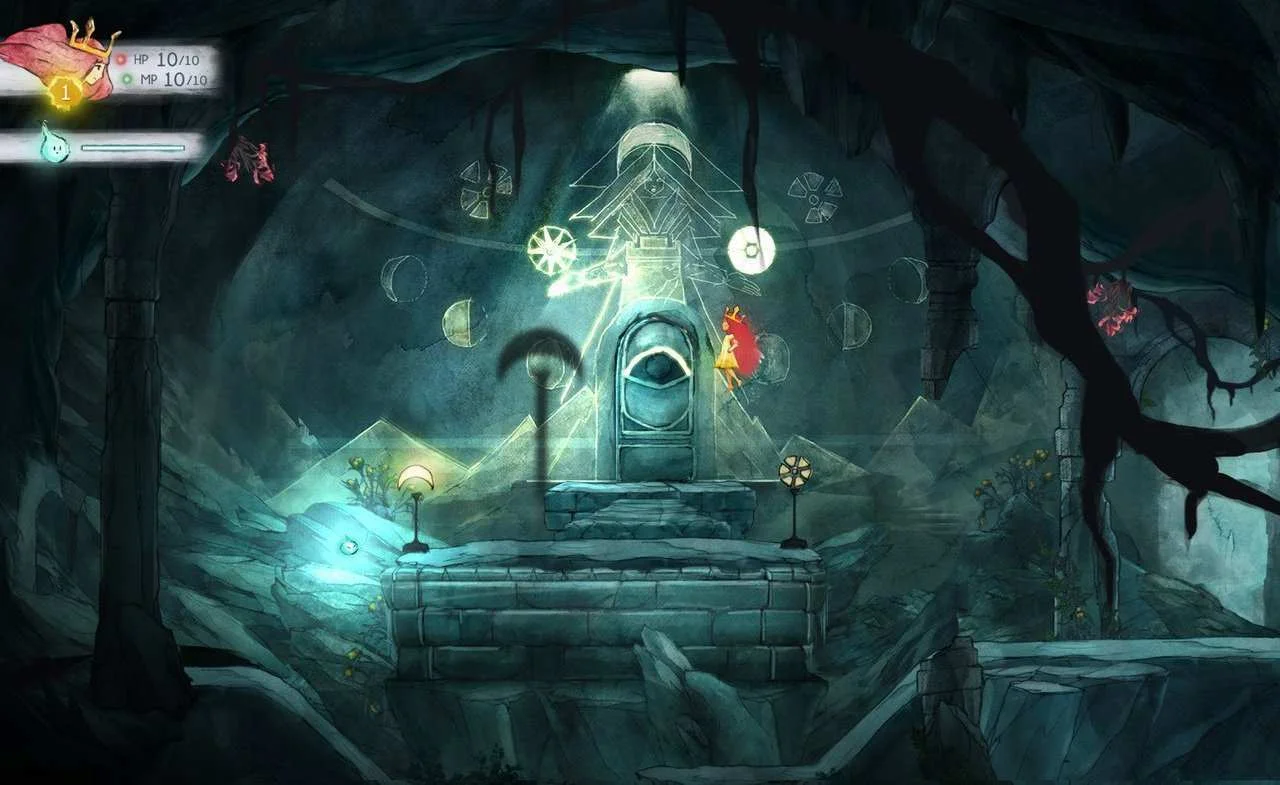
Child of Light presents Lemuria from a 2D side view rather than a conventional overhead RPG perspective. Aurora travels through branching environments, floating ruins, forests, caves, and dungeons while jumping, flying, opening passages, collecting items, and discovering optional paths.
The movement system stays deliberately approachable. Aurora eventually gains the ability to fly, which changes how she navigates the world and makes previously inaccessible routes reachable. Exploration is not built around procedural generation or open-world systems; it follows a handcrafted adventure structure with visible enemies, environmental puzzles, treasure, and story-driven progression.
Players who enjoy story-focused fantasy platformers with a strong visual identity may also appreciate hand-drawn metroidvania adventures such as Ori and the Will of the Wisps, although Child of Light places much more emphasis on party-based RPG combat than on precision action.
Active-Time Combat And The Timeline
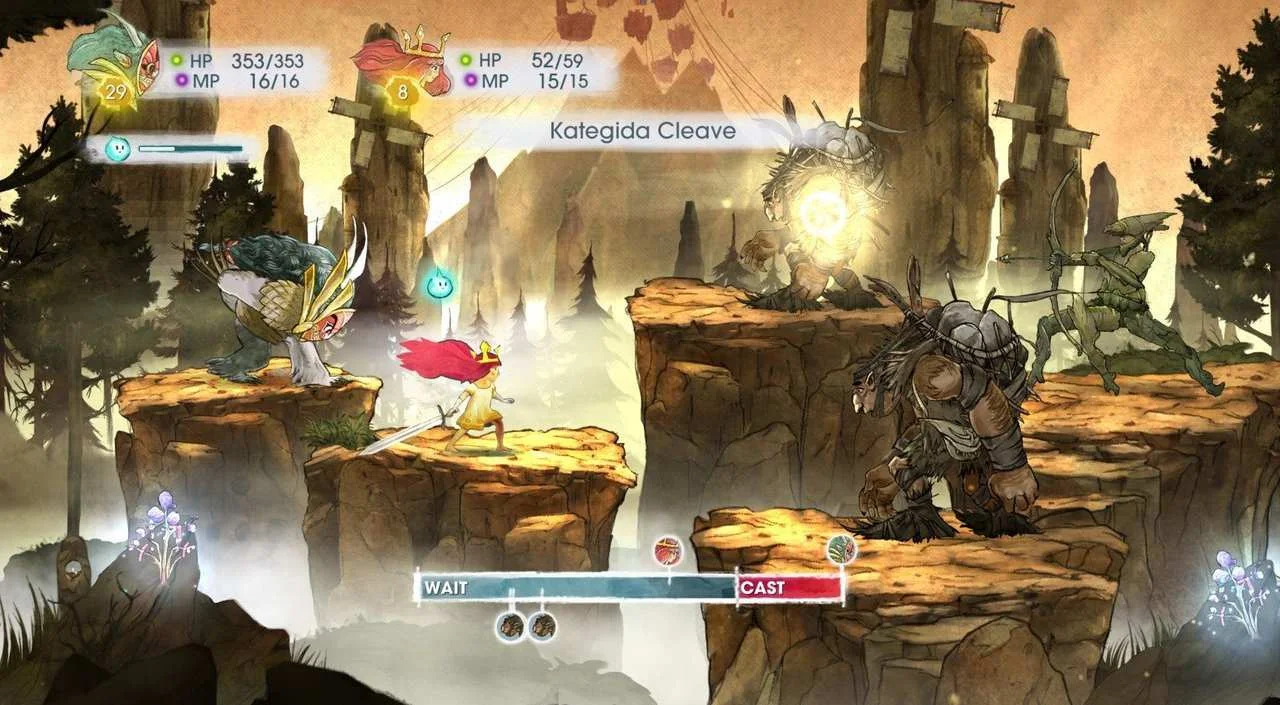
Combat uses an Active-Time Battle System rather than purely simultaneous turns. Every participating character and enemy moves along a shared timeline. When a combatant reaches the casting area, the game pauses while you select an action, allowing attacks, spells, defenses, and support abilities to be planned around the order of upcoming turns.
The timeline gives even simple encounters a tactical layer. A fast character can interrupt an enemy before its attack resolves, while a slower ability may deliver more power at the cost of giving the opponent time to act first. Defending can also improve a character's position on the timeline, making timing as important as raw damage.
Enemy encounters are visible in the environment instead of being based on random battles. This lets you approach fights more deliberately, avoid some threats, or attempt to begin an encounter with an advantage. Elemental strengths, resistances, status effects, and the difference between physical and magical attacks become increasingly relevant as the party expands.
Igniculus, Party Roles, And Character Growth
Aurora's firefly companion, Igniculus, is one of the game's defining systems. During exploration, the player can move him independently to activate mechanisms, illuminate areas, collect glowing resources, and interact with objects Aurora cannot reach.
In combat, Igniculus can slow enemies on the timeline or provide limited support to party members. This creates a second layer of decision-making: Aurora and her allies choose conventional RPG actions while Igniculus manipulates the pace of the encounter. In local co-op, a second player can control Igniculus while the first player handles Aurora and the active party.
Aurora recruits additional allies throughout the adventure, each with different abilities and positions within the party. The game includes individual skill trees, allowing characters to develop along distinct offensive, defensive, magical, or support paths. Party members can be switched in and out during battle, so the strongest setup depends on the enemy group and the situation rather than a single permanent lineup.
Equipment customization comes through Oculi, gemstones that modify attributes such as health, strength, defense, magic, speed, critical chance, and elemental effects. Combining and placing Oculi gives the progression system more flexibility than a simple linear level-up screen, while remaining easier to manage than the equipment economies found in larger role-playing games.
A Poetic Presentation With A Focused Adventure
The story follows Aurora, a young princess who awakens in Lemuria after being separated from her home. The kingdom's sun, moon, and stars have been stolen by the Black Queen, and Aurora must recover the sources of light while gathering allies and uncovering the fate of the realm.
Dialogue is presented in rhyming verse, giving conversations a storybook rhythm that is unusual for a Ubisoft RPG. The writing style is central to the game's identity rather than a surface-level visual flourish, and it works alongside the watercolor-inspired environments, hand-drawn character designs, and orchestral soundtrack.
The narrative is compact and directed. Child of Light is better suited to players who want a self-contained fantasy adventure than to players looking for an endlessly expandable RPG with open-ended builds, repeatable endgame activities, or a large social ecosystem.
Base Game, DLC, And Editions
The standard PC release is a paid single-player RPG with local cooperative play. Current storefront listings show seven optional DLC packs rather than a free-to-play structure or a rotating service model.
The additional content includes the Golem's Plight Pack, Light Aurora Pack, Dark Aurora Pack, Rough Oculi Pack, Tumbled Oculi Pack, Faceted Oculi Pack, and Stardust Pack. These add a playable golem, Aurora customization, healing-related abilities, and extra Oculi or stat-enhancing items rather than a separate campaign of comparable scale to the main adventure.
There is no verified current rebranding to an Ultimate, Definitive, or Classic PC edition. Storefront naming remains Child of Light, while the Ubisoft version is activated through the Ubisoft Connect ecosystem.
PC Features, Accounts, And Localization
The Steam version lists Remote Play Together, shared or split-screen play, and local multiplayer. This is not an online RPG with matchmaking or persistent multiplayer progression. Cooperative play is an assistive two-player format built around controlling Igniculus alongside the main player.
Keyboard and mouse are supported, and the PC listing identifies an optional Xbox 360-compatible controller. Steam labels the product with partial controller support, so players seeking modern controller layouts should treat native gamepad behavior as more limited than that of a controller-first release.
PC ownership requires a Ubisoft account and the Ubisoft Connect application. The Ubisoft Store also identifies Denuvo DRM as part of the PC version. The Steam listing retains the older Uplay wording for its third-party account requirement, but the current Ubisoft platform name is Ubisoft Connect.
The Steam release provides full interface, audio, and subtitle localization in English, French, Italian, German, Spanish from Spain, Japanese, Brazilian Portuguese, and Russian. That makes the PC edition unusually complete for players who want dubbed dialogue rather than subtitles alone.
Who Child of Light Suits Best
Child of Light is a strong fit for players who enjoy story-rich fantasy RPGs, visible enemy encounters, turn manipulation, party switching, and exploration that rewards curiosity without becoming an open-world checklist.
It also works well as a shared experience. The second player does not need to manage a full character build or learn the entire battle system, because Igniculus has a focused support role. That makes the cooperative mode suitable for a family member or friend who wants meaningful participation without controlling the whole party.
Players looking for a harsher tactical campaign may find the standard combat structure too accessible, especially when the party's skills and Oculi are used efficiently. Those who prefer grid-based positioning, long-term caravan decisions, and heavier strategic pressure may prefer choice-driven tactical RPGs such as The Banner Saga instead.
It is also a poor match for anyone expecting online co-op, competitive multiplayer, procedural replayability, or a large post-campaign ecosystem. Its appeal comes from the blend of atmosphere, character progression, and a focused adventure rather than from repeatable endgame content.
Child of Light FAQ
Is Child of Light still called Child of Light on PC?
Yes. Current Steam and Ubisoft storefront listings continue to use Child of Light. There is no verified PC rebrand or replacement name that players need to search for.
Is Child of Light multiplayer on PC?
Yes, but only in a local cooperative format. A second player controls Igniculus while the primary player controls Aurora and the party. Steam also lists Remote Play Together, but the game does not provide online matchmaking or a persistent multiplayer world.
Does Child of Light have turn-based combat?
It uses an Active-Time Battle System. Combat is turn-based in the sense that actions are selected from menus, but every combatant advances along a shared timeline, so interruption, casting speed, defense, and turn order matter.
What does Igniculus do?
Igniculus supports exploration by activating objects, collecting resources, and helping reveal paths. In battle, the firefly can slow enemies and assist allies, making it an active part of the combat system rather than a purely narrative companion.
Does the PC version require Ubisoft Connect?
Yes. The Ubisoft PC listing requires a Ubisoft account and the Ubisoft Connect application. The Steam release also retains a third-party Ubisoft account requirement, and the Ubisoft version lists Denuvo DRM.
What languages are supported on PC?
The Steam listing reports complete interface, audio, and subtitle support for English, French, Italian, German, Spanish from Spain, Japanese, Brazilian Portuguese, and Russian.
System Requirements
Minimum: |
Processor: Core i3 2.6 GHz Graphics: 896 MB VRAM Memory: 4 GB RAM Disk space: 3 GB HDD Operating system: Windows 7(SP1)/8/8.1 |
Screenshots
Trailer/Gameplay
Download
Child of Light (2014), 2.24GB
ElAmigos release, game is already cracked after installation (crack by Reloaded).

Updated to version 1.0.31711 (21.07.2014); 7 DLC included.

1. Extract files.
2. Burn or mount the image.
3. Install the game.
4. ElAmigos release, game is already cracked after installation.
5. Play the game. If you like this game, BUY IT!
Child of Light Download
🔒 Premium access required
To see and use the download links, you must be logged in and have an active PREMIUM account.
* Unlock downloads via Torrent and TeraBox.
Torrent Download
The best torrent download speeds are with qBittorrent!