Mordheim: City of the Damned
- Category:
- Release date:
- Game Genre:Strategy, fantasy, tactical, RPG elements, Warhammer
- Developer:Rogue Factor Publisher: Focus Home Interactive
- Release:ElAmigos
- Platform:PC
- Languages (subtitles):English, French, Italian, German, Spanish, Polish, Russian
- Dubbing/Audio:English
- Crack:Ali213, Codex
- Game size:3.58GB
Game Description
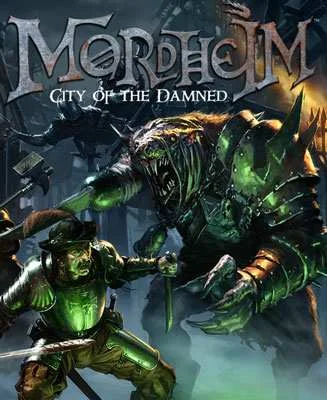
Mordheim: City of the Damned on PC is a dark-fantasy tactical RPG built around turn-based warband combat, persistent injuries, and high-risk scavenging. The current Steam storefront still uses the original name, with no verified rebrand or replacement edition. Developed by Rogue Factor and published by Nacon, it adapts Games Workshop's Mordheim tabletop setting into a campaign-driven digital skirmish game.
Lead a warband through lethal turn-based battles
The central loop is straightforward but unforgiving: assemble a small warband, enter ruined districts of Mordheim, complete mission objectives, collect Wyrdstone, and return to your warcamp with enough resources to keep the survivors equipped. Battles use a turn-based tactical system where movement, positioning, line of sight, elevation, and action-point spending determine whether an attack succeeds or leaves a fighter exposed.
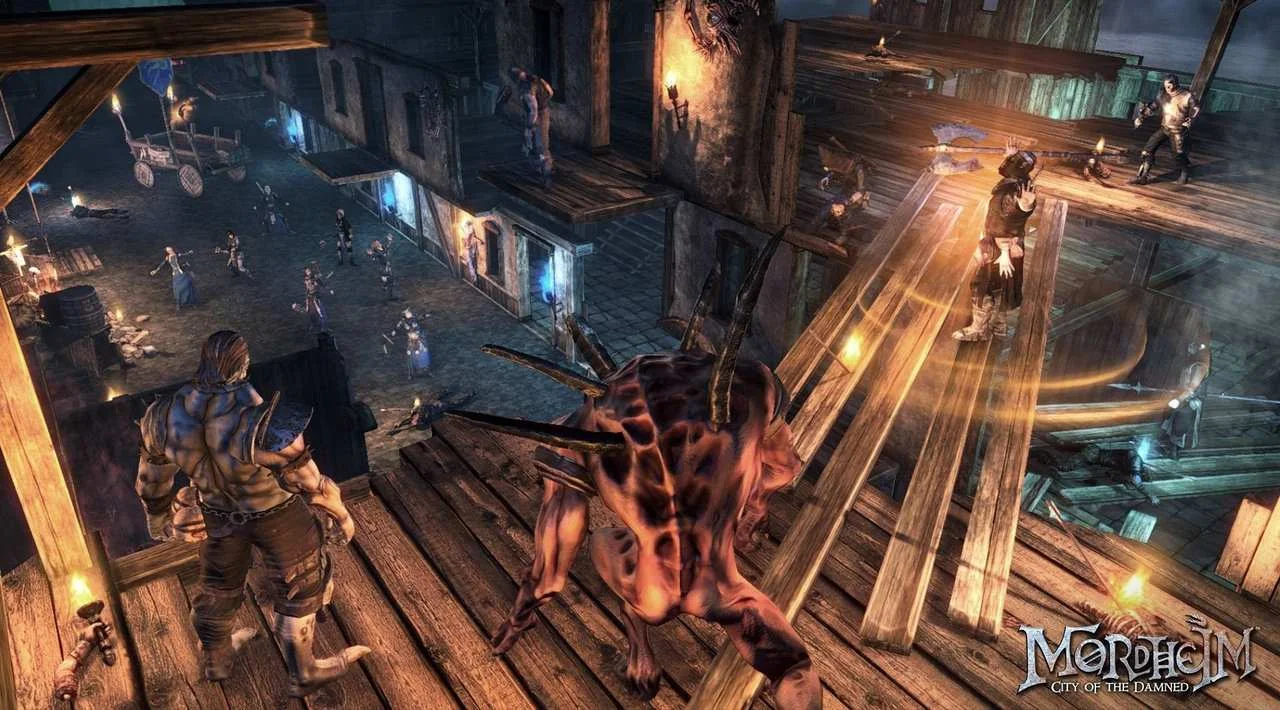
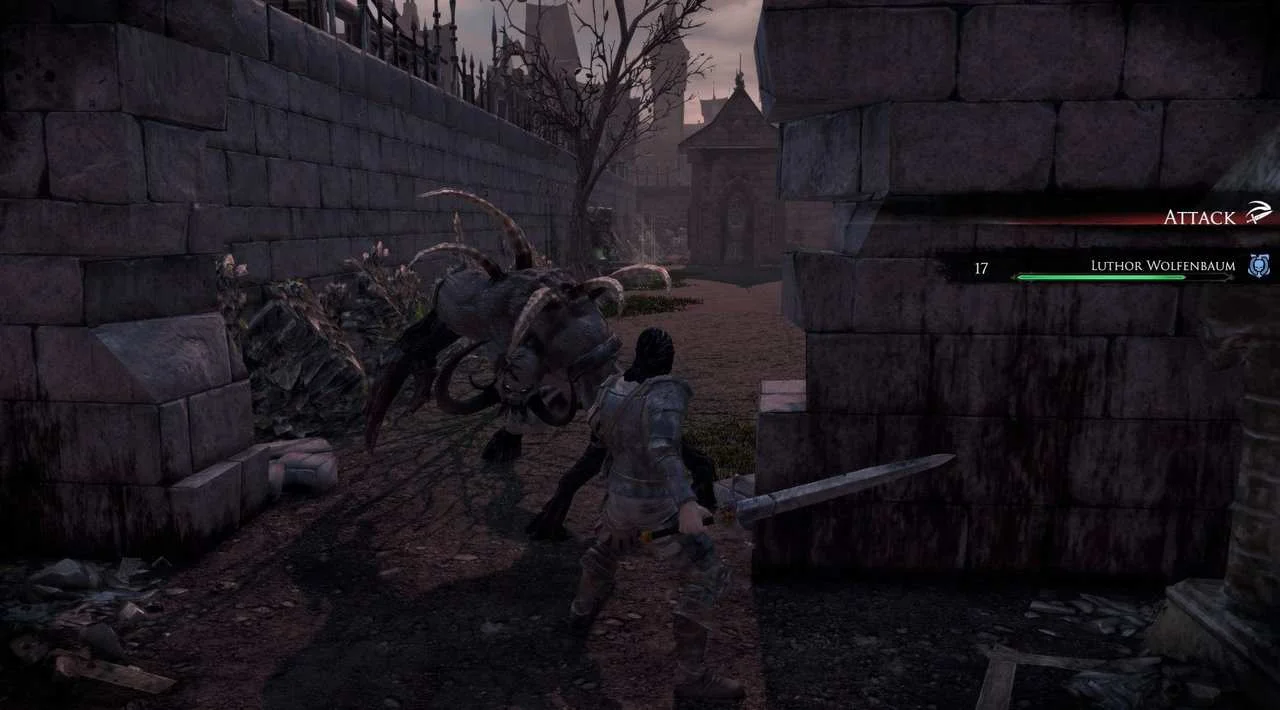
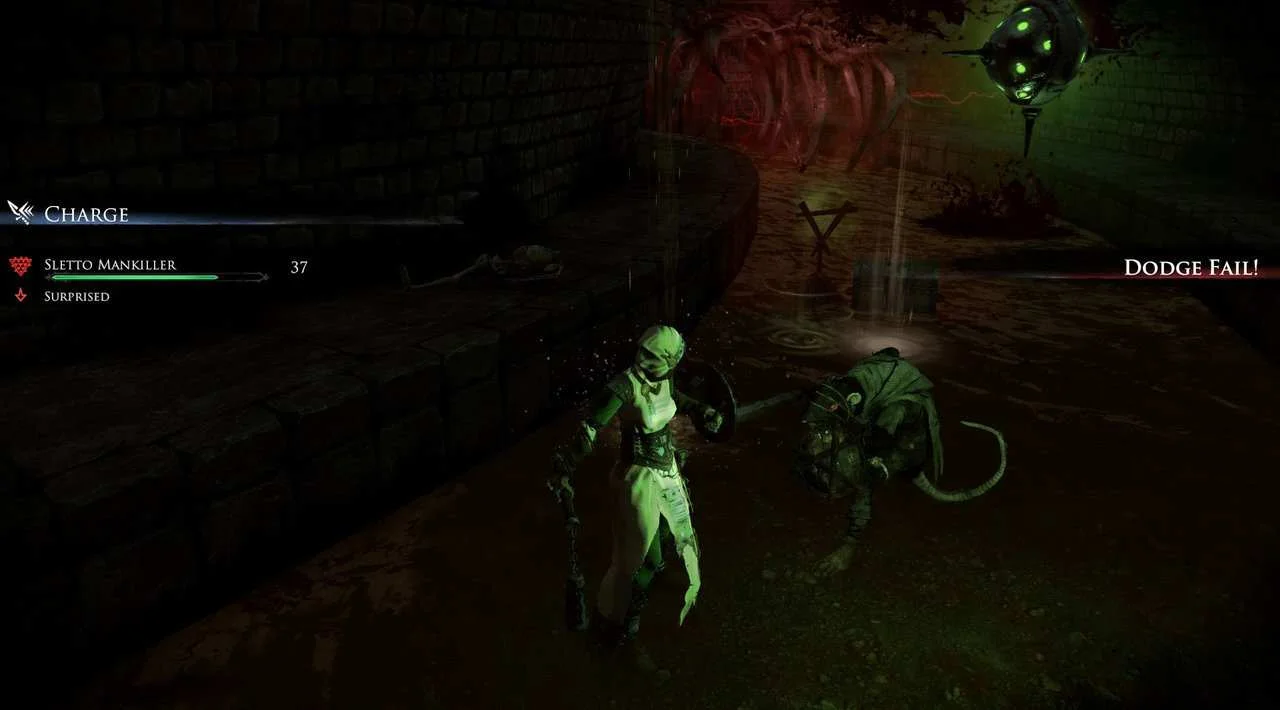
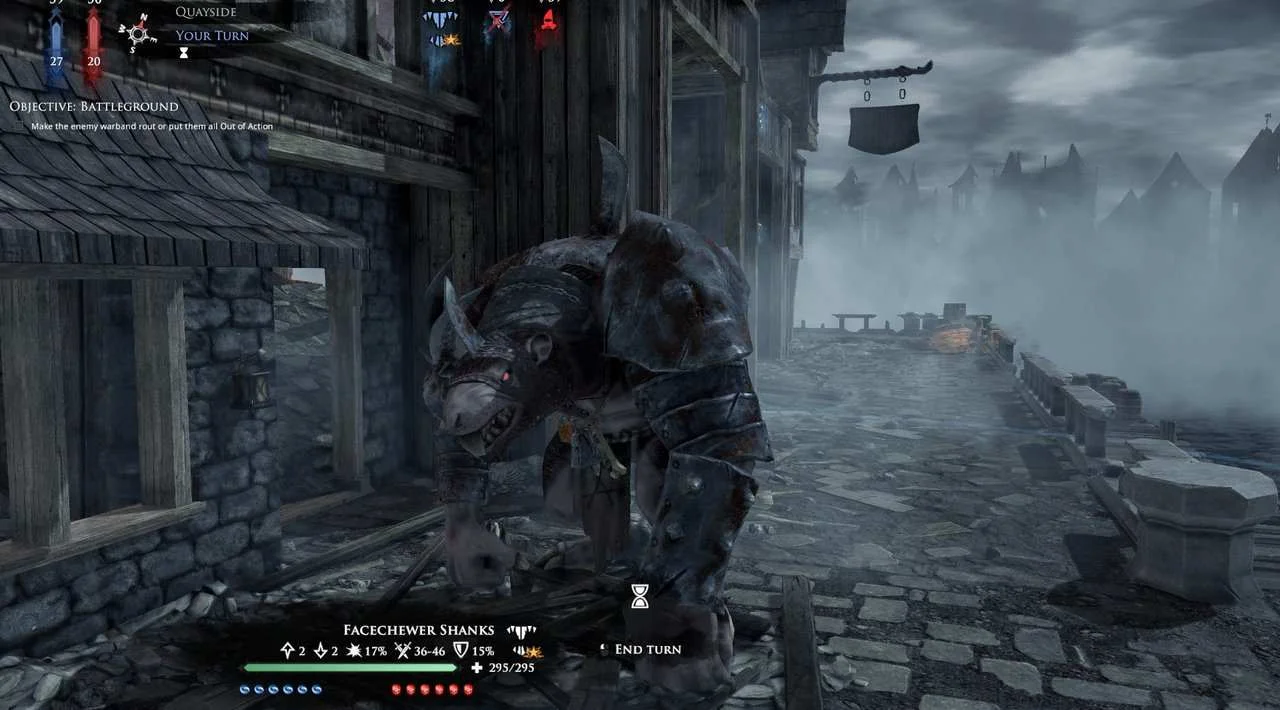
The combat camera gives you a broad view of streets, interiors, broken buildings, and elevated walkways. That environment is part of the rules rather than simple scenery. A narrow alley can limit a charge, a rooftop can create a useful firing position, and a ruined structure can conceal an ambush or separate your units from the rest of the warband.
Every warrior has a role, equipment loadout, statistics, and access to abilities that shape the way they contribute. You can use melee specialists to control chokepoints, ranged fighters to punish exposed targets, or support characters to improve the survival odds of the entire group. The important decision is rarely just who attacks; it is whether spending an action now creates a safer position for the next turn.
Persistent progression makes every casualty matter
Mordheim is built around persistent warband progression, not disposable squads. Survivors earn experience, develop abilities, and can be equipped with weapons and protective gear recovered from missions or purchased through the warcamp. The roster gradually becomes a collection of individual fighters rather than a set of interchangeable units.
The cost of failure is unusually direct. A warrior who is taken out of action may suffer an injury, lose functionality, or disappear permanently from the roster. The game explicitly treats a dead unit as lost forever, so reckless attacks can damage a campaign long after the battle itself has ended. This permadeath structure makes retreat, scouting, and objective control legitimate tactical choices instead of signs that a battle has gone badly.
Wyrdstone is both a mission objective and a strategic resource. You need to balance the value of collecting more fragments against the danger of keeping vulnerable fighters in the field. Searching ruins, looting fallen opponents, and reaching extraction points can all compete with the more obvious goal of eliminating rival units.
Four core factions with different battlefield identities
The base game includes four principal warbands: Mercenaries from the Empire, Sisters of Sigmar, Skaven, and the Cult of the Possessed. Their differences are expressed through available classes, abilities, equipment, and strategic priorities rather than only through visual design.
- Mercenaries provide a flexible human force with a broad selection of conventional combat roles.
- Sisters of Sigmar combine close-quarters strength with faith-themed abilities and durable frontline options.
- Skaven favor speed, mobility, ambushes, and disruptive tactics that reward aggressive positioning.
- Cult of the Possessed brings mutation, corruption, and unusual specialist tools to the battlefield.
Each faction campaign gives the warband a narrative context while the wider structure continues to revolve around missions, upgrades, injuries, and resource management. The result is closer to a digital tabletop campaign than a conventional linear RPG: the story provides direction, but the most memorable developments often come from a survivor who barely escapes a disastrous engagement.
Campaign, skirmish, and online PvP structure
The solo experience is organized around a campaign map and a warcamp where you manage recruitment, equipment, injuries, and progression between missions. Campaign objectives can involve fighting rival warbands, gathering Wyrdstone, exploring dangerous sections of the city, or dealing with hostile creatures and other threats. Mission layouts and encounters support the game's procedural-generation identity, so the campaign is not simply a sequence of identical arena fights.
For players who prefer direct competition, the PC version includes online PvP and one-off skirmish-style battles. It does not present itself as a cooperative campaign game: Steam lists single-player and online player-versus-player features, but not co-op or split-screen multiplayer. That distinction matters if you are looking for a party-based game to play through with friends.
The multiplayer layer is best understood as a test of warband construction and tactical discipline. A strong roster helps, but it cannot replace careful movement, threat assessment, and knowledge of each faction's strengths. If you prefer clean, deterministic tactical puzzles with enemy intentions clearly revealed, compact turn-based puzzle tactics like Into the Breach offer a much more controlled alternative.
Paid base game with focused DLC additions
Mordheim: City of the Damned is sold as a paid base game rather than a free-to-play service. The Steam listing currently shows six individual add-ons. Two expand the available warband roster with the Undead and Witch Hunters, while four smaller additions provide named Hired Swords: the Poison Wind Globadier, the Smuggler, the Wolf-Priest of Ulric, and the Doomweaver.
The DLC model adds faction and roster variety without changing the game's fundamental loop. The base experience already contains the four core warbands, campaign progression, character customization, and competitive skirmishes. The add-ons are most relevant to players who want additional faction identities or more options when building a long-term roster.
PC features, controls, and localization
The PC edition is distributed through Steam and requires agreement to a third-party EULA. Storefront features include Steam Cloud, achievements, trading cards, Family Sharing, and online PvP. Steam also lists controller support, although the game's management-heavy interface and dense combat information remain naturally suited to mouse and keyboard play.
Localization covers interface and subtitles in English, French, Italian, German, Spanish from Spain, Polish, and Russian. English is the listed full-audio language, while the other supported languages provide interface and subtitle localization. There is no verified evidence of dedicated mod tools, an integrated map editor, or a separate anti-cheat system, so those features should not be treated as part of the PC package.
Players comparing it with another Games Workshop tactical adaptation may also want to examine grid-based Warhammer 40,000 squad combat in Space Hulk: Tactics. The settings and rules differ, but both games emphasize tabletop-inspired positioning, specialized units, and punishing mistakes.
Who Mordheim: City of the Damned suits
This is a strong fit for players who enjoy hard tactical RPGs, persistent rosters, dark fantasy, and campaigns where a victory can still leave behind long-term consequences. It rewards people who like comparing equipment, testing faction builds, studying ability interactions, and accepting that a failed mission may permanently reshape the warband.
It is a weaker match for anyone seeking a relaxed fantasy adventure, a fast action game, or a purely deterministic tactics system. Randomized outcomes, injuries, uneven survivability, and the need to manage the warcamp between missions are central to the experience. The game expects patience, experimentation, and a willingness to recover from setbacks rather than reload every difficult decision.
Mordheim: City of the Damned FAQ
Is Mordheim: City of the Damned still the official PC name?
Yes. The current Steam storefront continues to list the game as Mordheim: City of the Damned. No verified Steam, Epic, GOG, or publisher rebrand was found during storefront research.
What type of game is Mordheim: City of the Damned?
It is a turn-based tactical RPG with squad management, character progression, dark-fantasy combat, resource collection, and persistent injuries. Battles take place across ruined urban environments where positioning and action-point management are essential.
Does the game have permadeath?
Yes. Warriors can suffer lasting injuries, and a unit that dies is permanently lost from that warband. This makes recruitment, retreat, equipment choices, and mission risk management important parts of the campaign.
Which warbands are available in the base game?
The base game includes Mercenaries from the Empire, Sisters of Sigmar, Skaven, and the Cult of the Possessed. The Undead and Witch Hunters are available through separate DLC additions.
Does Mordheim: City of the Damned support multiplayer?
Steam lists online PvP alongside single-player content. It does not list cooperative campaign play or split-screen multiplayer, so the multiplayer focus is competitive warband skirmishing rather than co-op progression.
What languages are supported on PC?
The game supports English, French, Italian, German, Spanish from Spain, Polish, and Russian for interface and subtitles. English is the listed full-audio language.
System Requirements
Minimum: | Recomended: |
| Processor: Intel Core 2 Duo 2.4 GHz/AMD Phenom X4 2.4 GHz Graphics: 1 GB GeForce GTX 460/Radeon HD 5850 Memory: 4 GB RAM Disk space: 4 GB HDD Operating system: Windows Vista(SP2)/7/8 | Processor: Intel Core i5-2500K 3.3 GHz/AMD FX-8350 4.0 GHz Graphics: 2 GB RAM GeForce GTX 670/Radeon HD R9 270 Memory: 4 GB RAM Disk space: 4 GB HDD Operating system: Windows Vista/7/8/10 64-bit |
Screenshots
Trailer/Gameplay
Download
Mordheim: City of the Damned (2015), 3.58GB
ElAmigos release, game is already cracked after installation (crack by Ali213 or Codex).

Updated to version 1.4.4.4 64bit (09.11.2016)

Included bonus content: Soundtrack (mp3).

1. Extract files.
2. Burn or mount the image.
3. Install the game.
4. ElAmigos release, game is already cracked after installation.
5. Play the game. If you like this game, BUY IT!
Mordheim: City of the Damned Download
 Download from TeraBox
Included DLC: Undead, Witch Hunters, Doomweaver, Wolf-Priest of Ulric, The Poison Wind Globadier, The Smuggler. Change language in game options.
Torrent Download
The best torrent download speeds are with qBittorrent!