Star Wars: The Force Unleashed Collection
- Category:
- Release date:
- Game Genre:Action, TPP, science fiction, Star Wars, videos
- Developer:n-Space, Krome Studios Publisher: LucasArts
- Release:ElAmigos
- Platform:PC
- Languages (subtitles):English, French, Italian, German, Spanish, Russian, Polish
- Dubbing/Audio:English, French, Italian, German, Spanish
- Crack:not necessary
- Game size:15.31GB
Game Description
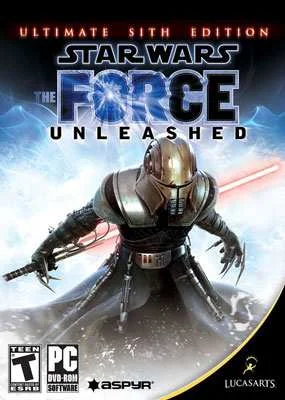
Star Wars: The Force Unleashed Collection is a PC action compilation built around third-person hack-and-slash combat, cinematic Force abilities, and two connected stories starring Darth Vader's secret apprentice. On current PC storefronts, the collection is not presented as one official product name: the first game is listed as STAR WARS - The Force Unleashed Ultimate Sith Edition, while the sequel remains a separate product called STAR WARS: The Force Unleashed II.
This distinction matters when searching for the collection on PC. The ElAmigos catalog entry groups both games together, but Steam and GOG identify them as separate LucasArts Star Wars releases. The first game is the expanded Ultimate Sith Edition, while the second is the standalone sequel with its own campaign, abilities, challenge content, and save data.
Two Force-powered action campaigns
The first campaign casts you as Galen Marek, known as Starkiller, Darth Vader's hidden apprentice. Vader sends him across the galaxy to hunt Jedi, but the mission gradually becomes a personal story involving Juno Eclipse, PROXY, Rahm Kota, and the origins of the Rebel Alliance.
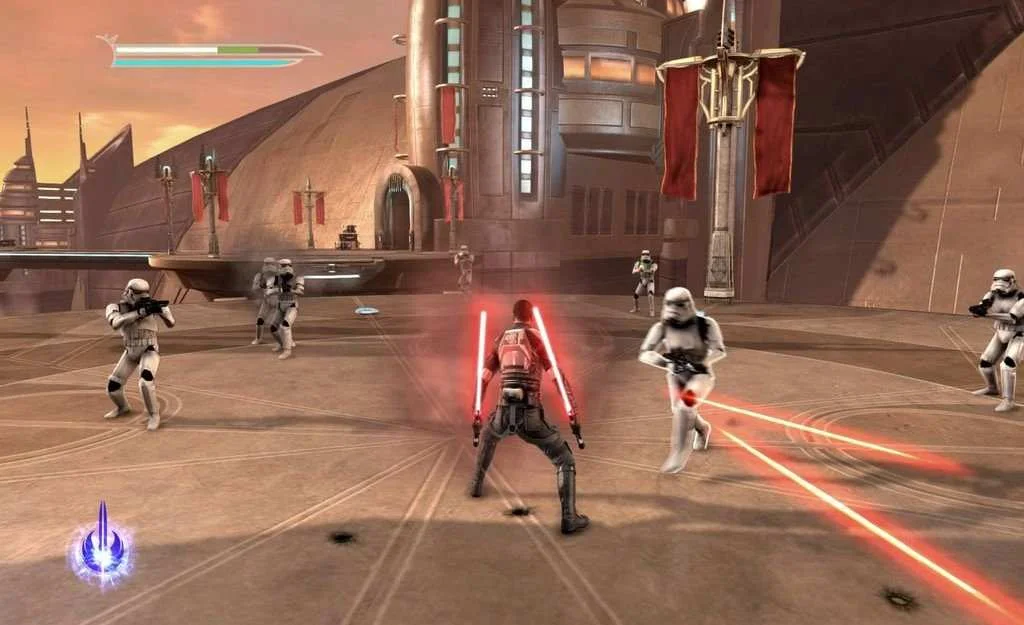
Combat uses a third-person camera and combines lightsaber strikes with direct Force manipulation. Starkiller can cut through enemies, launch them with Force Push, pull objects and opponents into position with Force Grip, strike groups with Force Lightning, and clear space around him with Force Repulse.
The central loop is straightforward: enter a combat area, experiment with the environment, defeat Imperial forces or hostile creatures, then move through a mostly linear level toward the next set piece. The appeal comes from combining powers rather than treating the lightsaber as a conventional melee weapon.
A stormtrooper can be thrown into another enemy, slammed against a wall, launched over a ledge, or used as part of a larger environmental attack. The interaction between enemies, props, and destructible scenery is supported by Digital Molecular Matter, euphoria, and Havok physics, systems that give the first game its exaggerated physical reactions.
Progression, combos, and Force mastery
The original campaign includes lightsaber combos, Force abilities, talents, and upgrade paths. Defeating enemies earns Force points that can be spent improving Starkiller's offensive powers, survivability, and combat options. Collectible holocrons and crystals add exploration incentives without turning the game into a traditional open-world RPG.
That progression creates a noticeable power curve. Early encounters teach the basic relationship between saber attacks and Force skills, while later fights expect more deliberate use of crowd control, ranged powers, and environmental hazards. Some enemies resist specific approaches, so relying on one favorite move is less effective than switching abilities during a fight.
Multiple endings give the first campaign a small amount of narrative variation, but this is still a directed action adventure rather than a branching role-playing game. The important decisions occur at selected story moments; they do not transform the entire structure into a freeform morality system.
The sequel changes the combat rhythm without abandoning the same power fantasy. Starkiller returns in a story focused on identity, cloning, Vader's control, and his search for Juno Eclipse. The sequel adds dual lightsabers, new Force powers, the Deceptive Mind Trick, and Force Fury, a temporary high-power state charged through combat.
What the Ultimate Sith Edition adds
The first game's PC edition is the Ultimate Sith Edition, not the standard console release under a generic collection label. It contains the original campaign plus three additional story levels: Tatooine, the Jedi Temple, and an exclusive Hoth mission.
These additions expand the campaign with alternate-continuity scenarios and new locations rather than functioning as disconnected arcade stages. They also provide extra context for Starkiller's abilities and let the game explore familiar Star Wars settings outside the main sequence of missions.
The second game is included separately in the collection and has its own campaign progression. It also includes Challenge levels that test combat and navigation skills outside the main story. These challenges provide a replay-oriented layer for players who want to practice Force combinations or chase stronger results after finishing the campaign.
Neither game is structured around live-service content, a seasonal pass, or online progression. The collection is fundamentally a pair of self-contained single-player action games, with the first title's expanded edition providing the clearest value for players who want the complete PC version of Starkiller's original story.
Who should play it on PC?
This collection suits players who want a linear Star Wars action game where the protagonist feels deliberately overpowered. It is less concerned with cautious dueling than with throwing enemies through the environment, chaining Force attacks, and turning ordinary combat arenas into destructive playgrounds.
It is also a strong fit for fans of character-action and hack-and-slash games who prefer cinematic set pieces over extensive exploration. Players who enjoy the direct combat and over-the-top abilities in third-person action slashers such as God of War will recognize the same emphasis on heavy attacks, ability upgrades, boss encounters, and spectacle.
The collection is a weaker match for players looking for cooperative play, competitive multiplayer, open-ended exploration, or a deep party-based RPG system. Both PC games are presented as single-player experiences, and their progression systems support a focused campaign rather than a broad character-building sandbox.
Expect some old-school design decisions as well. The levels are built around combat rooms, traversal sequences, quick-time events, collectibles, and scripted cinematic moments. The result is energetic and distinctive, but not as flexible or systems-heavy as modern open-world Star Wars games.
PC features, controls, and storefront versions
Steam lists the Ultimate Sith Edition with single-player support, Steam Cloud, Family Sharing, full audio and subtitle localization in English, French, German, Italian, and Spanish, plus subtitles and interface support in additional languages for the sequel. The sequel also supports English, French, German, Italian, Spanish, Polish, and Russian across its listed interface and subtitle options.
Controller support is an important part of the PC experience. The games were designed around console-style action controls, and a gamepad provides the clearest way to manage lightsaber attacks, Force powers, targeting, and quick-time prompts. Keyboard and mouse input is available on PC, but the control layout is less central to the original design.
GOG lists the Ultimate Sith Edition as DRM-free and provides an offline installer, with GOG Galaxy optional for features such as cloud synchronization. Steam uses the Steam client and includes Steam Cloud. These are separate storefront builds, so the collection label should not be assumed to represent one unified launcher package.
Players comparing Force-heavy Star Wars action with more traditional martial-arts combat can also look at real-time action RPGs such as Jade Empire: Special Edition. The settings differ, but both emphasize selectable combat styles, special abilities, and direct third-person encounters over turn-based commands.
Similar games and mechanical alternatives
The closest comparison is not another Star Wars strategy game but a third-person action title built around escalating abilities. The first Force Unleashed is more linear than God of War and less exploration-focused than many modern action RPGs, but its combat loop shares the same foundation of melee attacks, ability upgrades, environmental puzzles, and cinematic boss encounters.
Within Star Wars, Knights of the Old Republic offers much deeper dialogue, party management, and role-playing choices, but it uses a different combat structure and should not be treated as a direct mechanical substitute. The Force Unleashed Collection is the better choice for players who want immediate lightsaber-and-Force action rather than companion commands or extensive conversation systems.
The sequel is also best approached as a companion campaign rather than a complete replacement for the original. It adds dual-wielding and new powers, but the Ultimate Sith Edition remains the more substantial package because it combines the original story with three additional narrative levels.
Star Wars: The Force Unleashed Collection FAQ
What is the current PC storefront name?
There is no single official Steam or GOG product named Star Wars: The Force Unleashed Collection. The first game is sold as STAR WARS - The Force Unleashed Ultimate Sith Edition, and the sequel is sold separately as STAR WARS: The Force Unleashed II. The collection name describes a bundle or catalog grouping of both titles.
What games are included in the collection?
The collection combines the Ultimate Sith Edition of the original game with Star Wars: The Force Unleashed II. The first includes its main campaign and the Tatooine, Jedi Temple, and Hoth story levels. The sequel includes its own single-player campaign and additional challenge content.
Is the collection multiplayer or co-op?
No. The PC versions are designed for single-player use. There is no campaign co-op, split-screen mode, or competitive multiplayer progression in this collection.
Does the first game include Force upgrades?
Yes. The original campaign uses Force points, ability upgrades, talents, lightsaber combos, crystals, and collectible holocrons. These systems let players improve Starkiller while experimenting with different combinations of saber attacks and Force powers.
Does the sequel have different combat features?
Yes. The sequel adds dual lightsabers, new abilities such as Deceptive Mind Trick, the Force Fury power state, and separate challenge levels. Its campaign remains a linear third-person action experience rather than an open-world RPG.
Which PC version is best for the first game?
The Ultimate Sith Edition is the complete PC edition to look for because it includes the original campaign and the additional Tatooine, Jedi Temple, and Hoth levels. GOG provides a DRM-free option, while Steam adds Steam Cloud and platform account features.
System Requirements
Minimum: |
Processor: Core 2 Duo 2.4 GHz Graphics: 256 MB VRAM Memory: 2 GB RAM Disk space: 16 GB HDD Operating system: Windows XP/Vista/7 |
Screenshots
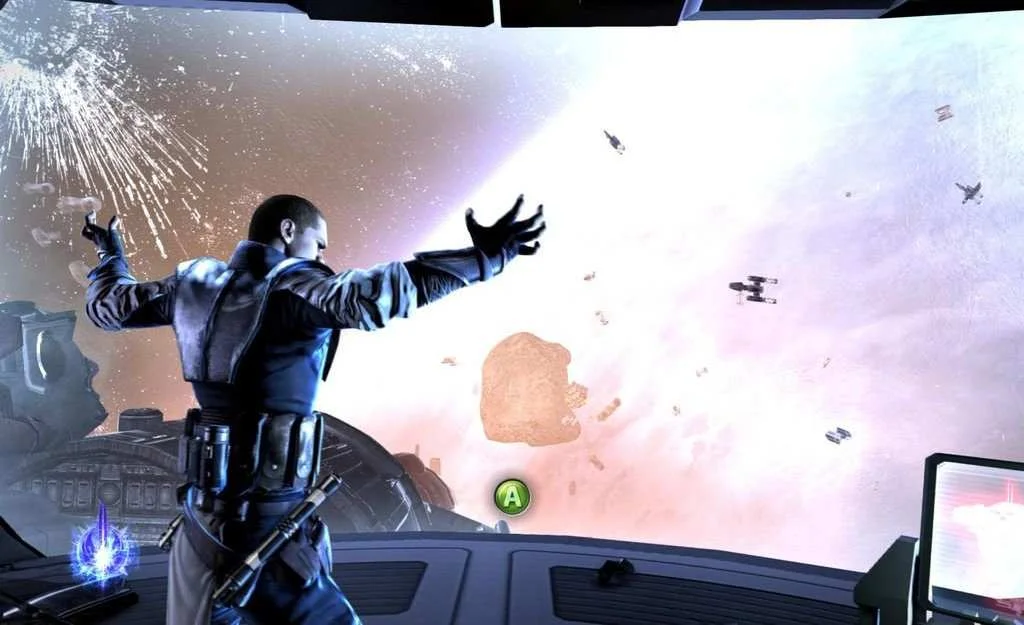


Trailer/Gameplay
Download
Star Wars: The Force Unleashed Collection (2009-2010), 15.31GB
ElAmigos release, unprotected games (serial or crack is not necessary).

1. Extract files.
2. Burn or mount the image.
3. Install the game.
4. Play the game. If you like this game, BUY IT!
Star Wars: The Force Unleashed Download
🔒 Premium access required
To see and use the download links, you must be logged in and have an active PREMIUM account.
* Unlock downloads via Torrent and TeraBox.
Included content: Star Wars: The Force Unleashed - Ultimate Sith Edition (v1.2) + Star Wars: The Force Unleashed II (v1.1).
Torrent Download
The best torrent download speeds are with qBittorrent!