
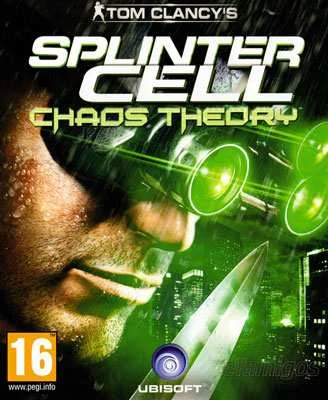
Tom Clancy's Splinter Cell: Chaos Theory
- Category:
- Release date:
- Game Genre:Action, TPP, Stealth, spyware, multiplayer
- Developer:
- Release:ElAmigos
- Platform:PC
- Languages (subtitles):English, French, Italian, German, Spanish, Polish
- Dubbing/Audio:English, French, Italian, German, Spanish, Polish
- Crack:not necessary
- Game size:3.40GB
Game Description
Tom Clancy's Splinter Cell: Chaos Theory on PC is a third-person stealth-action game built around careful infiltration, electronic espionage, and controlled aggression. Current storefronts still use the original title, with no verified rebrand or replacement edition. The PC version is presented by Ubisoft as a Standard Edition, while its online multiplayer and co-op services are no longer functional.
Stealth built on light, sound, and choice
Chaos Theory gives Sam Fisher room to approach missions through observation rather than a fixed sequence of takedowns. The central loop is simple but demanding: study patrols, locate a safe route, manipulate the environment, complete the objective, and disappear before the situation escalates.
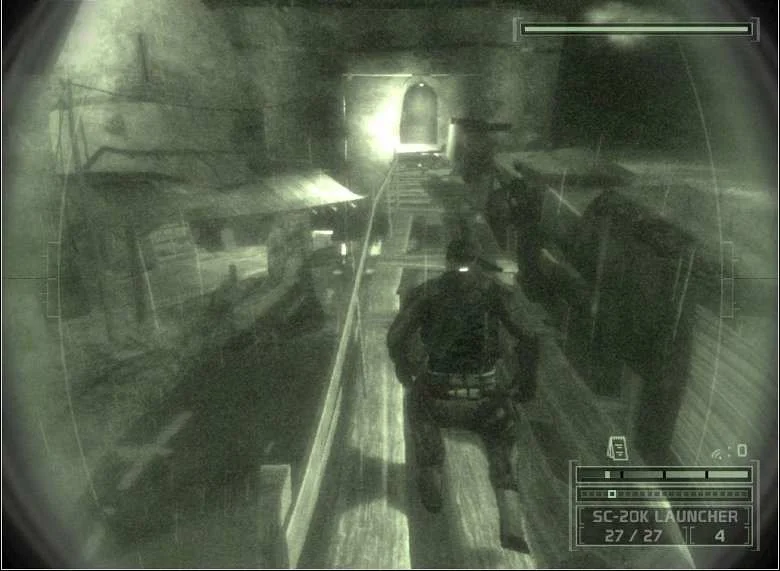
The light meter remains the most recognizable part of the design. Darkness makes Sam harder to see, but it does not make him invulnerable. Guards can still react to movement, open doors, missing equipment, suspicious bodies, and other signs that an intruder has passed through an area.
Sound is equally important. The sound meter compares Sam's noise with the ambient noise around him, so footsteps, weapon handling, movement speed, and environmental conditions all influence how safely he can cross a room. Moving slowly is often more valuable than moving quickly, especially when a patrol is close.
Tools for infiltration and improvisation
Sam's equipment supports several styles of stealth. He can observe from cover, lean around corners, climb, hang from ledges, use elevated routes, and exploit gaps in enemy positioning. The game also gives him firearms and gadgets, but loud combat is usually a way to recover from a mistake rather than the preferred solution.
The SC-20K assault rifle and 5-7 pistol cover different combat situations, while equipment such as the sticky camera lets Sam scout, distract, and create openings without exposing himself. Interrogations, close-quarters grabs, environmental hazards, and nonlethal options make encounters more varied than a basic cover shooter.
Chaos Theory is at its best when the player treats every room as a small tactical problem. A guard may be distracted by a sound, isolated from a group, or bypassed entirely. The game rewards patience, but it also allows confident players to improvise when a carefully planned route breaks down.
A campaign with flexible mission solutions
The single-player campaign follows Sam Fisher as Third Echelon investigates an international crisis involving information warfare, sabotage, and escalating military tension. The story moves through locations connected to the wider Tom Clancy espionage setting, but the strongest storytelling usually comes through mission context, radio conversations, environmental details, and the consequences of how you operate.
Mission objectives are generally structured, yet the path toward them is often open-ended. Players can search for alternate entrances, disable security systems, hide evidence, avoid alarms, or accept a more confrontational approach. The three-part mission scoring mindset of stealth, control, and completion makes replaying familiar areas more interesting than simply rushing toward the exit.
There is no character-class system or loot-driven progression loop. Sam's improvement comes from learning enemy behavior, understanding the light and sound rules, memorizing layouts, and becoming more efficient with his existing tools. That makes the campaign a strong fit for players who prefer mastery-based progression over upgrades and collectible economies.
Co-op and versus modes: important PC limitations
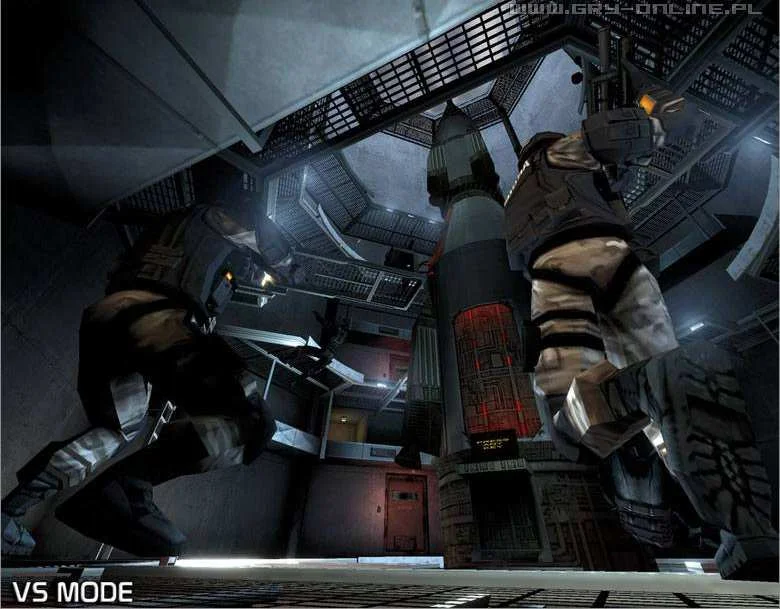
Chaos Theory originally expanded beyond its campaign with a dedicated two-player co-op mode and the returning Spies vs. Mercenaries competitive format. Co-op missions were designed around paired operators, shared positioning, and actions that a solo agent could not perform in the same way.
That historical feature set needs a current qualification. Ubisoft's present PC listing states that the game's online features are no longer supported and that multiplayer and co-op modes are no longer functional. Treat the PC storefront version primarily as a single-player stealth campaign, not as a reliable modern co-op purchase.
PC edition, controls, and storefront status
The current PC listings identify Ubisoft Montreal as developer and Ubisoft as publisher. Ubisoft's own store page says the game requires a Ubisoft account and installation of the Ubisoft Connect launcher. Steam continues to list the game under its original name, Tom Clancy's Splinter Cell Chaos Theory, rather than a remastered or renamed edition.
Keyboard and mouse remain the safest control assumption for the PC edition. Steam exposes community controller configurations, but the original PC release does not present modern plug-and-play gamepad support as a headline feature. Players who specifically want analog controls should expect configuration work rather than a console-style controller experience.
Steam lists interface support for English, French, German, Spanish, and Italian. Ubisoft's current page presents a narrower visible language summary, so the Steam listing is the clearer reference for the language options attached to that storefront build. The game is also cataloged as a single-player PC title on Steam, with Family Sharing listed among its platform features.
Who should play Chaos Theory?
Chaos Theory suits players who want deliberate stealth, readable enemy patterns, manual exploration, and missions that reward low-profile problem solving. It is especially appealing if you enjoy learning a level well enough to execute a clean run instead of relying on constant combat or automated cover mechanics.
It is less suitable for anyone expecting a current live-service ecosystem, functioning online matchmaking, seamless modern controller support, or a large open-world progression system. The presentation and interface are firmly rooted in classic PC stealth design, and some players will need patience when adapting to its older movement and control conventions.
Related stealth games on PC
Players who enjoy Chaos Theory's gadget-led infiltration but want broader mission spaces may prefer open-world tactical stealth like Metal Gear Solid V: The Phantom Pain. It shares the emphasis on scouting, enemy awareness, and choosing when to remain hidden, although its structure is much more expansive.
For social stealth built around disguises, accidents, and replayable assassination sandboxes, sandbox infiltration games such as Hitman 3 offer a different interpretation of the same broad fantasy: enter a controlled space, read the situation, and turn preparation into a clean escape.
Players more interested in a focused first-person burglary loop can also explore planning-heavy stealth simulation in Thief Simulator. Its objectives and tools differ substantially, but both games make observation, timing, and avoiding unnecessary attention central to success.
Tom Clancy's Splinter Cell: Chaos Theory FAQ
Is Chaos Theory still sold under its original name?
Yes. Steam and Ubisoft currently list the PC game as Tom Clancy's Splinter Cell Chaos Theory. No verified current rebrand, remaster name, or replacement edition has superseded that title on the storefronts checked.
Is Chaos Theory primarily a single-player game on PC today?
Yes. The campaign remains the dependable part of the PC release. Ubisoft states that the original online features are no longer supported, including multiplayer and co-op functionality.
Does the PC version include co-op?
The original package included co-op missions, but Ubisoft's current listing says those modes are no longer functional online. Do not buy the PC version expecting supported matchmaking or a maintained co-op service.
Does Chaos Theory have controller support on PC?
Keyboard and mouse are the most reliable choice. Controller play may be possible through configuration tools or community layouts, but the storefront does not advertise modern native gamepad support as a core PC feature.
What languages are available on Steam?
Steam lists English, French, German, Spanish, and Italian interface support. It does not list full audio or subtitle support separately for those languages, so players should regard the PC language offering primarily as interface localization.
Is Chaos Theory a stealth simulator or an action game?
It is best described as a third-person stealth-action game. The design prioritizes concealment, sound management, gadgets, and tactical movement, but firearms and direct confrontations remain available when stealth fails or the player chooses a more aggressive route.
System Requirements
Minimum: |
Processor: Pentium 4 2.2 GHz Graphics: 128 MB VRAM Memory: 512 MB RAM Disk space: 4 GB HDD Operating system: Windows XP |
Trailer/Gameplay
Screenshots


Download
Tom Clancy's Splinter Cell: Chaos Theory (2005), 3.40GB
ElAmigos release, unprotected game (serial or crack is not necessary).

Updated to version 1.05.157.

1. Extract files.
2. Burn or mount the image.
3. Install the game.
4. Play the game. If you like this game, BUY IT!
Tom Clancy's Splinter Cell: Chaos Theory Download
 Download from TeraBox
Torrent Download
The best torrent download speeds are with qBittorrent!
Similar games to Tom Clancy's Splinter Cell: Chaos Theory:
Before your comment If you have a problem with the installation:
#1 Files are corrupted / Checksum error / Install VC 2013 x64 - LINK1 and LINK2
#2 Add an exception in antivirus - preferably for the entire folder with the game.
#3 Update your graphics drivers.
#4 Adjust Virtual Memory - VIDEO
#5 Extracting error? Download the part where the error is again - you can use a different browser or downloader. Use Winrar or 7zip.
#6 Fix for +20 threads CPUs and old 2017-2020 installers
ReUpload? NO. Why? TeraBox links are always active (99%).
Premium TeraBox you will get for free! LINK.