
Tom Clancy's Splinter Cell
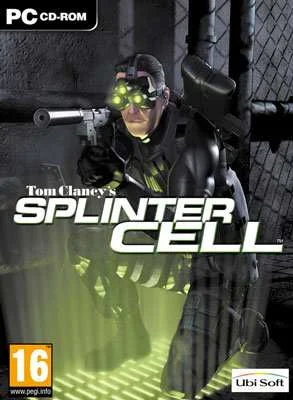
Game Description
Tom Clancy's Splinter Cell PC is a third-person stealth action game built around light, sound, infiltration, and controlled takedowns. The current Steam storefront keeps the original standalone name, with Ubisoft listed as both developer and publisher. You play Sam Fisher, an NSA operative working inside the covert Third Echelon unit, where missions reward patience, observation, and careful use of technology rather than running into open combat.
Stealth built around light, sound, and positioning
Splinter Cell treats stealth as a physical system instead of a simple crouch button. Sam's visibility depends on the surrounding darkness, while movement speed and posture influence the amount of noise he creates. A guard may not see Fisher immediately, but a careless sprint, jump, door interaction, or loud landing can still expose his position.
The central loop is deliberate: enter a guarded location, study patrol routes, identify cameras and lighting, complete the objective, and leave without creating evidence. The game supports both lethal and non-lethal approaches, but ammunition is limited and direct firefights are dangerous. In many missions, triggering an alarm can create consequences severe enough to force a restart.
Fisher operates from a third-person perspective, with closer aiming when weapons are equipped. His movement set includes crouching, leaning, climbing, mantling, hanging from ledges, using pipes, shimmying along edges, and performing quiet landings. These actions are not decorative animation; they provide the route-planning tools needed to move through spaces without crossing a guard's field of view.
Sam Fisher's tools and covert methods
Splinter Cell gives Fisher a compact but useful equipment kit. The iconic goggles provide night vision and thermal vision, allowing players to read dark rooms, locate warm bodies, and understand the spaces around them before moving. The visibility and sound feedback keeps the player informed without removing the need to make decisions.
Gadgets expand the number of ways to solve an obstacle. Fisher can use tools such as the sticky camera, camera jammer, wall mine, laser microphone, flares, lock picks, and the optic cable. Each tool answers a different problem: distract a guard, disable surveillance, listen through a barrier, inspect a room, bypass a lock, or create a temporary opening.
The game also emphasizes interaction with the environment. Fisher can peek through doors, hide in darkness, manipulate security systems, interrogate selected targets, and use nearby objects as part of an infiltration route. The best solutions often come from combining movement and equipment rather than selecting a single powerful weapon.
Mission structure and tactical pressure
The campaign is organized as a sequence of authored espionage missions connected by briefings, communications, and objectives. Locations vary from secured buildings and military facilities to industrial spaces and other high-risk environments. The structure is linear in its overall progression, but individual encounters frequently allow multiple routes through a guarded area.
Objectives can involve gathering intelligence, accessing computers, rescuing or locating personnel, disabling equipment, planting devices, or reaching a protected target. This variety keeps the campaign from becoming a repeated corridor crawl, while the stealth rules remain consistent enough for players to build a reliable personal method.
Difficulty comes from limited resources, alert states, enemy placement, and the need to repeat sections after a failed attempt. Splinter Cell is a game about controlled execution. It is a strong fit for players who enjoy learning patrol patterns and improving a route, but less suitable for anyone looking for a forgiving action game where detection simply starts a conventional firefight.
Story, characters, and the Third Echelon setting
The story follows Sam Fisher as he investigates an international crisis involving Georgia, Nikoladze, Philip Masse, and Chinese military interests. Fisher receives operational direction from Third Echelon, the NSA's secretive field organization, while his communications and mission intelligence are coordinated remotely.
The narrative uses briefings, conversations, intercepted information, and mission objectives to frame Fisher as an operative whose actions must remain officially deniable. That context gives the stealth mechanics a clear purpose: being unseen is not merely advantageous, because exposure can compromise the operation and create a political problem beyond the immediate encounter.
Players interested in a more open-ended modern stealth sandbox may also appreciate systemic military infiltration like Metal Gear Solid V: The Phantom Pain, although Splinter Cell is more compact, authored, and focused on traditional mission infiltration.
Content model and current PC edition
The current Steam product is a paid standalone single-player game. Its listing also appears in the Splinter Cell Legacy Collection, a separate bundle containing six games from the series. The collection does not rename or replace the standalone product, so players searching for the original PC game should use the full Tom Clancy's Splinter Cell title.
No free-to-play structure, season pass, or separate DLC pack is presented on the current standalone Steam page. The core experience is the campaign itself, with its missions, gadgets, stealth systems, difficulty settings, and story progression included as one product.
That makes the buying decision relatively simple. Choose the standalone game if you only want Sam Fisher's first PC adventure, or choose the Legacy Collection if you want the broader series lineup and its later changes to stealth, pacing, and multiplayer design.
Who should play Splinter Cell on PC?
Splinter Cell suits players who enjoy methodical stealth, careful route planning, limited ammunition, environmental interaction, and missions where avoiding detection is more satisfying than defeating every guard. It is especially appealing to fans of older tactical games that expect observation and repetition instead of constant progression rewards.
The game is less appropriate for players who want open-world exploration, character builds, cooperative missions, or a modern cover shooter. Its levels are authored and its objectives are tightly directed, even when individual rooms offer several ways through. The campaign also expects players to accept failure as part of learning a location.
For a different kind of PC stealth experience, first-person burglary planning in Thief Simulator shifts the focus from military espionage to reconnaissance, lockpicking, and stealing valuables. The objectives differ, but both games reward studying routines before committing to an approach.
PC controls, storefront features, and language support
The PC version is distributed through Steam and supports single-player gameplay and Family Sharing according to the current store listing. The original PC design was built around mouse and keyboard controls, with configurable movement, camera, interaction, inventory, weapon, and gadget inputs.
Steam lists controller support as a product tag, but the storefront does not describe the feature as full controller support. Mouse and keyboard remain the clearest fit for players who want precise control over movement speed, camera positioning, gadget selection, and interaction prompts.
The current Steam language table lists English and French interface support. It does not list full audio or subtitle support for either language on the product page, so players who require broader localization should check the storefront language information before buying.
There is no current storefront indication that the original game has been renamed, converted into a remaster, or replaced by a definitive standalone edition. The important distinction is between the unchanged standalone title and the separate Legacy Collection bundle.
Comparable stealth games on PC
Players who want a more recent third-person stealth game with reconnaissance, adaptive tactics, and broader mission spaces can compare it with compact urban infiltration in Assassin's Creed Mirage. Mirage adds parkour, social stealth, and open city movement, while Splinter Cell keeps its attention on enclosed facilities and high-pressure covert operations.
Another useful comparison is cooperative crime stealth in Crime Simulator. That game is built around multiplayer-friendly jobs and chaotic burglary scenarios, whereas Splinter Cell is a focused solo campaign where alarms, visibility, sound, and mission failure carry greater tactical weight.
Tom Clancy's Splinter Cell FAQ
Is Tom Clancy's Splinter Cell currently rebranded on PC?
No. The current Steam storefront still uses Tom Clancy's Splinter Cell for the standalone product. Splinter Cell Legacy Collection is a separate bundle rather than a replacement name for the original game.
Is the PC version single-player?
Yes. Steam lists the current product as single-player. Do not confuse the original game with later Splinter Cell entries that added competitive or cooperative modes.
Does Splinter Cell support co-op on PC?
No. The original PC game is built around Sam Fisher's solo campaign and does not provide cooperative campaign missions or split-screen play.
What is the main gameplay loop?
You scout a location, manage light and sound, avoid or neutralize guards, use gadgets to bypass security, complete mission objectives, and escape without compromising the operation. Replaying sections to refine a route is a major part of the experience.
Does the game support lethal and non-lethal play?
Yes. Fisher can use firearms and lethal takedowns, but the game also provides non-lethal options such as knockouts, distractions, and specialized gadgets. The most reliable approach often combines avoidance with selective incapacitation.
What languages are listed for the PC version?
The current Steam listing shows English and French interface support. It does not list full audio or subtitle support in its language table.
System Requirements
Minimum: |
Processor: Pentium III 1 GHz Graphics: 64 MB VRAM Memory: 256 MB RAM Disk space: 2.1 GB HDD Operating system: Windows XP |
Trailer/Gameplay
Screenshots


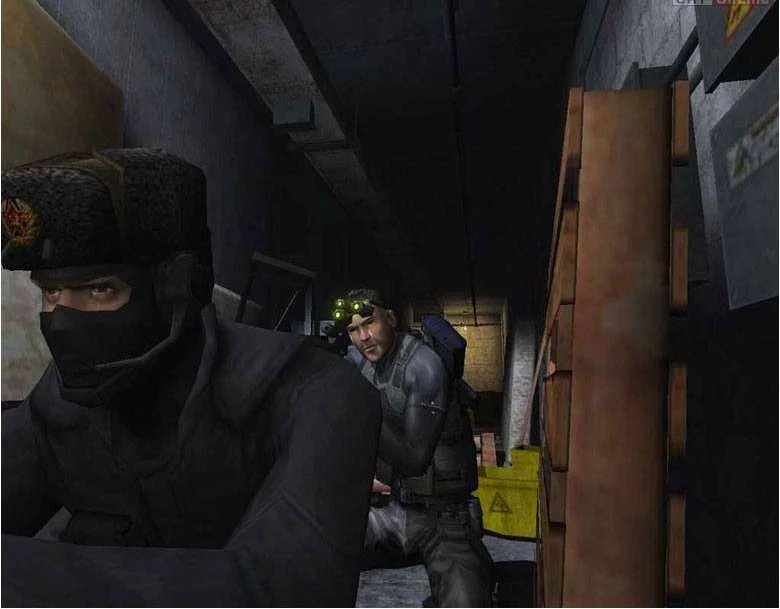
Download
Tom Clancy's Splinter Cell (2003), 2.03GB
ElAmigos release, unprotected game (serial or crack is not necessary).

Updated to version 1.3.

1. Extract files.
2. Burn or mount the image.
3. Install the game.
4. Play the game. If you like this game, BUY IT!
Tom Clancy's Splinter Cell Download
🔒 Premium access required
To see and use the download links, you must be logged in and have an active PREMIUM account.
* Unlock downloads via Torrent and TeraBox.
Included content: Tom Clancy's Splinter Cell + Tom Clancy's Splinter Cell: Mission Pack + HD Textures (optional during setup).
Torrent Download
The best torrent download speeds are with qBittorrent!
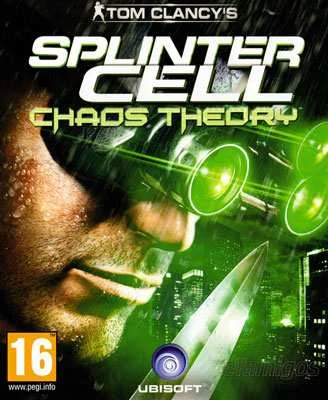
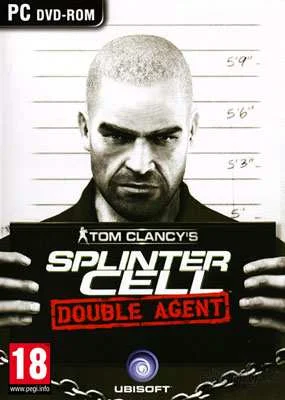
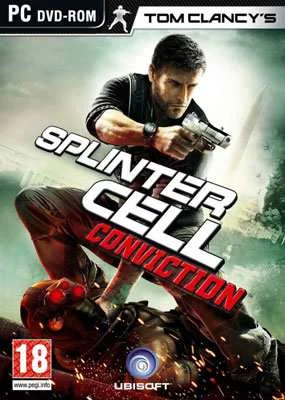
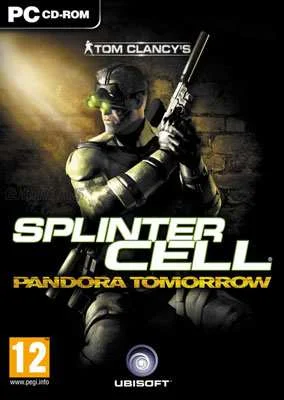
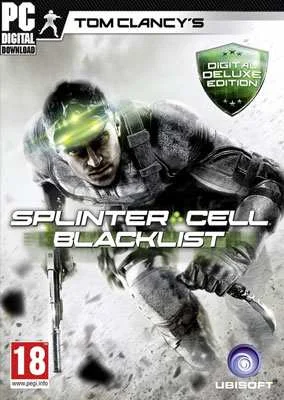
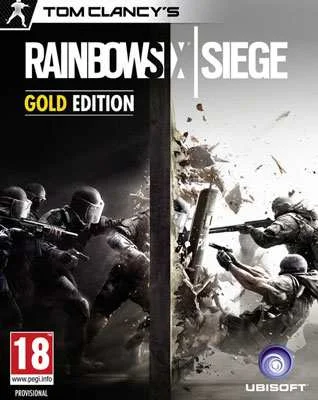
Similar games to Tom Clancy's Splinter Cell:
Before your comment If you have a problem with the installation:
#1 Files are corrupted / Checksum error / Install VC 2013 x64 - LINK1 and LINK2
#2 Add an exception in antivirus - preferably for the entire folder with the game.
#3 Update your graphics drivers.
#4 Adjust Virtual Memory - VIDEO
#5 Extracting error? Download the part where the error is again - you can use a different browser or downloader. Use Winrar or 7zip.
#6 Fix for +20 threads CPUs and old 2017-2020 installers
ReUpload? NO. Why? TeraBox links are always active (99%).
Premium TeraBox you will get for free! LINK.