GRIS
- Category:
- Release date:
- Game Genre:Arcade, platform, logical elements, 2D, indie games, experimental/art
- Developer:Nomada Studio Publisher: Devolver Digital
- Release:ElAmigos
- Platform:PC
- Languages (subtitles):English, French, German, Spanish, Russian, Portuguese-Brazil, Chinese Simplified, Traditional Chinese, Japanese, Korean
- Dubbing/Audio:English
- Crack:Codex
- Game size:0.88GB
Game Description
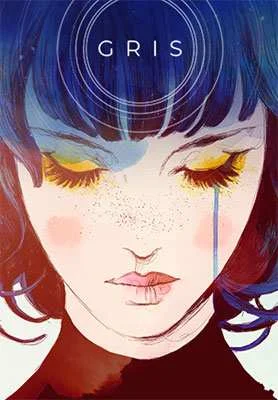
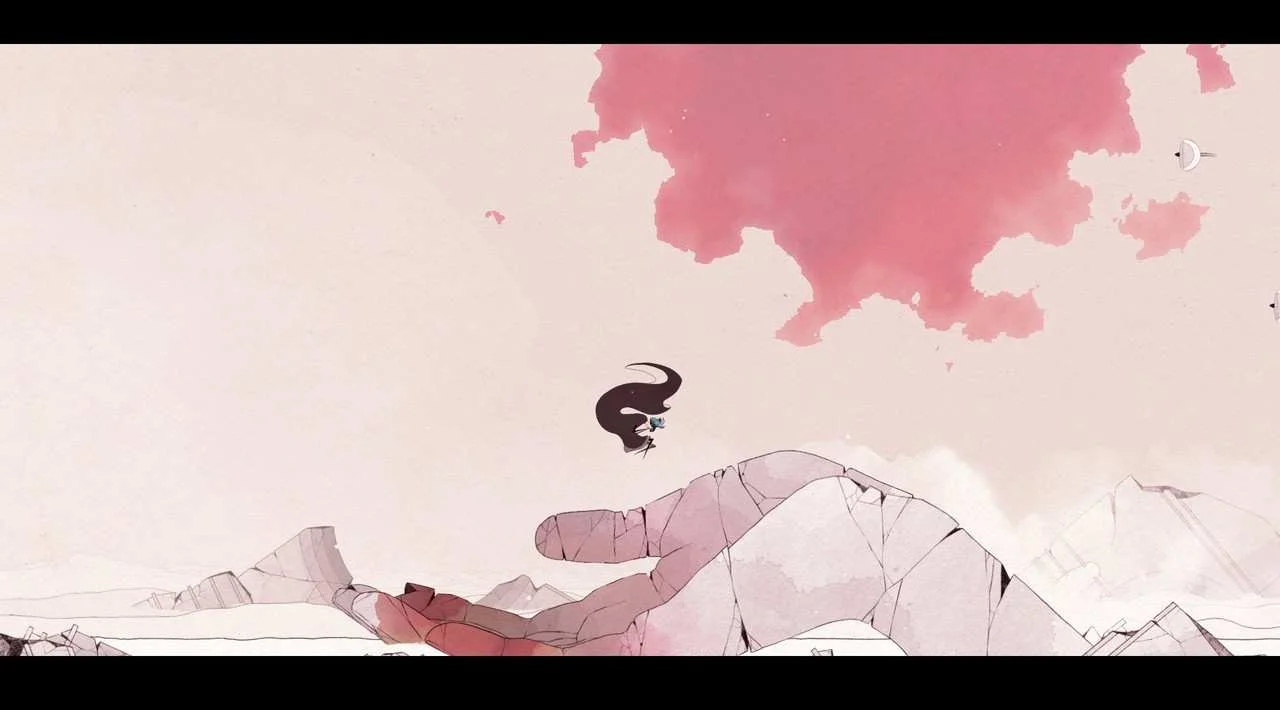
GRIS on PC is a serene 2D platform-adventure from Nomada Studio and Devolver Digital, still listed under its original name on current PC storefronts. It follows a young woman moving through a fractured inner world, combining expressive watercolor art, atmospheric music, light puzzles, and platforming without combat, conventional danger, or a game-over loop.
Rather than chasing a rebrand or a separate definitive edition, PC players will find the same core GRIS experience sold as GRIS. The game is a premium single-player release, with the optional GRIS Soundtrack available separately rather than a large expansion program or season-pass structure.
A platforming journey built around movement
GRIS uses a 2D side-scrolling perspective and a deliberately controlled pace. Gris begins with limited movement, then gradually gains abilities through her dress that change how she crosses the world. Exploration, traversal, and visual discovery form the main loop.
The game introduces light platforming in carefully arranged spaces rather than demanding precision from the first screen. Jumping, floating, swimming, falling, and moving through environmental set pieces are taught through context, with each new ability opening routes that previously seemed unreachable.
There are also light environmental puzzles and optional skill-based challenges. These encounters are generally about recognizing a route, reading visual cues, or combining movement with the surroundings instead of managing inventories, combat statistics, or complex switches.
Players who prefer a more demanding platforming test should understand the distinction between GRIS and precision-focused games. Its progression is closer to a guided artistic journey than an obstacle course, while challenging 2D platformers such as Celeste place much greater emphasis on repeated execution and mastery.
Abilities, color, and readable progression
The dress is the central mechanical system. It is not a cosmetic wardrobe or a conventional equipment screen; it grants movement options that let Gris interact with spaces in new ways. The resulting progression is easy to read because the world itself changes alongside her capabilities.
Color restoration gives the journey its structure. Areas begin in restrained palettes and develop as Gris moves forward, turning visual change into a clear sign of emotional and mechanical progress. New colors are not simply decoration: they accompany new locations, interactions, and forms of movement.
The game also uses a mostly wordless narrative. There is little conventional exposition, and control reminders rely on simple icons. Animations, music, architecture, color, and the rhythm of movement carry most of the meaning.
That approach makes GRIS approachable across language barriers, but it also asks players to interpret rather than decode a detailed lore system. The story is symbolic and personal, with the journey through sorrow expressed through changing environments and the gradual return of color.
What is included on PC
The base purchase contains the complete single-player game. There is no multiplayer campaign, co-op mode, competitive mode, or combat-focused endgame. GRIS is designed as a compact, linear experience with optional exploration and collectible-style challenges for players who want to examine its spaces more carefully.
The only separately listed add-on on the main PC storefront is the GRIS Soundtrack. It is supplementary music content rather than a gameplay expansion, so players buying the base game are not missing a second campaign, character pack, or large post-game system.
Progression is therefore about reaching new regions, learning dress abilities, restoring color, and finding optional secrets. There are no loot tiers, skill trees, crafting materials, or procedural maps competing for attention.
That focused structure is one of GRIS’s defining strengths. It gives every new mechanic room to support the same emotional direction instead of turning the game into a collection of unrelated activities.
Who should play GRIS?
GRIS is a strong fit for players who value visual storytelling, hand-drawn presentation, expressive animation, original music, and calm exploration. It works especially well for people looking for an atmospheric PC game that can be played without learning a large ruleset.
It is also suitable for players who want a platform-adventure with low frustration. The game is explicitly built without traditional enemies, combat, or death-driven repetition, so failure rarely interrupts the flow of discovery.
Players seeking boss fights, build variety, difficult jumps, branching dialogue, or a long-form role-playing system should look elsewhere. GRIS offers gentle challenge, not a demanding mechanical gauntlet.
Its emotional subject matter is presented through metaphor rather than direct explanation. That makes the experience open to interpretation, but players who prefer heavily documented plots and explicit character dialogue may find the storytelling intentionally spare.
PC features, launcher, and language support
On Steam, GRIS is a single-player title with Steam Achievements, Steam Cloud, Family Sharing, Trading Cards, and Steam Remote Play support for phone, tablet, and TV. The Steam edition uses the Steam client as its launcher environment.
GRIS also has a GOG version with DRM-free distribution. That edition can be installed and played without requiring GOG Galaxy, which makes it the more direct choice for players who want an offline installer and no mandatory platform client.
The game supports full controller input on Steam, alongside standard PC control options. Its simple movement scheme works naturally with a gamepad, making it a practical fit for a living-room PC or handheld-style setup.
Interface text is available in English, French, German, Spanish, Japanese, Korean, Russian, Simplified Chinese, Traditional Chinese, and Brazilian Portuguese. Because the narrative uses very little text and universal visual prompts, localization has a smaller impact on the overall experience than in dialogue-heavy adventures.
Similar games on PC
GRIS sits between a platformer, an art-driven adventure, and a wordless interactive story. Its closest comparisons are not identical mechanical matches, but games that use movement, atmosphere, and visual language as major parts of their identity.
Story-led 2D adventures like Never Alone (Kisima Ingitchuna) share GRIS’s side-scrolling exploration and emphasis on environmental interaction, although Never Alone is built around character switching and local co-op rather than GRIS’s solitary journey.
Narrative-focused 2D platform adventures such as My Memory of Us are another useful comparison for players who want visual storytelling and movement to carry emotional themes. Its character-driven structure is more explicit, while GRIS relies more heavily on symbolism, color, and music.
These comparisons help set expectations: GRIS is not a combat platformer or a systems-heavy puzzle game. It is best understood as a carefully paced, single-player audiovisual journey with platforming and exploration supporting the mood.
GRIS FAQ
Is GRIS still the official PC name?
Yes. Current Steam and GOG listings use GRIS, and no verified storefront rebrand or replacement PC edition was found. The game remains associated with Nomada Studio and Devolver Digital.
Is GRIS multiplayer or co-op?
No. GRIS is a single-player experience. Steam Remote Play features are listed for supported devices, but they do not turn the game into a local or online co-op title.
Does GRIS have combat?
No traditional combat system is present. The game focuses on movement, environmental puzzles, exploration, and optional skill challenges, with no enemy-fighting loop or conventional death penalty.
What kind of game is GRIS?
It is a 2D side-scrolling platform-adventure with puzzle elements, exploration, surreal presentation, and a mostly wordless narrative. Its difficulty is gentle compared with precision platformers.
Does GRIS support controllers on PC?
The Steam version supports full controller input, making a gamepad a suitable way to play. Keyboard and mouse remain available for PC players who prefer traditional controls.
Which languages does GRIS support?
Steam lists interface support for English, French, German, Spanish, Japanese, Korean, Russian, Simplified Chinese, Traditional Chinese, and Brazilian Portuguese. The limited-text presentation also reduces reliance on extensive translation.
System Requirements
Minimum: |
Processor: Intel Core 2 Duo E6750 2.66 GHz / AMD Athlon 64 X2 5000+ 2.6 GHz Graphics: 1 GB GeForce GT 430 / Radeon HD 5570 Memory: 4 GB RAM Disk space: 1 GB HDD Operating system: Windows 7 |
Screenshots


Trailer/Gameplay
Download
GRIS (2018), 0.88GB
ElAmigos release, game is already cracked after installation (crack by Codex).
Updated till 07.03.2019.

1. Extract files.
2. Burn or mount the image.
3. Install the game.
4. ElAmigos release, game is already cracked after installation.
5. Play the game. If you like this game, BUY IT!
GRIS Download
🔒 Premium access required
To see and use the download links, you must be logged in and have an active PREMIUM account.
* Unlock downloads via Torrent and TeraBox.
Torrent Download
The best torrent download speeds are with qBittorrent!