Lost Sphear

- Category:
- Release date:
- Game Genre:RPG, fantasy, jRPG
- Developer:Tokyo RPG Factory Publisher: Square Enix
- Release:ElAmigos
- Platform:PC
- Languages (subtitles):English, French, German, Japanese
- Dubbing/Audio:English
- Crack:Ali213, Codex
- Game size:2.79GB
Game Description
Lost Sphear on PC is a single-player Japanese role-playing game from Tokyo RPG Factory and Square Enix, built around a fading world, recoverable memories, and a strategic Active Time Battle system. The PC storefront continues to list the game as LOST SPHEAR; no verified rebrand, replacement title, or definitive edition currently supersedes that name.
A classic JRPG loop with tactical movement
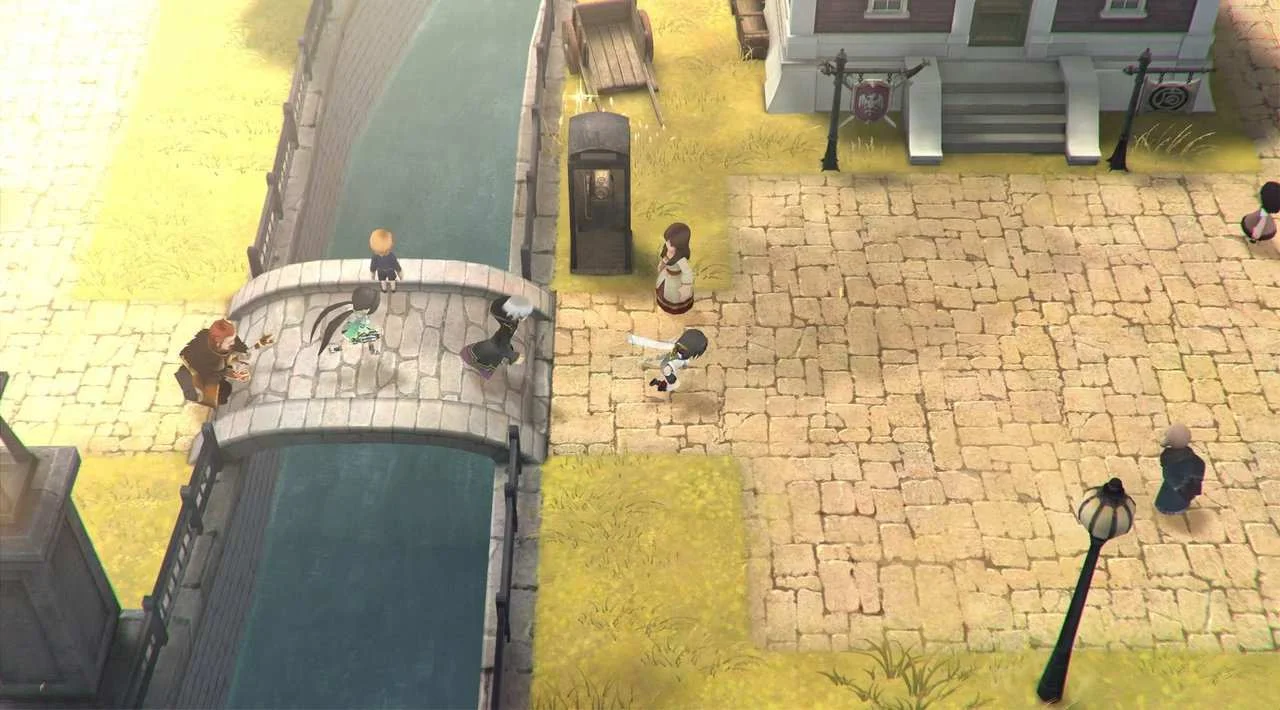
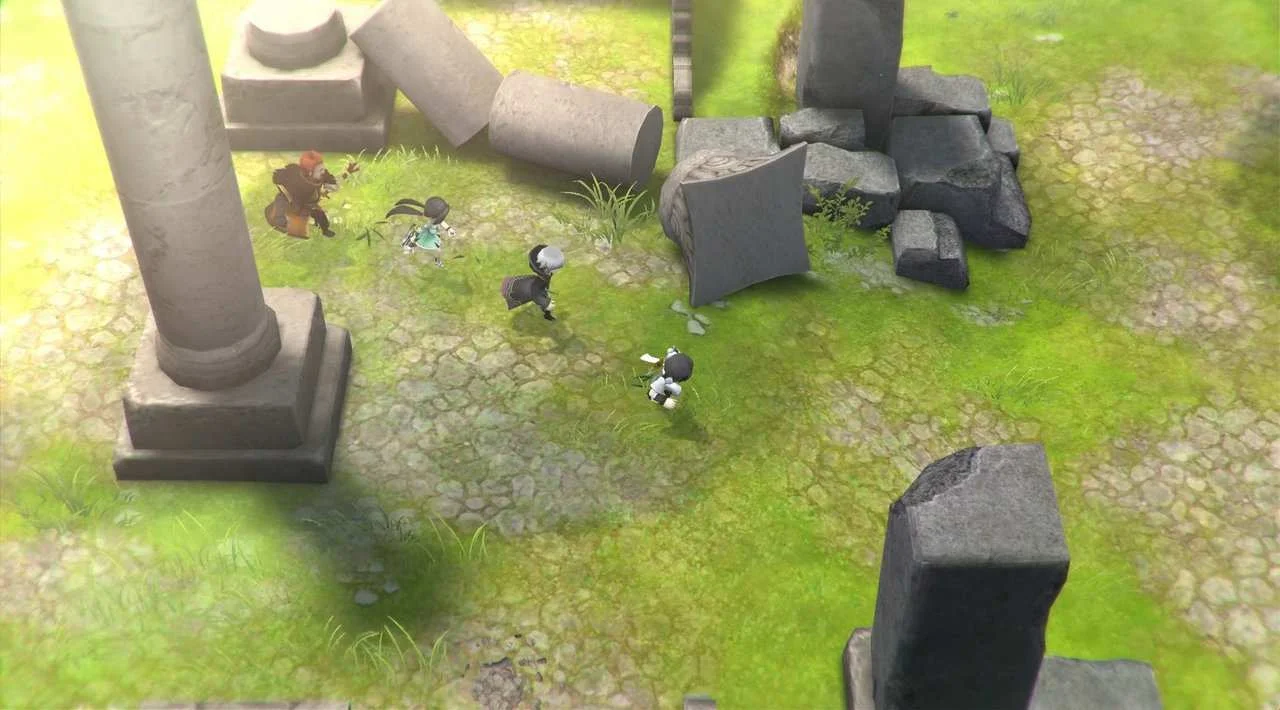
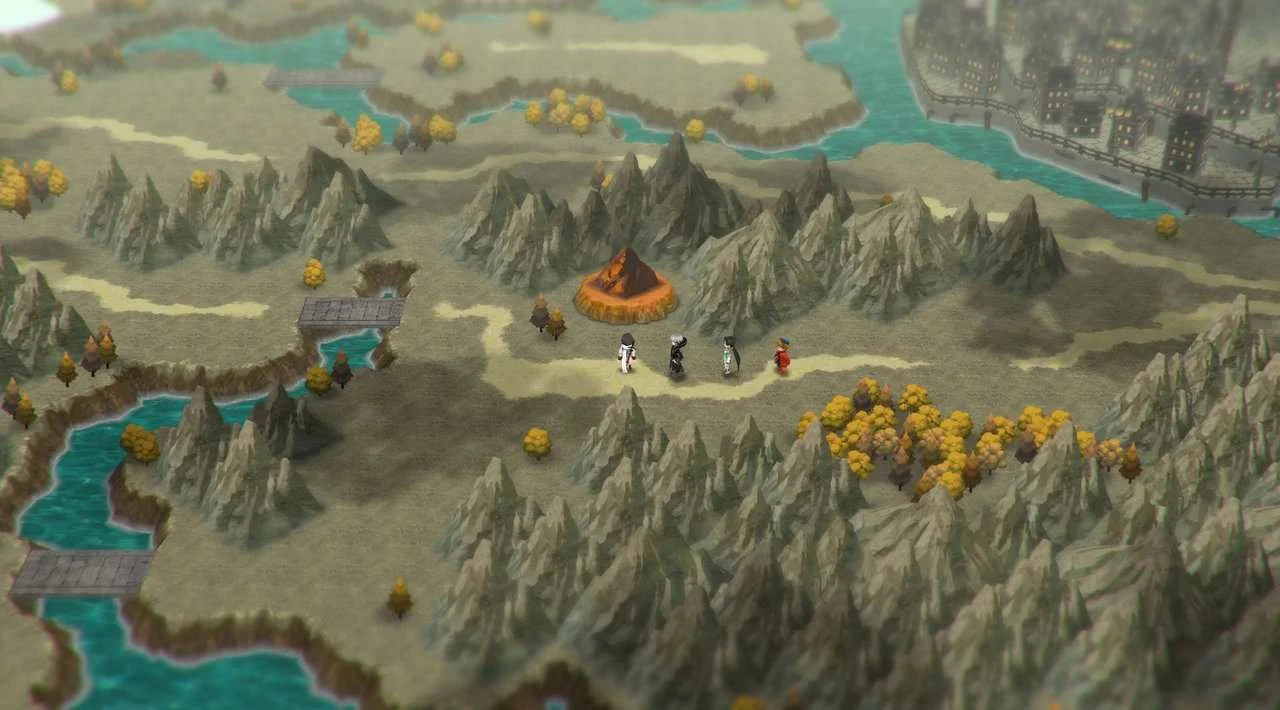
Lost Sphear follows Kanata and his companions as they confront a phenomenon that causes people, places, and parts of the world to disappear. Exploration uses a top-down, three-dimensional presentation with towns, fields, ruins, and story locations connected through a traditional linear adventure structure.
The defining progression loop is the recovery of Memories. These memories are not only narrative collectibles. They are used to restore lost elements of the world and help unlock the systems needed to move the story forward.
Combat uses an enhanced ATB Battle System. Characters and enemies act as their gauges fill, but battles are not limited to selecting commands from fixed positions. Party members can move around the battlefield before acting, making distance, attack areas, and enemy placement important parts of each encounter.
That movement gives Lost Sphear more tactical texture than a purely menu-driven RPG. A well-placed character can line up an area attack, avoid an incoming pattern, or reach a more useful position before spending an action. The system still feels recognizably classic, but it rewards players who plan around space as well as statistics.
Memory, Spiritnite, and battle customization
Lost Sphear connects its world premise to character development through Spiritnite customization. Abilities can be acquired, equipped, and adjusted to shape how each party member contributes in combat. The result is a flexible system for tuning damage, support, and utility rather than simply replacing equipment whenever a stronger item appears.
Abilities also interact with the game's Momentum mechanic. Timed button inputs can improve the effect of certain actions, giving attacks and techniques an additional execution layer. Momentum is most useful when treated as part of a broader build rather than as a standalone reflex challenge.
Memory items can also be combined into Artifacts. These constructions apply special effects to the adventure, including changes that influence battles and other aspects of exploration. Artifacts are easy to overlook if you only follow the main path, but they are one of the game's clearest answers to players who want optional systems to shape their route through a JRPG.
The party structure supports experimentation. Different characters have distinct attack ranges, abilities, and tactical roles, so party selection matters more than simply choosing the highest-level lineup. Players who enjoy comparing skill layouts and adjusting a team for particular enemy formations will find more depth here than the nostalgic presentation initially suggests.
Its combat lineage is easiest to understand alongside classic Square-style ATB design. Players who want the foundational version of that approach can compare it with time-traveling classic JRPG combat in Chrono Trigger, while Lost Sphear adds free battlefield movement and its own memory-based customization.
Vulcosuits change how encounters work
One of Lost Sphear's most distinctive additions is the Vulcosuit, a mechanized armor system that gives selected characters access to specialized equipment and attacks. Vulcosuits are not merely cosmetic upgrades. They provide different abilities for field traversal and can alter how a character approaches battle.
In combat, Vulcosuits unlock powerful Paradigm Drive attacks with effects that vary by character. These attacks give the party another resource and timing decision, particularly in encounters where positioning several enemies or exploiting a weakness can swing the result.
The suits also reinforce the game's mixture of old and new ideas. The surrounding adventure follows familiar town, dungeon, and party conventions, while Vulcosuits introduce a more mechanical layer that lets the player change the rhythm of difficult fights.
Outside battle, individual Vulcosuit abilities can help overcome obstacles in the environment. This makes the suits relevant during exploration instead of reducing them to a special attack menu used only against bosses.
Content structure and available editions
On PC, Lost Sphear is sold as a conventional premium single-player RPG rather than a free-to-play game or live-service product. The main purchase is the campaign and its core progression systems, with no online subscription or recurring multiplayer model attached to the experience.
The Steam listing identifies the game as an action, adventure, and RPG title with single-player support, Steam Achievements, Steam Trading Cards, and Family Sharing. The store also displays a third-party EULA requirement.
Steam's associated content includes LOST SPHEAR DAY-1 DLC and a separate official remix album. These should be understood as optional add-ons rather than a replacement edition or a major story expansion. The base game remains the central product for players evaluating the PC version.
The content model is therefore straightforward: buy the RPG for its campaign, memory restoration, party customization, and tactical battles, then treat the soundtrack and bonus DLC as supplementary extras. There is no verified current storefront rebrand that bundles the game under a new definitive name.
Who Lost Sphear suits
Lost Sphear is aimed at players who want a single-player traditional JRPG with a clear party, a focused story route, and combat that rewards positioning. It is a reasonable fit for fans of ATB systems who want more freedom than fixed command rows usually provide.
The game is also suited to players who enjoy optional build decisions. Spiritnite, Momentum, Artifacts, and Vulcosuits create several layers to inspect between story scenes and battles, even though the overall adventure remains recognizably old-school.
Players looking for a heavily branching role-playing game, online co-op, or an open-ended sandbox should set expectations accordingly. Lost Sphear is structured as a linear Japanese RPG, and its freedom comes mainly from combat setup, memory use, and party configuration rather than from broad narrative choice.
Those who prefer fast real-time action may also find the pacing deliberate. The ATB gauges keep combat moving, but every encounter still asks the player to read the field, choose a command, and manage resources instead of relying on continuous attacks.
PC features, controls, and localization
The PC version includes full controller support through Steam, alongside keyboard input. Steam's feature data also identifies a keyboard-only option, adjustable difficulty, and custom volume controls, which makes the port more flexible than a basic mouse-and-keyboard conversion.
Steam Deck compatibility is listed as Verified, with controller icons and interface readability accounted for in the platform configuration. That makes the game particularly suitable for players who want a compact, controller-first way to play a menu-driven RPG.
Localization is limited to English, French, German, and Japanese interface text. The Steam listing does not provide full voice audio for these languages, so players should approach Lost Sphear as a text-localized RPG rather than a voiced-language showcase.
The PC release is distributed through Steam and requires acceptance of the game's third-party EULA. No multiplayer mode, co-op mode, dedicated server tool, or anti-cheat feature is listed for the game, because its design is entirely centered on offline single-player progression.
For another Tokyo RPG Factory comparison, players can look at the real-time demon-fighting action RPG Oninaki. It shares the studio's interest in focused Japanese RPG systems, but its combat and perspective are substantially different from Lost Sphear's ATB-based party battles.
Similar games on PC
Lost Sphear's closest mechanical reference point is Chrono Trigger-style ATB combat, but it is not a remake or sequel. Its own identity comes from free positioning, Spiritnite builds, memory restoration, and mechanized Vulcosuits.
I Am Setsuna is the most direct comparison in terms of developer lineage and classic-JRPG intent, although Lost Sphear expands the formula with movement during battle, Artifacts, and Paradigm Drives. Oninaki is a looser comparison because it uses real-time action and daemon-based customization instead of turn-based party commands.
Players should choose Lost Sphear when they want a focused, linear adventure with a nostalgic structure but enough tactical systems to make party planning matter. It is less suitable when the priority is open-world exploration, extensive dialogue choices, or multiplayer progression.
Lost Sphear FAQ
Is Lost Sphear still called LOST SPHEAR on PC?
Yes. The current Steam listing uses LOST SPHEAR. There is no verified PC rebrand, definitive replacement, or newer storefront title that supersedes it.
What kind of game is Lost Sphear?
It is a single-player Japanese role-playing game with a top-down three-dimensional presentation, linear adventure structure, party-based combat, and an enhanced ATB system with free movement during battles.
Does Lost Sphear have multiplayer or co-op?
No. The PC version is listed as single-player, with no online co-op, local multiplayer, or split-screen mode.
What makes Lost Sphear's combat different?
Characters can move around the battlefield while waiting for or preparing actions. Positioning affects attack coverage and tactical safety, while Momentum timing, Spiritnite abilities, and Paradigm Drive attacks add further customization.
What are Memories and Artifacts used for?
Memories help restore parts of the disappearing world and support story progression. They can also be used to create Artifacts that apply special effects to battles and other areas of the adventure.
Does the PC version support controllers and Steam Deck?
Yes. Steam lists full controller support, and the game is listed as Steam Deck Verified. Keyboard input is also available.
Which languages are supported on PC?
The PC version supports English, French, German, and Japanese interface text. Steam does not list full audio for those languages.
System Requirements
Minimum: | Recomended: |
| Processor: Intel Core i3 2.4 GHz Graphics: 1 GB GeForce GTX 460 / Radeon HD 5750 Memory: 4 GB RAM Disk space: 3 GB HDD Operating system: Windows 7 64-bit | Processor: Intel Core i5 2.0 GHz Graphics: 2 GB GeForce GTX 560 Ti / Radeon HD 7770 Memory: 4 GB RAM Disk space: 3 GB HDD Operating system: Windows 8/8/8.1/10 64-bit |
Screenshots
Trailer/Gameplay
Download
Lost Sphear (2018), 2.79GB
ElAmigos release, game is already cracked after installation (crack by Ali213 or Codex).

1. Extract files.
2. Burn or mount the image.
3. Install the game.
4. ElAmigos release, game is already cracked after installation.
5. Play the game. If you like this game, BUY IT!
Lost Sphear Download
🔒 Premium access required
To see and use the download links, you must be logged in and have an active PREMIUM account.
* Unlock downloads via Torrent and TeraBox.
Torrent Download
The best torrent download speeds are with qBittorrent!