Moss Book II VR
- Release date:
- Game Genre:Arcade, fantasy, 3D platformers, Oculus Rift/Quest, action adventure, PlayStation VR, SteamVR, virtual reality
- Developer:
- Release:ElAmigos
- Platform:PC
- Languages (subtitles):English, French, Italian, German, Spanish, Russian, Portuguese-Brazil, Swedish, Korean, Japanese, Traditional Chinese, Simplified Chinese
- Dubbing/Audio:English, French, German, Spanish, Japanese, Chinese Simplified, Chinese Traditional
- Crack:Codex, FLT
- Game size:4.75GB
Game Description
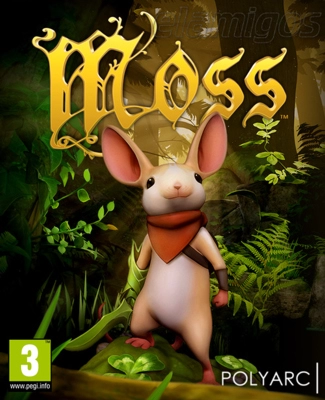
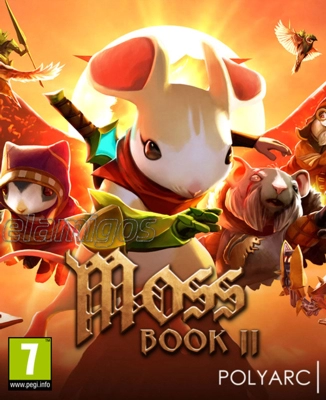
Moss Book II VR is a story-driven action-adventure puzzle game for PC VR, developed and published by Polyarc. The current Steam storefront listing uses the name Moss II VR, while the game itself and Polyarc's official materials continue to identify it as Moss: Book II. It is the direct sequel to Moss and requires a virtual reality headset.
This is also separate from Moss: The Forgotten Relic, the later flat-screen reimagining that combines Moss, Book II, and the Twilight Garden content into one non-VR package. Players specifically looking for the original seated VR design should choose the Moss II VR listing.
A Seated VR Adventure Built Around Two Heroes
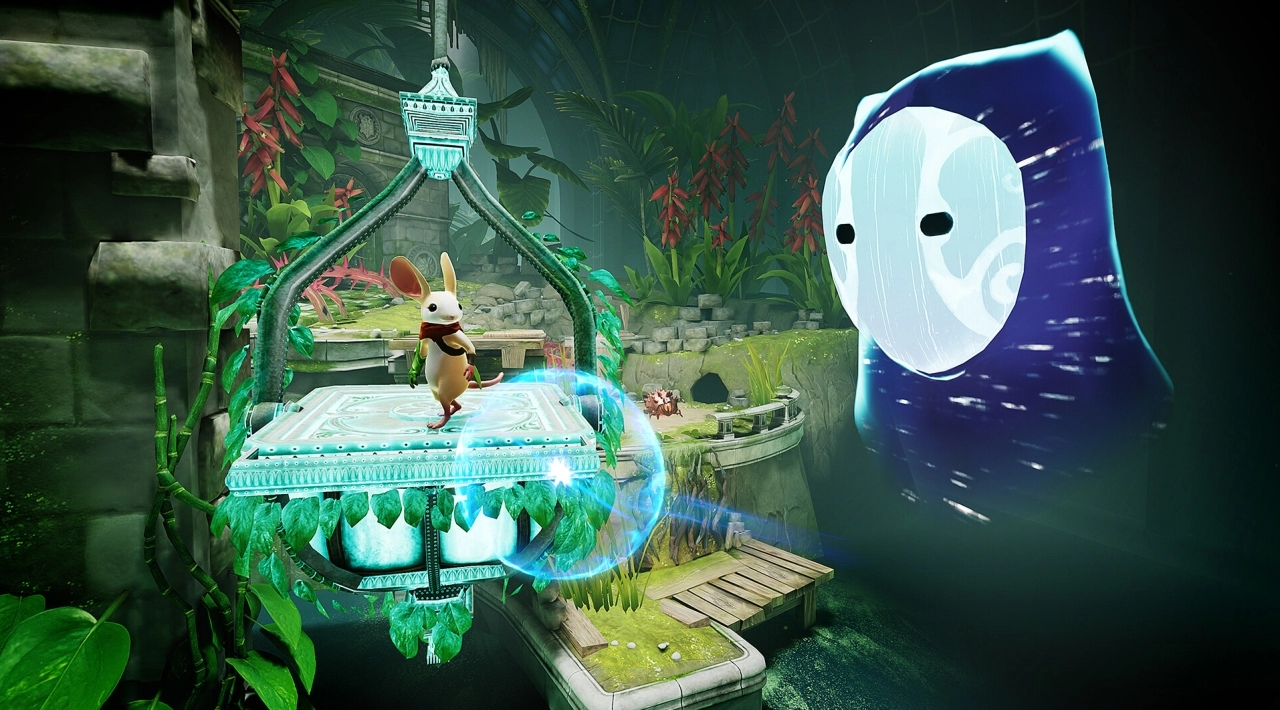
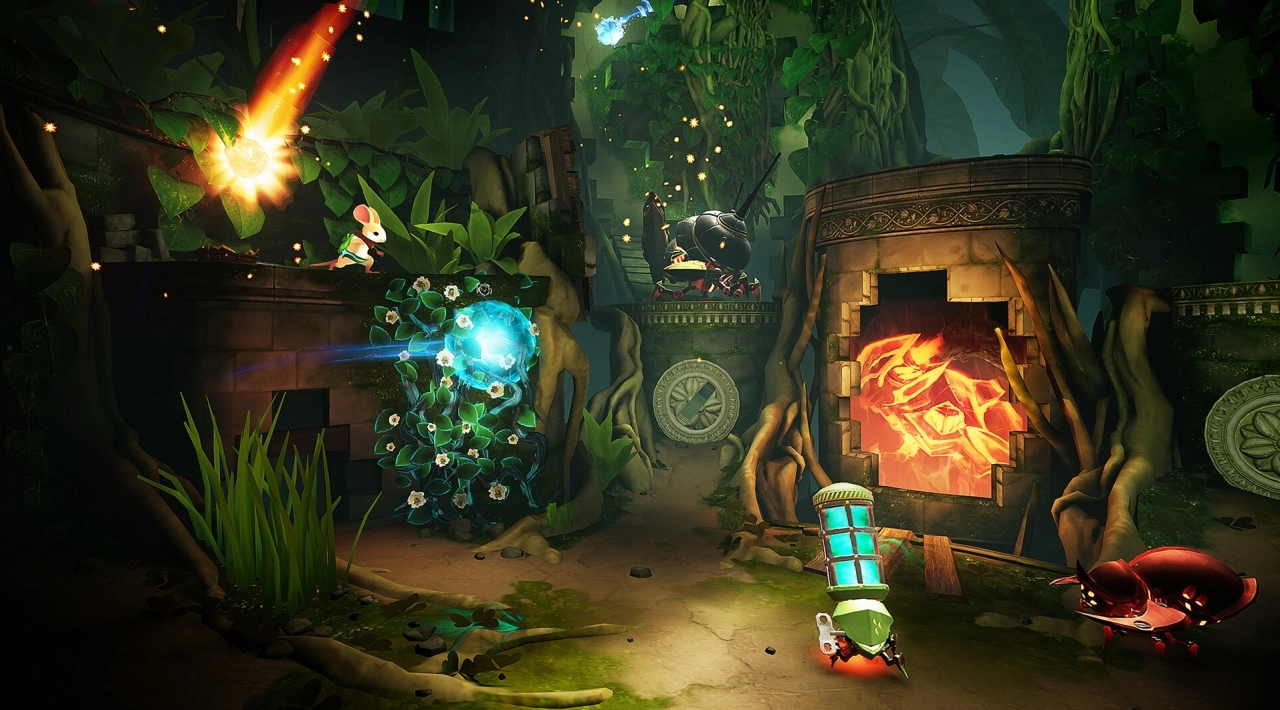
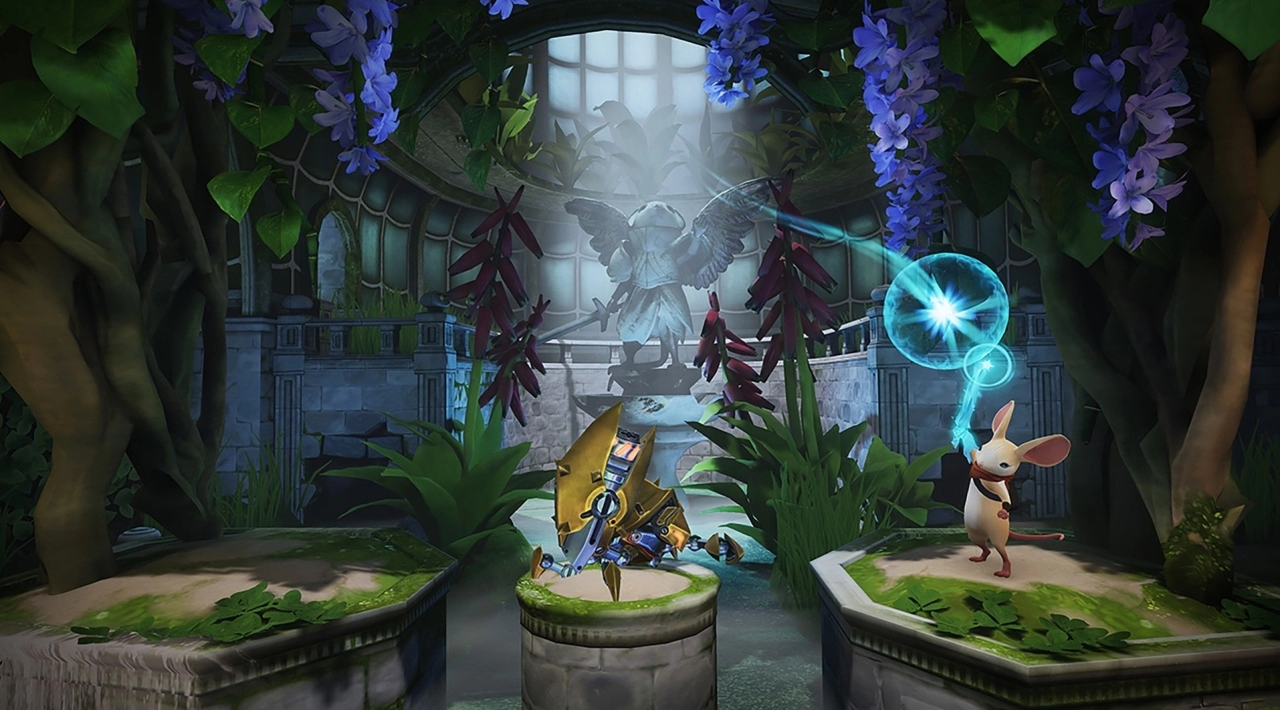
Moss: Book II places you in the role of the Reader, a presence who looks down into detailed, room-sized dioramas while guiding the young mouse Quill. Quill is controlled like a traditional third-person platforming hero, but the Reader can also reach directly into the environment and influence objects, enemies, switches, and pathways.
The result is a deliberate combination of third-person action-adventure controls and first-person VR interaction. You move Quill through compact environments, jump across gaps, fight hostile creatures, and search for a route forward while using your tracked hands to reshape the space around her.
Most areas are self-contained dioramas rather than one continuous open world. That structure keeps the puzzles readable and gives every location room for close inspection. You can lean toward a ledge, look behind scenery, or physically examine details that would be easy to miss from a conventional camera.
Combat, Exploration, and Environmental Puzzles
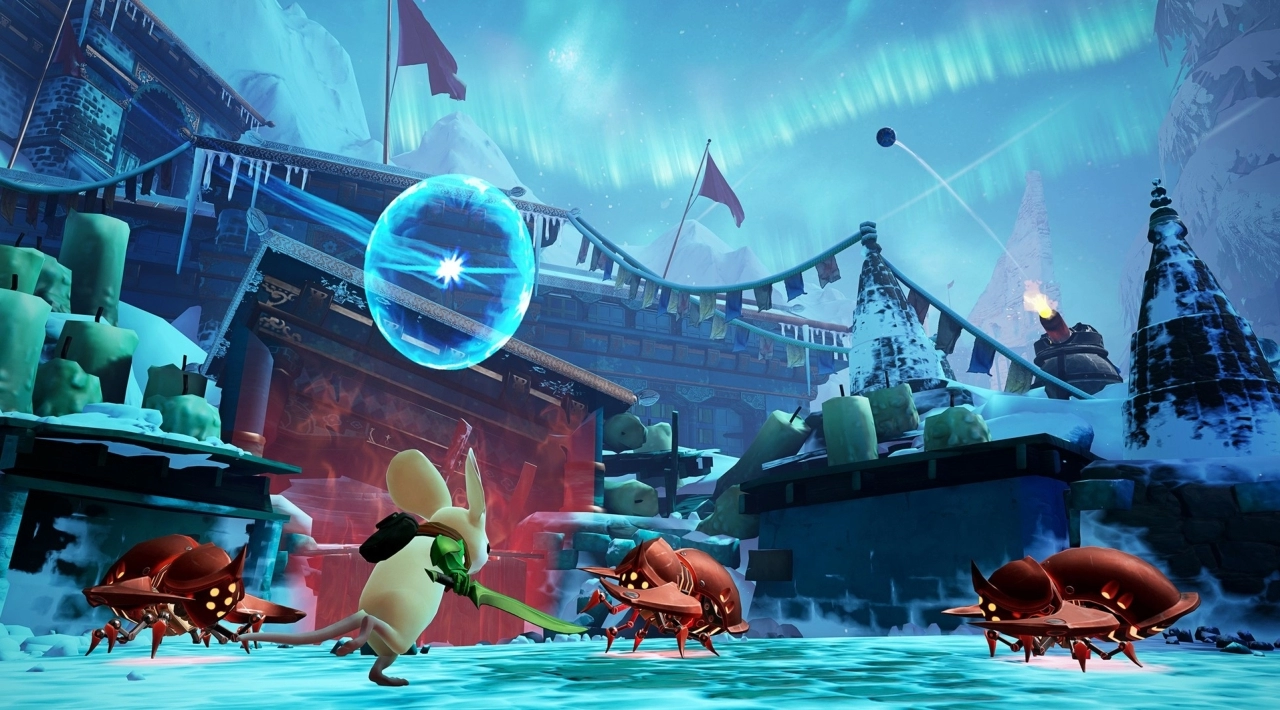
Quill's core abilities include movement, jumping, attacking, and evasive actions. Combat is accessible, but it is not purely automatic: positioning, timing, weapon choice, and the Reader's intervention all matter when enemies surround her.
The Reader's abilities are equally important. You can move objects, manipulate parts of the environment, interact with mechanisms, assist Quill during encounters, and affect enemies so that she can safely attack or reach a new position.
Book II expands the original formula with more vertical navigation and additional tools. Quill can climb in selected areas, while new weapons such as the heavy hammer and throwable circular blade add different combat and puzzle functions alongside her sword.
Weapons are not simple cosmetic swaps. Some encounters reward the right attack pattern, while certain environmental obstacles are designed around a particular tool. Switching equipment through the VR interface reinforces the idea that the Reader is actively supporting Quill rather than merely issuing commands from a distance.
The best puzzles ask both characters to work at once. Quill may need to stand on a platform, pull a lever, or draw an enemy into position while the Reader moves a block, holds a mechanism, or reaches into a distant part of the diorama. This two-character structure is the game's defining design principle.
What Makes Book II Different
The strongest feature is the Reader and Quill partnership. Quill is an independent character with expressive animation and clear reactions, while the Reader is represented through direct physical presence. The game uses that relationship for problem-solving, combat support, and emotional storytelling.
Book II also introduces more varied environments than the original adventure. Quill travels through the castle of the Arcane, underground spaces, snow-covered mountain regions, and areas filled with ancient artifacts and hostile creatures. Each setting changes the visual language of the puzzles without abandoning the compact diorama format.
Story scenes are framed like pages in a fantasy book, with narration and illustrated transitions connecting the playable sections. The presentation is intentionally theatrical, but the narrative remains focused on Quill's effort to protect the Glass and oppose the forces trying to unmake her world.
There is no character-class system, open-ended loot grind, or multiplayer campaign. Progress comes from learning the level layouts, mastering Quill's tools, completing optional discoveries, and understanding how the Reader's abilities interact with each environment.
Content, Progression, and Commercial Model
Moss II VR is a paid single-player game rather than a free-to-play service. The main purchase provides the Book II adventure, its combat encounters, environmental puzzles, narrated story sections, and exploration-focused progression.
The current Steam page lists achievements and a separate soundtrack add-on. It does not present a collection of gameplay expansion packs for Book II, so players should not expect a season-pass structure or a large catalog of paid mission bundles.
Because this is a direct sequel, the most coherent way to play the series is to complete Moss first and then continue with Book II. Newcomers can follow the sequel's story, but some character relationships and world context are carried over from the earlier game.
Completion is based on moving through the campaign, solving environmental challenges, defeating enemies, and searching the dioramas for optional discoveries. That makes the game a fit for players who enjoy mastery and observation more than repeated procedural runs or competitive score chasing.
Who Should Play Moss II VR?
This is a strong match for players who want comfortable seated VR, a clear narrative, light-to-moderate combat, and puzzles that use spatial interaction. It is also approachable for people who are new to VR because movement is mostly handled through Quill rather than unrestricted first-person locomotion.
The game should appeal to fans of storybook fantasy, miniature environments, expressive character animation, and games where the player feels physically involved in the world. Its pacing leaves room to inspect scenery instead of constantly pushing toward the next fight.
Players seeking a long-form role-playing system, open-world exploration, cooperative play, or highly demanding action may find the structure too contained. The campaign is built around authored rooms and carefully staged encounters, not endless replayability or competitive depth.
For a non-VR comparison, the environmental scale and perspective-driven puzzle design have some kinship with surreal first-person puzzle adventures such as Maquette, although Moss II VR is more focused on combat, platforming, and character interaction.
PC VR Features and Input
The PC version is VR-only and launches through SteamVR. Steam lists single-player support, Steam Achievements, Steam Cloud, Family Sharing, and tracked controller support. There is no conventional keyboard-and-mouse mode presented as the intended way to play.
Tracked motion controllers are central to the Reader's actions. The PC listing identifies support for common PC VR ecosystems including Valve Index, HTC Vive, and Oculus Rift-class devices, while Quest owners can access the PC version through a compatible PC VR connection.
The game is primarily designed as a seated experience. You look around the diorama, reach into the scene, and guide Quill with the controller while remaining largely stationary. That makes it less physically demanding than room-scale action games, though precise tracking still matters when interacting near the edges of a level.
Steam lists 13 supported interface and subtitle languages. Full audio is available in English, French, German, Japanese, Simplified Chinese, and Traditional Chinese, while the remaining listed languages provide interface and subtitle localization.
There is no listed competitive multiplayer, online co-op, or split-screen mode. Moss II VR is a single-player experience built around the unusual feeling of being both an observer and an active partner inside the same miniature world.
Similar PC Games
If the strongest appeal is quiet exploration, environmental storytelling, and a fantasy world built around visual discovery, third-person puzzle adventures like RiME offer a comparable emphasis on movement, atmosphere, and authored environments without the VR requirement.
For players more interested in platforming, character abilities, and cooperative-style puzzle logic, fairy-tale platform adventures such as Trine 4 provide a broader side-scrolling alternative with more traditional multiplayer support.
Neither comparison reproduces Moss II VR's central feature: physically reaching into the level to assist a character you are simultaneously controlling. That dual perspective is what separates Polyarc's sequel from ordinary puzzle platformers.
Moss II VR FAQ
Is Moss II VR the same game as Moss: Book II?
Yes. Moss II VR is the current Steam listing name for the PC VR version commonly known as Moss: Book II. It is the sequel to Moss, not a separate third entry.
Does Moss II VR require a VR headset?
Yes. The Steam version is marked VR Only and is intended to run through SteamVR with tracked motion controllers. The separate Moss: The Forgotten Relic package is the non-VR option.
Can Moss II VR be played in multiplayer?
No. The game is listed as single-player and has no online co-op, local co-op, or split-screen campaign mode.
What weapons does Quill use?
Quill uses her sword along with additional tools introduced during the adventure, including a hammer and a throwable circular blade. These weapons affect both combat encounters and selected environmental puzzles.
Is Moss II VR comfortable for people sensitive to VR movement?
Its seated, mostly stationary design is generally more approachable than free-movement VR games. You still need to look around and reach into the dioramas, but Quill handles most movement through the environment.
Does the game support subtitles in multiple languages?
Yes. The PC storefront lists 13 supported languages across interface and subtitles, with full audio available in a smaller group of languages including English, French, German, Japanese, Simplified Chinese, and Traditional Chinese.
System Requirements
Minimum: |
Processor: Intel Core i7-4790 / AMD Ryzen 5 1500X or better Graphics: Nvidia GeForce GTX 1070 8GB / AMD RX Vega 56 8GB or better Memory: 8 GB RAM Disk space: 6 GB HDD Operating system: Windows 10 (64-bit) |
Screenshots
Trailer/Gameplay
Download
Moss Book II VR (2022), 4.75GB
ElAmigos release, game is already cracked after installation (crack by Codex or FLT).

Updated to version 1.0.3.96503 (25.10.2022).

Installation time with 16 threads CPU and SSD - 1 minute.
Credits to Razor12911.

1. Extract files.
2. Burn or mount the image.
3. Install the game.
4. ElAmigos release, game is already cracked after installation.
5. Play the game. If you like this game, BUY IT!
Moss Book II VR Download
🔒 Premium access required
To see and use the download links, you must be logged in and have an active PREMIUM account.
* Unlock downloads via Torrent and TeraBox.
Torrent Download
The best torrent download speeds are with qBittorrent!