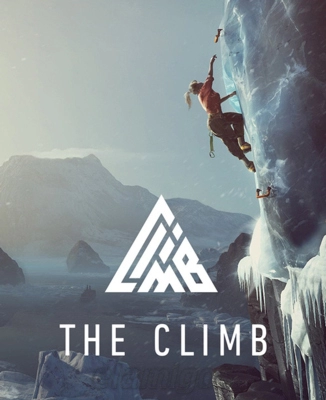
The Climb VR
- Release date:
- Game Genre:Arcade, FPP, extreme sports, Oculus Rift/Quest, virtual reality, climbing
- Developer:
- Release:ElAmigos
- Platform:PC
- Languages (subtitles):English, French, German, Spanish, Korean
- Dubbing/Audio:English, French, German, Spanish, Korean
- Crack:Arthur Ford
- Game size:9.92GB
Game Description
The Climb PC is a first-person virtual reality climbing game from Crytek, built around free-solo ascent, route choice, hand movement, and the physical tension of looking down from a great height. The game is still officially branded The Climb; older references may call its storefront Oculus Home or Oculus Store, while current Meta platform naming uses the Meta Horizon Store and Link PC VR Store. No verified game rebrand or separate definitive edition has replaced the original name.
This is not a conventional adventure campaign. It is a focused VR climbing experience where players replay routes to improve technique, beat personal times, unlock equipment, complete achievements, and challenge asynchronous leaderboard ghosts.
How The Climb Plays on PC
The core loop is direct: choose a route, study the rock face, reach from hold to hold, and find the safest or fastest way to the summit. The first-person camera keeps the player close to the action, with virtual hands representing the main tools for movement.
Free-solo climbing is the defining mechanic. You grab ledges, shift your weight through hand placement, search for alternate paths, and make controlled jumps when the route demands it. The game is designed around standing in place physically while the virtual body handles the ascent, so there is no conventional walking or teleportation loop.
Grip management gives the simple controls meaningful depth. In the more demanding rule set, stamina drains as you hang from holds and move inefficiently, while chalk helps restore reliable grip. Good runs depend on planning when to pause, when to chalk, and when to commit to the next section rather than blindly reaching upward.
The climbing surfaces are not always solved by following one obvious line. Tougher routes can offer branching paths, shortcuts, caves, ladders, ropes, and traversal sections that reward players who learn the environment. The result is closer to route optimization than a linear obstacle course.
Players who want a gentler introduction can use Tourist mode. It simplifies or removes some of the pressure mechanics, allowing newcomers to explore the scenery and learn the hand controls without chasing scores. This makes the mode useful for demonstrations, casual sessions, or anyone who finds the competitive climbing rules too demanding.
Locations, Routes, and Progression
The Climb presents several distinct climbing regions rather than a story-driven world. Crytek identifies the Alps, Canyon, Bay, and North as major environments, each using different scenery and route ideas to change how the ascent feels.
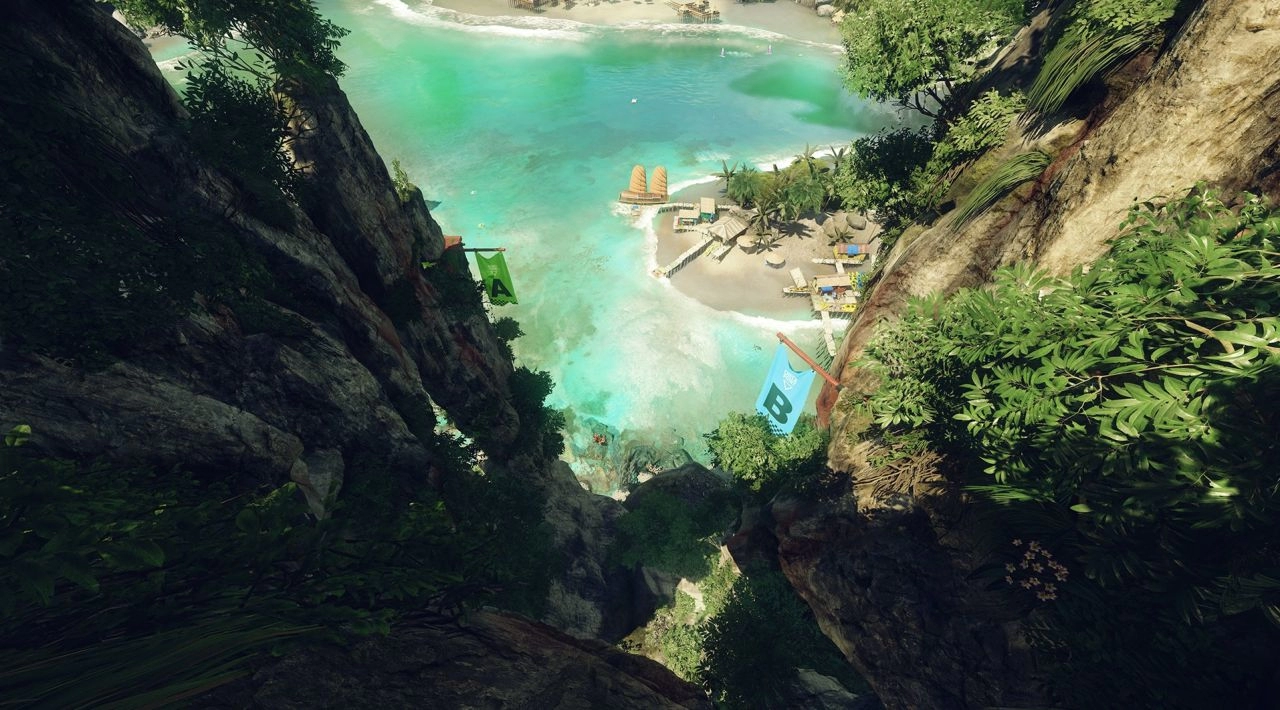
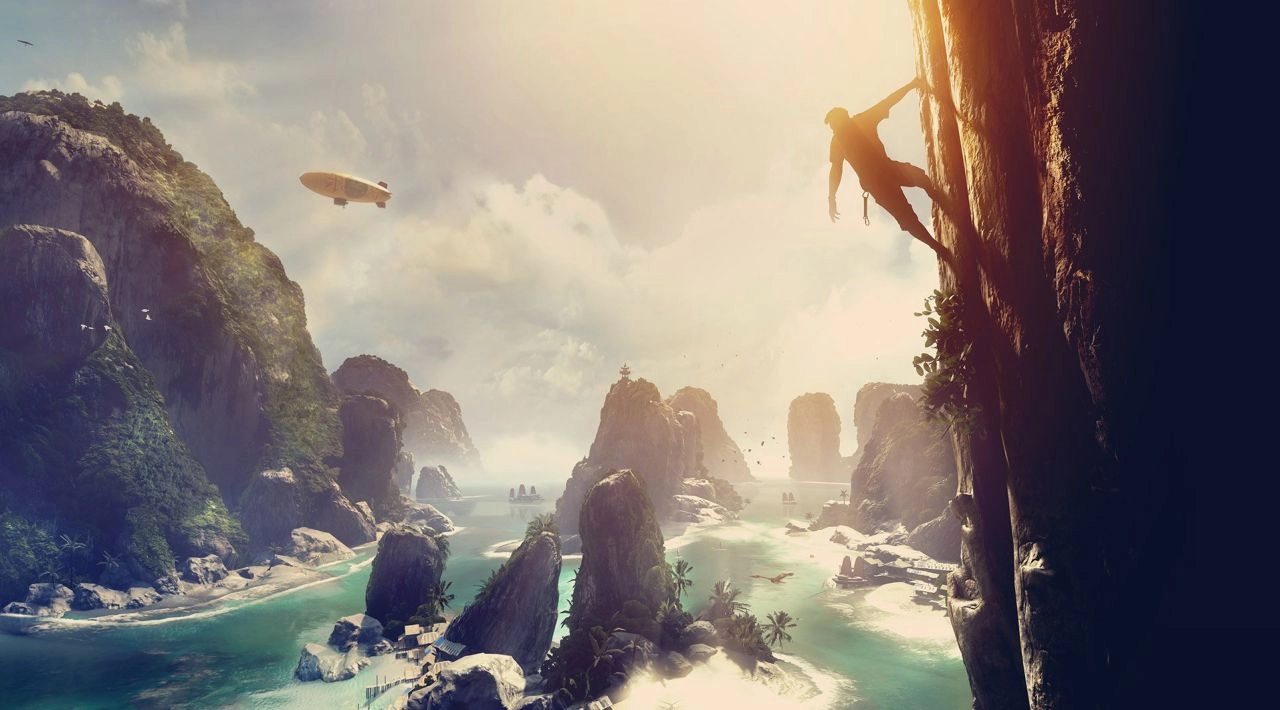
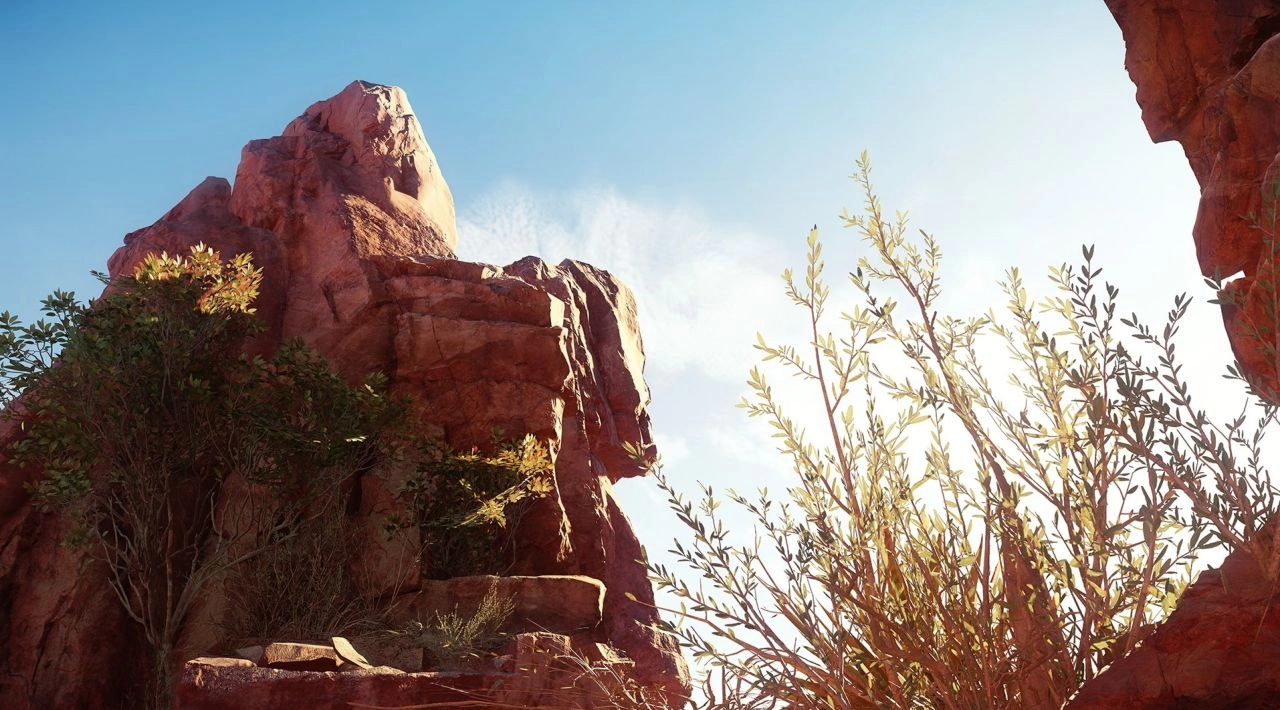
The Alps emphasize mountain climbing and exposed rock faces. Canyon routes introduce warm, arid scenery and vertical walls. Bay areas provide coastal views, while North adds a colder setting with its own visual identity and climbing challenges.
There is also a procedurally generated Practice Wall for repeatable climbing sessions. It is not a replacement for the designed routes, but it gives experienced players a way to practice movement, grip timing, and route handling without simply memorizing a fixed ascent.
Bouldering routes provide shorter, more concentrated tests of technique. These challenges focus on difficult sequences and precise movement rather than a long scenic climb, making them a useful change of pace when players want to work on execution.
Progression is largely performance-based. Better climbing technique opens up cosmetic rewards such as gloves and watches, while achievements provide additional goals for completion-focused players. There is no skill tree, character build, combat system, or equipment-stat economy to manage.
Competition Without Live Co-op
The Climb includes asynchronous multiplayer, not conventional real-time co-op. Players race against recorded routes or ghost representations of other climbers, compare completion times, and work their way up leaderboards.
This distinction matters for buyers searching for multiplayer VR climbing. You do not climb side by side with a friend in the same route, and the game is not a social room-scale hangout. Its competitive layer is built around personal improvement, leaderboard pressure, and sending or following challenges.
The asynchronous structure suits the game’s design. A route can be replayed repeatedly while players search for a cleaner line, faster transitions, better stamina control, or a more efficient shortcut. The challenge comes from mastering the same physical vocabulary rather than waiting for a live match.
For a more narrative climbing adventure with deliberate exploration and a third-person perspective, meditative climbing games such as Jusant provide a useful contrast. Jusant is built around a continuous expedition, while The Climb is more focused on discrete routes and repeatable score attacks.
PC Platform, Controllers, and Storefront Status
The original PC version was created for the Oculus Rift ecosystem and remains associated with Meta’s PC VR platform rather than Steam. Players should expect to use the Meta Horizon Link PC VR environment and a compatible Oculus or Meta account to access the PC storefront and launch the game.
Oculus Touch controllers are the natural input method because they allow the player to position each virtual hand directly. The game also has documented support for an Xbox controller, although a gamepad provides less direct hand interaction than tracked motion controllers.
The Climb is a headset-first title. It does not provide a conventional flat-screen mode, and the PC experience depends on a supported PC VR setup connected through Meta’s Link software environment. No verified Steam edition, HTC Vive storefront edition, or separate non-VR version was found during current storefront research.
The official branding still uses The Climb, while platform references have changed from Oculus terminology to Meta terminology. That means searches for “The Climb Oculus Rift,” “The Climb PC VR,” and “The Climb Meta store” can describe the same original game rather than different editions.
Verified localization information lists English, French, German, Spanish, and Korean support on the Meta storefront data available for the game. The game is designed for standing or seated VR play depending on the headset setup, but the climbing itself is primarily performed through arm and hand movement.
Who Should Play The Climb?
The best audience is players who want a concentrated VR experience built around physical interaction, height, and repeated mastery. If you enjoy learning routes, shaving seconds from a run, and improving through practice, the structure has more depth than its one-button premise suggests.
It is also a strong fit for players who prefer exploration without combat. The environments are there to frame the climb, not to support a large open-world checklist, enemy encounters, or inventory management.
Players who dislike virtual heights, repetitive score chasing, or arm-heavy motion may find the design limiting. The game does not offer a conventional campaign, broad social multiplayer, crafting, story quests, or character progression in the role-playing sense.
Compared with a story-led zero-gravity VR adventure, hand-focused PC VR experiences like Lone Echo offer more environmental interaction and narrative structure. The Climb is narrower, but that narrowness is intentional: nearly every system supports the act of climbing.
What Makes Its VR Design Distinct?
The strongest feature is the way the game turns a familiar real-world activity into a complete virtual control language. You are not pressing a climb button while an avatar handles the animation. You are reaching, choosing holds, managing grip, and judging distance from a first-person viewpoint.
Virtual height and visual exposure are part of the challenge. Looking down from a route can affect decision-making even though the player is standing safely in a room. The game uses scale and perspective as gameplay pressure rather than treating scenery as background decoration.
The environmental design also supports repeat play. A summit is not always the end of the decision-making process; players can search for cleaner lines, hidden shortcuts, alternate holds, and better transitions. This gives skilled players reasons to revisit routes after their first successful ascent.
At the same time, The Climb is not a full climbing simulator. It abstracts real-world footwork, equipment, safety systems, and route preparation into an accessible VR arcade structure. The emphasis is on readable hand interaction, timing, and spectacle rather than reproducing every part of outdoor climbing.
The Climb FAQ
Is The Climb still called The Climb VR?
Yes. The official game branding remains The Climb. “The Climb VR” is a common search phrase used to distinguish it from other climbing games, but no verified rebrand to a new game title was found. Older Oculus Store references now correspond to Meta’s current Horizon Store and Link PC VR terminology.
Is The Climb available on PC?
Yes. The original game is a PC VR title associated with the Oculus Rift and Meta PC VR ecosystem. It is accessed through Meta’s Link PC VR software environment rather than a verified Steam release.
Does The Climb have multiplayer co-op?
No. Its multiplayer component is asynchronous. Players compete against ghosts, compare route times, send challenges, and climb leaderboards, but they do not complete routes together in live co-op.
Does The Climb support Oculus Touch controllers?
Yes. Oculus Touch controllers are the primary motion-control option because the game maps climbing to tracked virtual hands. An Xbox controller is also documented as supported, but it does not offer the same direct hand positioning.
What game modes are included?
The main structure includes designed climbing routes, Tourist mode, asynchronous competition, bouldering challenges, and a Practice Wall with procedurally generated sections. The game is organized around route mastery rather than a traditional story campaign.
Is The Climb a realistic climbing simulator?
It is best described as an arcade-style VR climbing game with stamina and chalk mechanics. It captures the physical sensation of reaching between handholds and the visual pressure of height, but it does not simulate every aspect of real-world climbing equipment or safety.
Which languages does The Climb support?
Available storefront information lists English, French, German, Spanish, and Korean localization. The exact availability of text or audio elements can depend on the platform listing and installed version.
System Requirements
Minimum: |
Processor: Intel Core i5-4590 3.3 GHz Graphics: 4 GB GeForce GTX 970 Memory: 8 GB RAM Disk space: 8.8 GB HDD Operating system: Windows 8/10 |
Screenshots

Trailer/Gameplay
Download
The Climb VR (2016), 9.92GB
ElAmigos release, game is already cracked after installation (crack by Arthur Ford).

Updated to version 1.5.0.16 (09.2022).

1. Extract files.
2. Burn or mount the image.
3. Install the game.
4. ElAmigos release, game is already cracked after installation.
5. Play the game. If you like this game, BUY IT!
The Climb VR Download
🔒 Premium access required
To see and use the download links, you must be logged in and have an active PREMIUM account.
* Unlock downloads via Torrent and TeraBox.
Torrent Download
The best torrent download speeds are with qBittorrent!