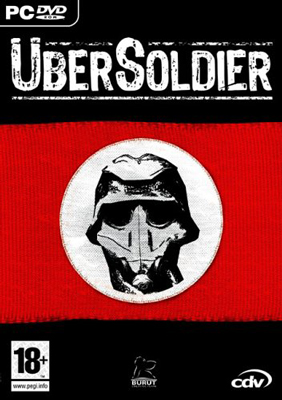
UberSoldier II
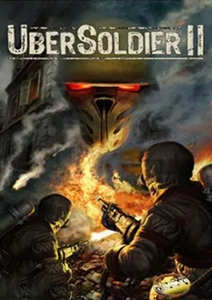
- Category:
- Release date:
- Game Genre:Action, FPP, World War II, shooters
- Developer:Burut
- Platform:PC
- Languages (subtitles):English
- Dubbing/Audio:English
- Game size:2.63GB
Game Description
UberSoldier II is a PC first-person action shooter set in an alternate World War II, where resurrected soldier Karl Stolz fights the Nazi organization that created him. The current Steam storefront still uses UberSoldier II; Crimes of War and Eastern Front: Fall of Ahnenerbe are associated alternate titles, not verified modern rebrands or replacement editions.
Supernatural combat in a first-person shooter
UberSoldier II begins with familiar firearms and linear military encounters, then builds its identity around Karl's supernatural abilities. The central mechanic is the Time Shield, an energy sphere that stops bullets touching its perimeter. It can suspend both enemy and player-fired rounds, allowing you to reposition, close distance, or release the stored projectiles toward enemies.
The shield is not a permanent defensive stance. Its energy drains while active and refills through combat, creating a rhythm between ordinary shooting, aggressive movement, and carefully timed protection. When the energy state is high enough, suspended bullets can be fired in the direction Karl is facing when the shield closes. That turns incoming fire into a delayed counterattack rather than simple damage avoidance.
Close combat is equally important. The dedicated knife attack enables fast executions at short range, while accurate headshots and consecutive knife kills feed the game's reward systems. Players who rely only on standard gunfire miss much of the design, because the strongest results come from alternating headshot chains, knife attacks, shield timing, and conventional cover-based shooting.
Abilities, experience, and enemy variety
Combat performance generates experience points, which can be spent between missions on attributes such as health, accuracy, energy capacity, and the duration or strength of Karl's special abilities. This creates a light RPG progression system inside a mostly linear shooter. There is no broad open-world build system; progression is about making Karl more effective in the next set of encounters.
Two combat states give skilled play an additional payoff. Ubersniper is triggered through consecutive headshots and introduces a slow-motion advantage for precision attacks. Berserker mode is linked to consecutive knife kills and supports a more aggressive melee sequence. Both abilities reward players who treat accuracy and positioning as part of the progression loop rather than simply emptying magazines into every enemy.
The campaign's opposition includes ordinary soldiers, officers, flamethrower units, resurrected guards, telekinetic enemies, armored mutants, and elite UberMacht troops. Telekinetic enemies can manipulate nearby objects and disrupt Karl's orientation, while heavily armored opponents force more deliberate target selection. The result is a supernatural enemy roster layered over recognizable World War II weapon handling.
Weapons and mission structure
The verified game materials document a broad period-inspired arsenal with pistols, rifles, submachine guns, automatic weapons, grenades, heavy anti-armor weapons, and the Phoenix flamethrower. Named weapons include the Luger Parabellum, Walther P38, Mauser 98K, SVT-40, Ithaca 37, BAR, MP-40, FG-42, StG-44, PPSh-41, Thompson, MG-42, Panzerschreck, and an anti-tank rifle.
Most missions follow a guided route through military compounds, ruined areas, laboratories, and remote locations connected to the UberMacht conspiracy. Objectives, ladders, stationary weapons, scripted encounters, and occasional vehicle sequences break up the standard firefights, but exploration remains limited compared with an open-ended immersive sim or sandbox shooter.
The campaign supports selectable Easy, Medium, and Hard difficulties. Manual saving is a notable part of the PC experience because the game provides configurable quicksave and quick-load commands alongside automatic saving at the start of a new level. Players who want a smoother run should use quicksave deliberately before major combat sequences.
Multiplayer and content model
UberSoldier II is not a single-player-only release. The Steam listing documents multiplayer through LAN and the internet for up to 16 players, with Deathmatch, Team Deathmatch, and a knife-focused mode commonly identified as Uberknife Fight or ÜberMesser Deathmatch.
These multiplayer modes are separate from the campaign's defining progression. The Time Shield and single-player RPG upgrades are not the foundation of the competitive experience, so players should approach multiplayer as a traditional arena-style shooter component rather than cooperative campaign play.
The current storefront presents UberSoldier II as a paid standalone game. It is also included in a Steam bundle with the original UberSoldier, but no verified season pass, live-service model, or modern expansion structure is listed. The main purchase is centered on the solo campaign, with the legacy multiplayer modes available as an additional feature.
PC controls, localization, and storefront status
The official manual documents remappable keyboard-and-mouse controls for movement, sprinting, jumping, crouching, weapon switching, aiming, melee attacks, the Time Shield, objectives, quicksave, and quick-load. Native controller support is not listed on the current Steam product page, so PC players should plan primarily for keyboard and mouse rather than assume modern plug-and-play gamepad support.
Steam lists interface and subtitle support in English, French, Italian, German, Simplified Chinese, Polish, Russian, Czech, and Hungarian. Full audio is listed for English, French, Italian, German, and Russian, while the remaining languages have more limited localization coverage. The storefront also identifies single-player support and Family Sharing.
No verified current Epic Games Store or GOG replacement name was found during the storefront check. The reliable current listing is the Steam product under UberSoldier II, and there is no documented modern anti-cheat layer or separate launcher ecosystem attached to the game beyond the storefront client.
Who should play UberSoldier II?
This is a good fit for players who enjoy linear first-person campaigns, unusual defensive mechanics, exaggerated alternate-history fiction, and older PC shooters with explicit manual saving. Its strongest appeal is the Time Shield: few conventional World War II shooters let you freeze incoming bullets, carry them through the battlefield, and convert them into a counterattack.
It is less suitable for players looking for open-ended missions, realistic military simulation, deep character builds, modern co-op, or a large competitive community. The campaign is structured around repeated combat encounters, and its progression system is deliberately light. Players seeking a more historically grounded campaign can compare it with classic linear World War II first-person missions such as Medal of Honor: Allied Assault War Chest, while those wanting a more supernatural and polished alternative-history shooter may prefer modern occult WWII action in the style of Wolfenstein: The Old Blood.
Similar PC games
For a more traditional campaign with squad interaction and historically focused battlefield scenarios, campaign-driven Pacific War combat like Medal of Honor: Pacific Assault provides a clear contrast. It emphasizes military progression and squad-based encounters, whereas UberSoldier II is built around one enhanced protagonist and his ability-driven combat loop.
The closest comparison is therefore mechanical rather than purely historical. UberSoldier II combines the corridor structure of a classic war shooter with bullet-stopping defense, supernatural enemies, chain-based ability triggers, and light RPG upgrades. That combination gives it a distinct place among budget-era PC action games, even when its conventional shooting sections feel familiar.
UberSoldier II FAQ
Is UberSoldier II currently rebranded?
No verified current rebrand replaces the name UberSoldier II on the active Steam listing. Crimes of War and Eastern Front: Fall of Ahnenerbe are alternate names associated with the same game.
What kind of game is UberSoldier II?
It is a first-person action shooter with alternate-history World War II combat, supernatural abilities, light RPG progression, and linear mission structure.
How does the Time Shield work?
The Time Shield creates a protective sphere that stops bullets, including your own projectiles. The stored rounds move with Karl while suspended and can be released toward the direction he is facing when the shield is deactivated at the appropriate energy state.
Does UberSoldier II have multiplayer?
Yes. The PC version supports LAN and internet multiplayer for up to 16 players, including Deathmatch, Team Deathmatch, and a knife-focused mode. It does not provide cooperative campaign play.
Does UberSoldier II support controllers?
Native controller support is not identified on the current Steam storefront. The documented control scheme is remappable keyboard and mouse, so that remains the safest input assumption.
Which languages are supported?
Steam lists nine supported languages: English, French, Italian, German, Simplified Chinese, Polish, Russian, Czech, and Hungarian. Audio coverage is more limited than interface and subtitle support.
System Requirements
Minimum: |
Processor: Pentium IV 2.8 GHz or AMD Athlon 2800+ Graphics: GeForce FX 5900, Radeon 9600 or higher Memory: 1024 MB RAM Disk space: 6 GB available space Operating system: Windows XP sp2 or Vista |
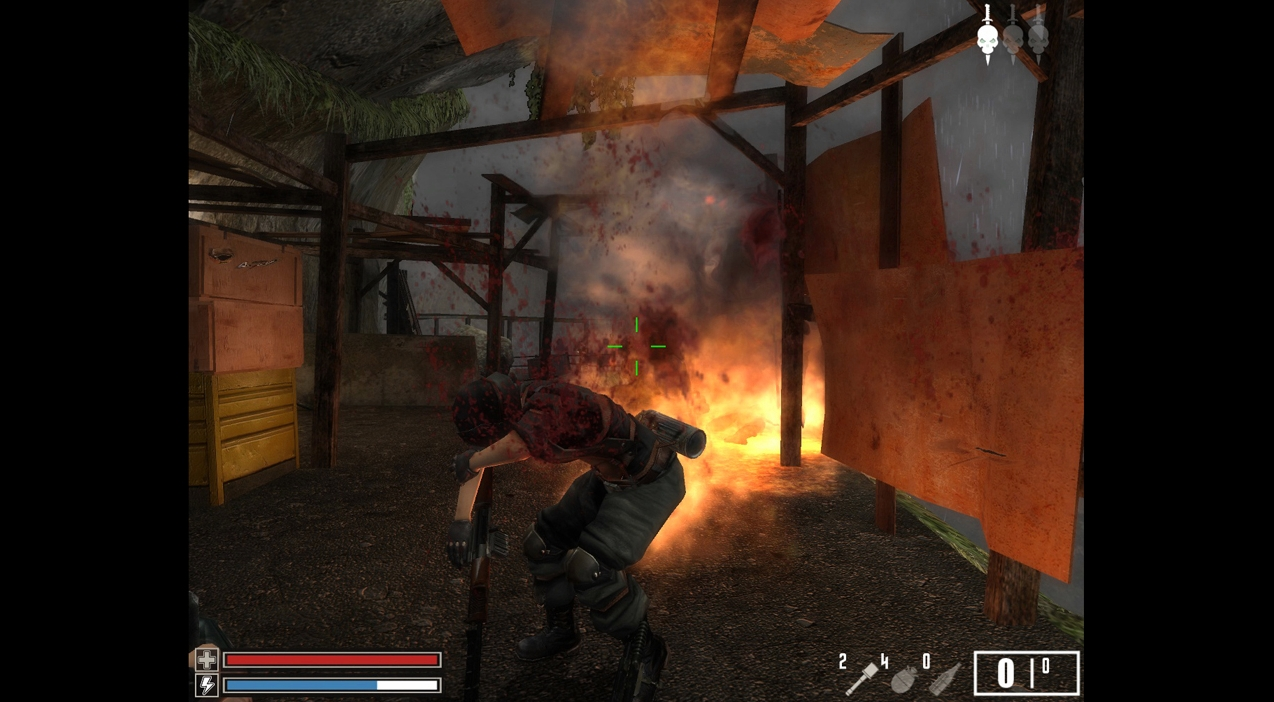
Screenshots


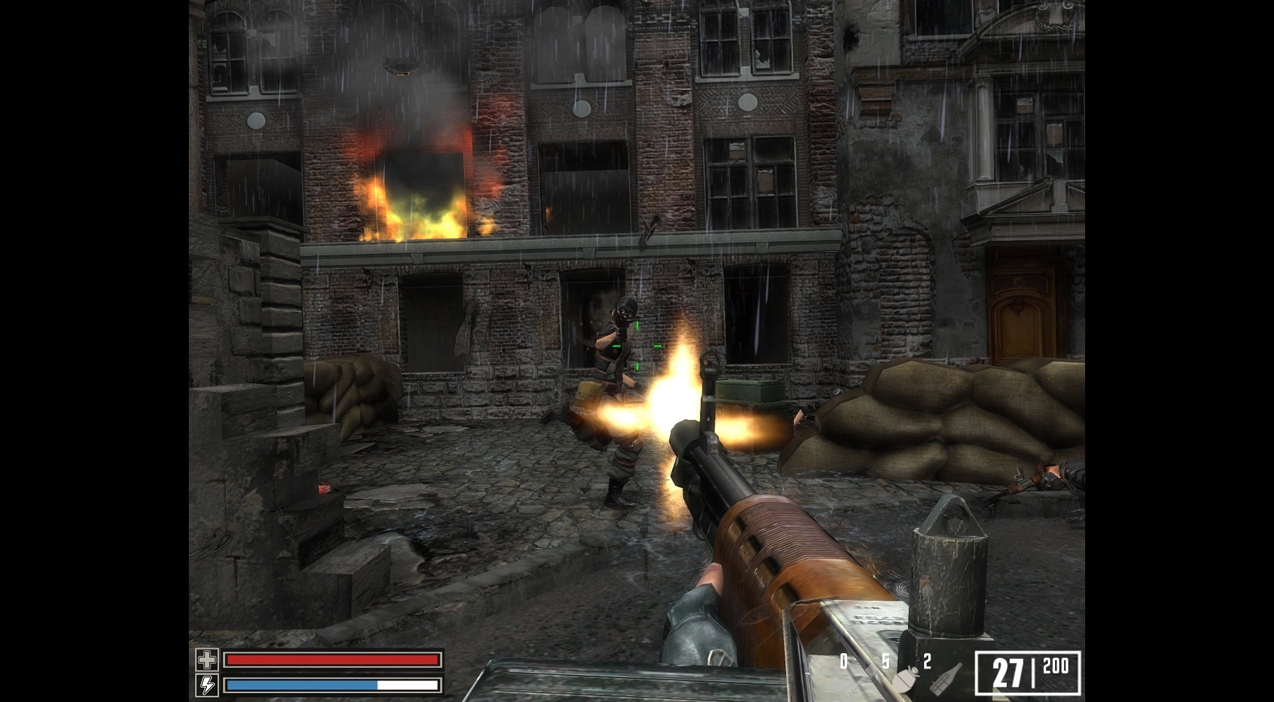
Trailer/Gameplay
Download
UberSoldier II (2007), 2.63GB

1. Extract files.
2. Install the game.
3. Play the game. If you like this game, BUY IT!
ÜberSoldier 2 / UberSoldier II Download
Eastern Front: Ahnenerbe Crash
🔒 Premium access required
To see and use the download links, you must be logged in and have an active PREMIUM account.
* Unlock downloads via Torrent and TeraBox.
Torrent Download
The best torrent download speeds are with qBittorrent!