
Final Fantasy VII Rebirth
Edit date: 4-06-2026, 13:01
Reason: Updated to version 1.005 (03.06.2026).
- Category:
- Release date:
- Game Genre:RPG, TPP, science fiction, remasters/remakes, action RPG, jRPG, urban fantasy, singleplayer
- Developer:Square Enix
- Release:ElAmigos
- Platform:PC
- Languages (subtitles):English, French, Italian, German, Spanish, Spanish (Mexico), Portuguese-Brazil, Japanese, Korean, Simplified Chinese, Traditional Chinese
- Dubbing/Audio:English, French, German, Japanese (Japanese movies were replaced with English ones)
- Crack:Codex/Rune
- Game size:133.03GB
Game Description
Final Fantasy VII Rebirth is a third-person action RPG for PC and the second standalone entry in Square Enix's three-part remake project. Steam and Epic Games Store currently use the same official name, with no verified PC rebrand or replacement edition. Cloud and his companions leave Midgar behind to pursue Sephiroth across open regions filled with story chapters, party quests, combat challenges, traversal systems, and substantial optional activities.
The PC release is a paid single-player game. Storefront options include the standard game, a Digital Deluxe Edition upgrade, and Twin Pack bundles that pair Rebirth with Final Fantasy VII Remake Intergrade. Square Enix states that there are no plans for post-launch DLC, so the main purchase decision concerns the base game and digital Deluxe extras rather than a live-service content roadmap.
A tactical action RPG built around party control
Rebirth combines direct real-time combat with a command system that slows the action through Tactical Mode. You can move, dodge, block, and attack freely, then pause the flow long enough to issue precise commands for abilities, spells, items, and summons. The result is more deliberate than a standard character-action game but more immediate than a traditional turn-based JRPG.
Normal attacks help fill the ATB gauge, while abilities and magic consume ATB charges. Materia equipped to weapons and armor determines much of a character's utility, allowing party members to cover elemental attacks, healing, buffs, debuffs, and enemy analysis. The strongest encounters reward switching characters instead of treating Cloud as the only protagonist.
Combat presentation is flexible. Active mode gives you direct control over basic actions, while Classic mode automates those actions so you can focus on selecting commands. Difficulty options include Easy, Normal, and Dynamic difficulty, where enemies scale upward alongside character growth. That makes the game accessible to story-focused players while preserving a demanding progression path for repeat runs.
Players who enjoy a more focused Square Enix party adventure may also appreciate open-world action JRPG exploration like Final Fantasy XV Windows Edition, although Rebirth places more emphasis on switching between several active party members during battles.
Synergy, materia, and character relationships
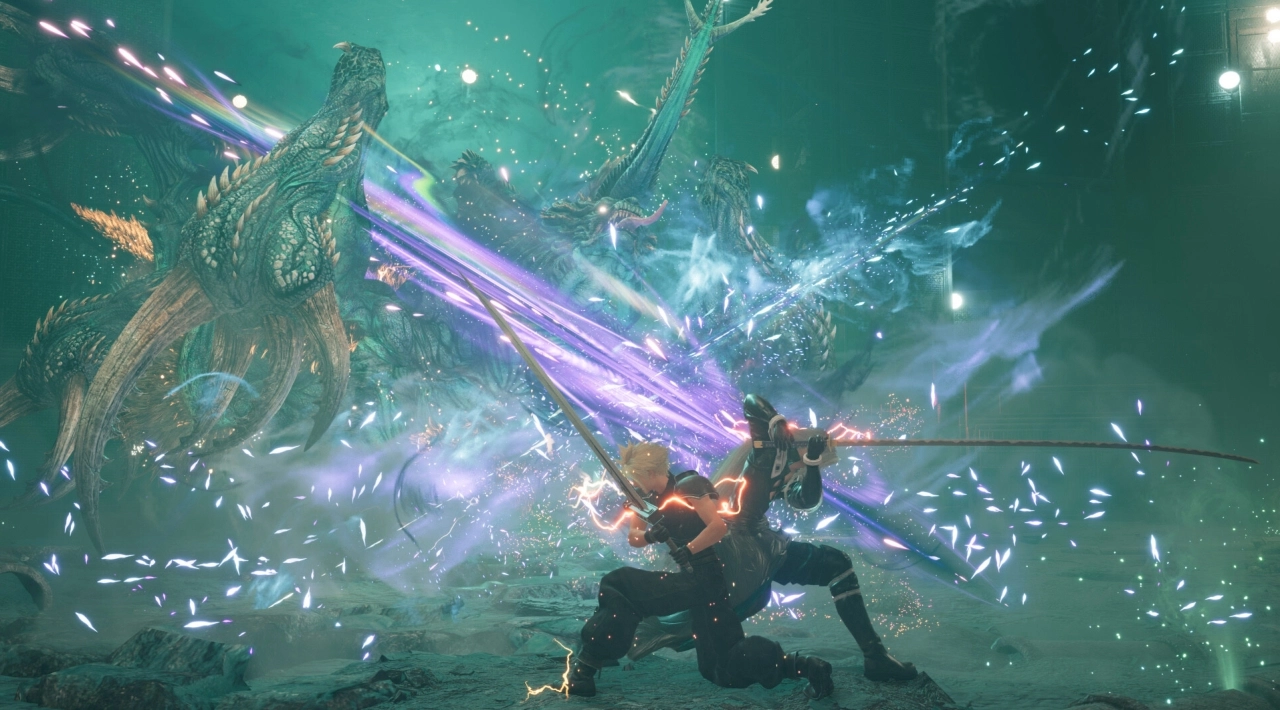
The defining combat addition is the Synergy system. Characters can use Synergy Skills during encounters, then build a shared gauge through combat actions to unleash Synergy Abilities. These team attacks are tied to party relationships and progression, making character development relevant both narratively and mechanically.
Party members retain distinct combat identities. Cloud is a flexible frontline fighter, Tifa excels at close-range pressure and stagger damage, Barret provides ranged firepower, Aerith specializes in magical support, Red XIII uses a revenge gauge to turn defense into offense, and other companions add their own movement and ability patterns. Rebirth encourages experimentation because enemy weaknesses and arena layouts can change the value of each role.
Materia loadouts remain central to build planning. Elemental spells, healing, support effects, status manipulation, and summon access all compete for limited equipment space. Weapon abilities and the party's Folio progression add another layer, letting players unlock new skills, passive effects, and additional Synergy options without reducing every character to a simple level-based upgrade.
Summons operate as temporary battlefield allies rather than ordinary menu spells. Once summoned, they fight automatically while responding to selected commands, then perform a final attack before leaving. Their presence gives major encounters a distinct rhythm and makes preparation through materia selection worthwhile.
Exploration outside Midgar
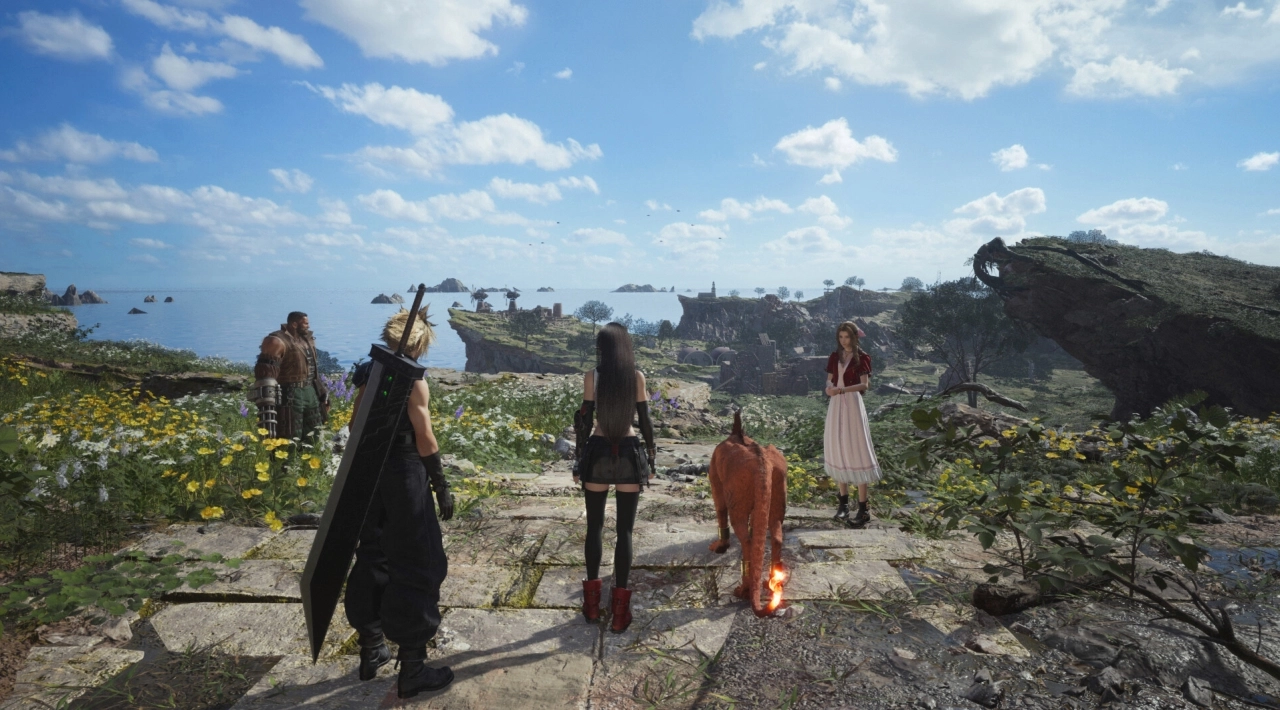
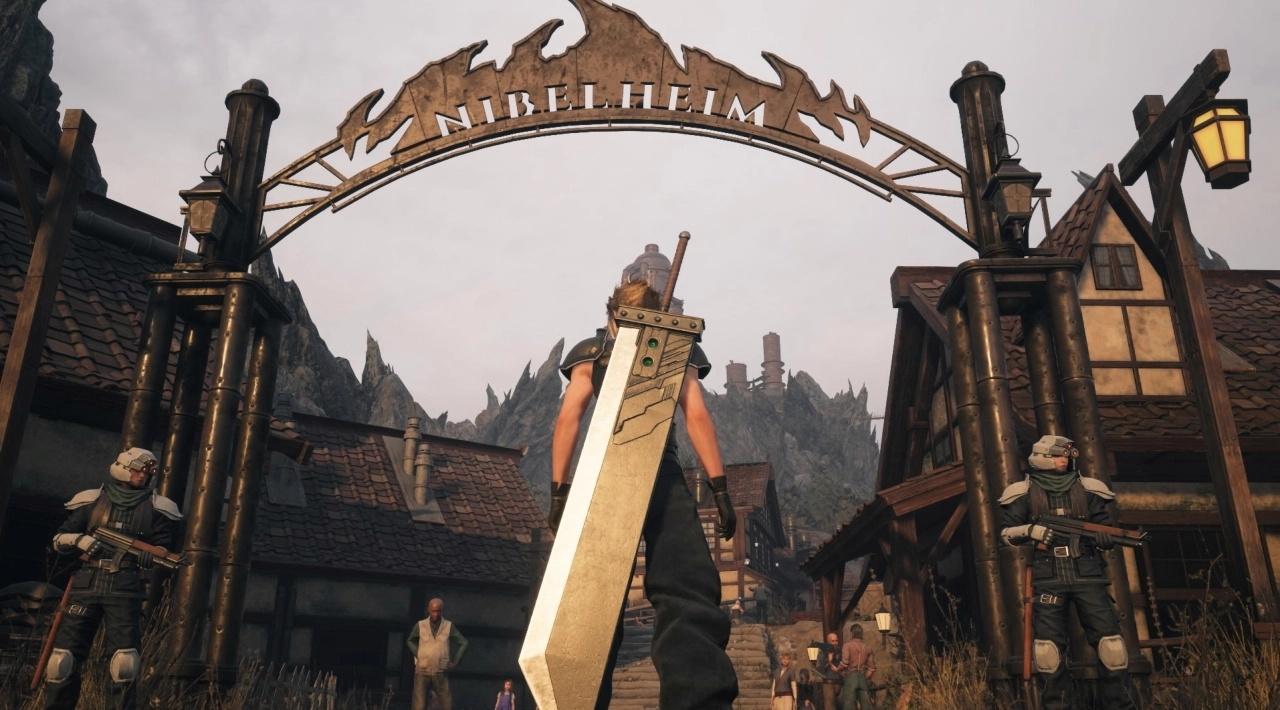
Rebirth replaces the first remake's concentrated urban structure with a series of broad, region-based environments. The journey moves through grasslands, coastlines, forests, canyons, settlements, ruins, and other recognizable locations from the wider Final Fantasy VII setting. Each region mixes main objectives with side quests, combat assignments, environmental discoveries, and local activities.
Traversal is not just a cosmetic change. Regional Chocobos have different abilities that affect how you reach hidden routes and inaccessible terrain. Mounts can assist with movement across difficult surfaces, while other transport options and world activities provide alternatives to simply running between quest markers.
Exploration is supported by optional objectives that reveal lore, unlock combat simulations, improve crafting access, and introduce additional encounters. The structure suits players who enjoy clearing a region before advancing, but the game also allows a more direct route through its cinematic main story.
The optional content is unusually varied for a story-driven JRPG. Players can encounter Queen's Blood, a tactical card game with its own opponents and progression, alongside minigames, racing activities, rhythm challenges, arena battles, collectibles, and region-specific tasks. These diversions are not all equally important, but they give each destination a different identity rather than making the world feel like one repeated checklist.
Campaign structure and commercial content
Square Enix describes Rebirth as a standalone adventure, and the PC version includes a recap video covering the previous remake. Newcomers can follow the broad premise without owning another Final Fantasy game, although players who have completed Remake Intergrade will understand the returning characters and unresolved plot threads more immediately.
The campaign is single-player and built around a chapter-based narrative connected by open regional exploration. Progression alternates between major cinematic sequences, party conversations, dungeon-style routes, large boss encounters, and freeform activities. There is no cooperative campaign, local split-screen mode, or online party mode for the main adventure.
The standard purchase contains the full Rebirth game. The Digital Deluxe Edition adds digital items such as a mini-soundtrack and art book through Square Enix's Digital Content Viewer, while some bundles include Final Fantasy VII Remake Intergrade as a separate game. Existing Remake save data can also provide eligibility for bonus summon materia where the corresponding account and save conditions are met.
Because Square Enix has stated that it has no plans for post-launch DLC, players should view Rebirth as a complete premium release rather than an ongoing platform with seasonal expansions. The substantial amount of optional content is part of the main game structure.
Who should play Final Fantasy VII Rebirth?
Rebirth is a strong fit for players who want a cinematic single-player JRPG with active combat, a large party, extensive character development, and a world that rewards detours. It is particularly suited to players who enjoy changing tactics mid-fight, tuning materia for specific encounters, and balancing a dramatic main plot against lighter side activities.
The game is less suitable if you want a tightly focused action campaign with minimal menus or no interruption from minigames. Its pacing deliberately shifts between serious story chapters, open-world errands, relationship scenes, and playful diversions. That variety is part of its identity, but players who prefer a consistently urgent plot may find the optional structure distracting.
Fans of real-time anime RPG combat can compare its party-focused approach with character-driven action JRPG battles in Tales of Arise. Rebirth is broader and more system-heavy, while Tales of Arise keeps its combat loop more concentrated around direct encounters and combo-based party actions.
PC features, controls, and localization
The PC edition offers three default graphics presets plus individual customization for players who want to tune the presentation. Square Enix highlights enhanced lighting, adjustable background texture and model detail, NVIDIA DLSS support, and variable refresh rate support. The release was also optimized with Steam Deck play in mind, although the ideal experience depends on the device and chosen settings.
Full controller support is available, including DualSense input that can reproduce the control layout used on PlayStation 5. Keyboard and mouse support is also included, with separate customization options for world exploration, combat, and minigames. That flexibility matters because Rebirth moves between third-person traversal, menu-heavy battles, vehicle sections, and precision-focused diversions.
Steam provides platform features such as achievements, cloud saves, trading cards, HDR support, and Family Sharing. The Epic Games Store version runs through the Epic storefront. The official PC information reviewed for this guide identifies Steam and Epic Games Store as the PC distribution platforms and does not present a separate Square Enix launcher requirement for the game itself.
Localization is broad. The PC listing supports interface and subtitle options across English, French, Italian, German, Spanish, Japanese, Korean, Brazilian Portuguese, Simplified Chinese, and Traditional Chinese, while available audio languages are more limited and vary by storefront presentation. Players should check the language table on their chosen store before purchase if a specific voice track or subtitle combination is essential.
Final Fantasy VII Rebirth FAQ
These answers focus on the practical questions most relevant to PC players choosing an edition and deciding whether the game's structure matches their preferences.
Has Final Fantasy VII Rebirth been renamed on PC?
No verified rebrand was found. Steam and Epic Games Store currently list the game as FINAL FANTASY VII REBIRTH. Digital Deluxe and Twin Pack are package names, not replacement titles.
Is Final Fantasy VII Rebirth a full game or an expansion?
It is a full paid single-player action RPG and the second standalone entry in the remake project. It is not an expansion for Final Fantasy VII Remake, although some PC bundles include both games.
Does the PC version include multiplayer or co-op?
No. The main campaign is single-player, with no online co-op or local split-screen mode. Party members fight alongside Cloud under player control, but they are not separate online players.
Do I need to play Final Fantasy VII Remake first?
No. Square Enix presents Rebirth as a standalone game and includes an in-game recap. Playing Remake Intergrade first is still the clearest way to understand the returning cast, previous events, and the remake project's changing interpretation of the original story.
Does Final Fantasy VII Rebirth support keyboard and mouse?
Yes. PC players can use keyboard and mouse controls and customize inputs separately for exploration, combat, and minigames. DualSense and other controller-focused play styles are supported as well.
What kind of progression does Rebirth use?
Progression combines levels, weapons, materia, weapon abilities, Folio upgrades, party relationships, summons, and regional unlocks. The long-term loop is about improving party flexibility and mastering optional encounters rather than repeating a multiplayer endgame.
System Requirements
Minimum: | Recommended: |
| Processor: AMD Ryzen™ 5 1400 / Intel® Core™ i3-8100 Graphics: AMD Radeon™ RX 6600 / Intel® Arc™ A580 / NVIDIA® GeForce® RTX 2060 Memory: 16 GB RAM Disk space: 155 GB available space Operating system: Windows® 10 64-bit | Processor: AMD Ryzen™ 5 5600 or Ryzen™ 7 3700X / Intel® Core™ i7-8700 or Core™ i5-10400 Graphics: AMD Radeon™ RX 6700 XT / NVIDIA® GeForce® RTX 2070 Memory: 16 GB RAM Disk space: 155 GB available space Operating system: Windows® 11 64-bit |
Trailer/Gameplay
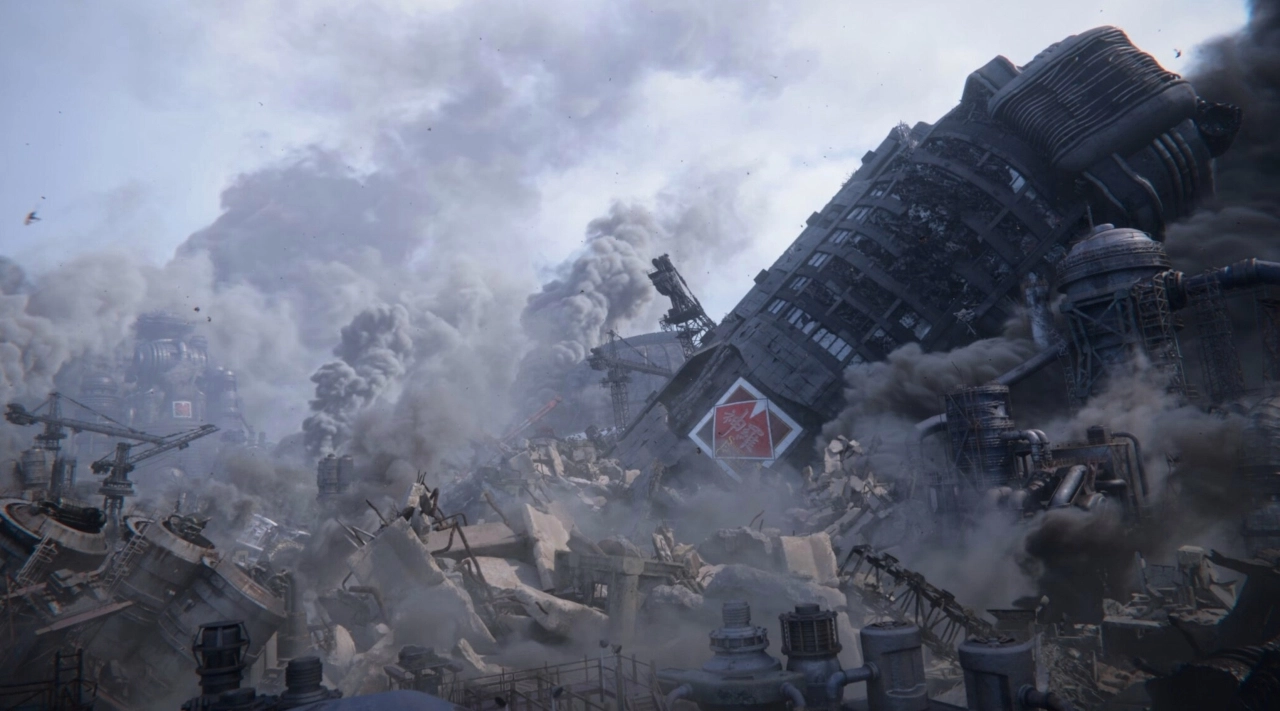
Screenshots
Download
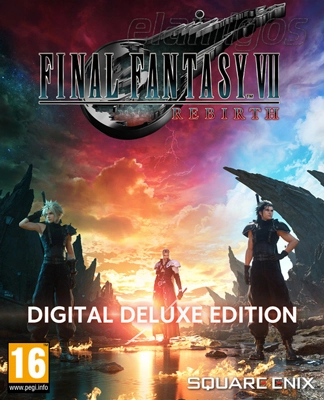
Final Fantasy VII Rebirth Deluxe Edition (2025), 133.03GB
ElAmigos release, game is already cracked after installation (crack by Codex/Rune).

Updated to version 1.005 (03.06.2026).

Installation time with 16 threads CPU and SSD - 4 minutes.

1. Extract files.
2. Burn or mount the image.
3. Install the game.
4. ElAmigos release, game is already cracked after installation.
5. Play the game. If you like this game, BUY IT!
Final Fantasy VII Rebirth Deluxe Edition Download
🔒 Premium access required
To see and use the download links, you must be logged in and have an active PREMIUM account.
* Unlock downloads via Torrent and TeraBox.
DLC: Digital Deluxe Edition Upgrade, Summon materia Moogle trio, Summon materia Magic Pot, Accessory Reclaimant Choker, Armor Orchid Bracelet, Posh Chocobo Summoning Materia, Armor Shinra Bangle Mk. II, Armor Midgar Bangle Mk. II, Accessory Kupo Charm & Survival Set.
Torrent Download
The best torrent download speeds are with qBittorrent!
Similar games to Final Fantasy VII Rebirth:

Before your comment If you have a problem with the installation:
#1 Files are corrupted / Checksum error / Install VC 2013 x64 - LINK1 and LINK2
#2 Add an exception in antivirus - preferably for the entire folder with the game.
#3 Update your graphics drivers.
#4 Adjust Virtual Memory - VIDEO
#5 Extracting error? Download the part where the error is again - you can use a different browser or downloader. Use Winrar or 7zip.
#6 Fix for +20 threads CPUs and old 2017-2020 installers
ReUpload? NO. Why? TeraBox links are always active (99%).
Premium TeraBox you will get for free! LINK.