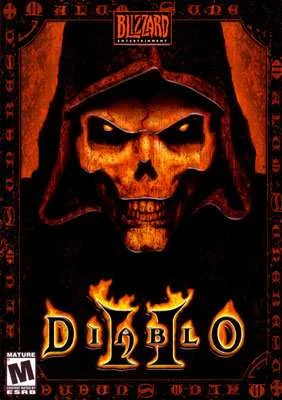
Diablo II Complete Edition
- Category:
- Release date:
- Game Genre:RPG, fantasy, hack'and'slash, Isometric view, multiplayer, action RPG
- Developer:
- Release:ElAmigos
- Platform:PC
- Languages (subtitles):English, French, Italian, German, Spanish, Polish
- Dubbing/Audio:English, French, Italian, German, Spanish, Polish
- Crack:not necessary
- Game size:4.26GB
Game Description
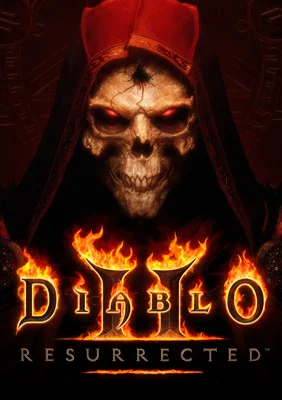
Diablo II Complete Edition PC is a dark-fantasy isometric action RPG built around real-time hack-and-slash combat, randomized loot, class specialization, and repeatable character progression. “Complete Edition” is not the current official storefront title: the modern package is sold as Diablo II: Resurrected – Infernal Edition, combining the remastered game, the Lord of Destruction expansion, and the current Reign of the Warlock content.
This distinction matters because Diablo II Classic, Diablo II: Resurrected, and the current Infernal Edition are separate catalog identities. Players searching for the complete modern version should look for the Infernal Edition branding rather than assuming that “Complete Edition” is an official standalone product.
Classic ARPG combat with serious build depth
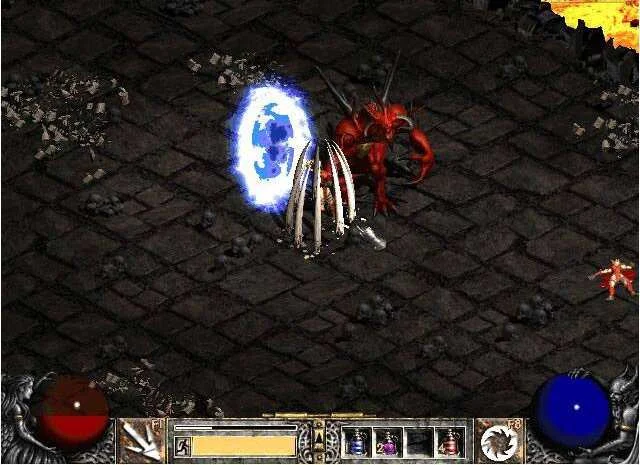
The core loop is direct and highly replayable: choose a class, travel through Sanctuary, complete quests, clear monster-filled areas, defeat bosses, and replace your equipment with stronger or more specialized loot. Combat takes place from an isometric perspective, with positioning, resistances, skill timing, resource management, and enemy immunities shaping how each encounter is approached.
The original campaign and Lord of Destruction expansion cover five acts, each built around distinct environments, quest lines, bosses, and monster groups. The structure is more focused than an open-world RPG. You move between towns, wilderness zones, dungeons, and waypoint networks while gradually assembling a build capable of surviving higher difficulty levels.
Character development is the defining system. The package includes the seven classic classes from Diablo II and Lord of Destruction, alongside the current Warlock content for a total of eight playable classes. Each class uses its own skill trees, passive bonuses, equipment priorities, and play patterns, so a Sorceress built around elemental spells feels fundamentally different from a melee Paladin, summoning Necromancer, or shapeshifting Druid.
Skills, runes, and loot-driven progression
Diablo II's itemization rewards experimentation rather than a single linear upgrade path. Weapons, armor, charms, rings, amulets, gems, and runes can change how a character deals damage, survives incoming attacks, or supports a party. Runewords are especially important for advanced builds because they turn specific rune combinations placed into compatible socketed items into powerful equipment effects.
The game also separates offensive power from defensive reliability. Resistances, faster casting or attack thresholds, life, mana, blocking, movement, and recovery effects can all matter when a character enters a harder difficulty tier. A build that destroys ordinary enemies may still struggle against resistant monsters, bosses, or areas with dangerous elemental damage.
Modern versions retain the original character-building logic while adding quality-of-life improvements such as shared stash tabs, automatic gold pickup, updated interface options, and the ability to switch between the remastered presentation and the original visual style through the Legacy toggle. These changes reduce friction without replacing the underlying game systems.
What the current package includes
The current Infernal Edition is the closest match for players using the catalog term “Complete Edition.” It includes the remastered Diablo II campaign, the Lord of Destruction expansion, and the Reign of the Warlock DLC. The expansion adds its own fifth act, two classic classes, additional items, new areas, and the systems that define the long-term endgame.
The Reign of the Warlock content expands the package with a new class, additional build options, updated endgame systems, new items and runewords, and modern inventory features. It is not simply a cosmetic bundle. Players interested in the most complete current ruleset should verify that the edition they choose includes the DLC rather than only the base remaster.
There is no free-to-play base game model here. The current package is sold as a premium product through Blizzard's Battle.net ecosystem, with the included campaign and expansion content determined by the edition purchased. The business model is therefore easier to understand than a seasonal free-to-play ARPG: buy the relevant edition, then build characters and pursue loot without treating the core experience as an item-shop service.
Ladder, Hardcore, and multiplayer structure
Diablo II supports both offline and online characters, but they are separate progression environments. Offline mode is suitable for solo players who want local character progression and adjustable difficulty, while online characters use Battle.net features such as friend invitations, shared online play, and Ladder participation.
Online sessions support cooperative play for up to eight players. More players can make encounters more dangerous while increasing the value of coordinated builds, crowd control, healing, curses, auras, summons, and elemental coverage. The game does not use modern drop-in shared-world design; players join a session and work through the same combat spaces together.
Ladder mode provides a seasonal competitive structure with fresh characters, leaderboards, and rulesets that can differ from standard non-Ladder play. Hardcore mode adds permanent character death, making defensive planning and escape options as important as damage output. Players who prefer a slower, self-contained experience can stay with offline or non-Ladder characters instead.
PC features and storefront requirements
On PC, the game is distributed through the Battle.net desktop application. An internet connection, Battle.net account, and Battle.net client are required for installation and authentication. Single-player can be played offline after setup, although the modern version may still require periodic connectivity for authentication and updates.
Keyboard and mouse remain natural input options for precise cursor-based movement, inventory management, and skill targeting. The remastered version also supports controllers, with a separate interface designed around direct character control. Switching between input methods is useful for players who prefer controller movement but still want the efficiency of a mouse for inventory work.
The PC version includes remastered 3D visuals, improved lighting, remastered audio, updated cinematics, legacy presentation switching, and modernized stash functionality. Cross-progression is available across supported platforms when the same Battle.net account is linked, but online and offline characters should not be treated as interchangeable saves.
Localization includes English, French, Italian, German, European Spanish, Mexican Spanish, Korean, Polish, Traditional Chinese, Japanese, Brazilian Portuguese, and Russian. Language availability can vary by interface, subtitles, and audio, so players should check the client language selector for the exact configuration available in their region.
Who should play Diablo II Complete Edition?
This is a strong fit for PC players who enjoy deep loot systems, deliberate character planning, repeatable boss runs, seasonal resets, and the satisfaction of refining a build over many sessions. It also suits players who prefer a campaign with a clear act structure rather than a permanently shared open world.
The game is less suitable for anyone looking for a modern quest tracker, fully flexible respec system, casual drop-in multiplayer, or a forgiving action RPG where equipment upgrades always follow a simple power curve. Diablo II often expects players to understand resistances, breakpoints, item bases, skill synergies, and the difference between a functional build and an optimized one.
For a more self-contained dark-fantasy alternative with dual-class builds, Devotion constellations, factions, crafting, and mod support, compare its progression model with grim action RPG systems like Grim Dawn. The two games share an isometric loot-driven foundation, but Grim Dawn gives character combinations and offline customization a larger role.
Similar PC games and genre context
Players who want a brighter presentation, a pet companion, randomized dungeons, and accessible co-op may prefer loot-focused co-op adventures such as Torchlight II. It uses a more colorful tone and a lighter interface, while Diablo II emphasizes grim atmosphere, tightly constrained resources, and long-term build theory.
Diablo IV is the closest modern series comparison, but its shared-world structure, seasonal systems, and live-service framework create a different rhythm. The older design of Diablo II is more compact and more demanding: zones are smaller, item decisions can be opaque, and many of the strongest builds depend on understanding interactions that the game does not always explain directly.
For a newer Blizzard-style action RPG with a persistent online world, seasonal progression, and a more guided interface, see the open-world action RPG structure of Diablo IV. Diablo II remains the better fit for players who want a classic campaign-and-loot loop with offline support and a sharper distinction between character modes.
Diablo II Complete Edition FAQ
Is Diablo II Complete Edition the official name?
No. “Complete Edition” is a useful catalog phrase for the all-content package, but the current official storefront branding is Diablo II: Resurrected – Infernal Edition. The original Diablo II and Lord of Destruction are also separate classic products from the remaster.
What does the current Infernal Edition include?
It includes the remastered Diablo II campaign, the Lord of Destruction expansion, and the Reign of the Warlock DLC. That means the full five-act expansion structure, the classic seven classes, the current Warlock class, additional item systems, and the modern endgame features associated with the complete package.
Can Diablo II be played offline on PC?
Yes. Single-player offline characters are supported after installation and authentication. Offline characters use a separate progression environment from online Battle.net characters and cannot participate in online Ladder play.
Does the PC version support co-op?
Yes. Online Battle.net sessions support cooperative play for up to eight players. Local split-screen co-op is not the PC multiplayer model, so players should plan on using online sessions for group play.
Does Diablo II: Resurrected support controllers on PC?
Yes. Controller support is included alongside keyboard and mouse controls. The interface changes to accommodate direct character movement and controller-based skill access, while mouse input remains useful for inventory and menu management.
Is Hardcore mode different from Ladder mode?
Yes. Hardcore is defined by permanent character death, while Ladder is a seasonal progression and leaderboard structure. They can overlap in separate rulesets, but neither mode replaces the other.
System Requirements
Minimum: |
Processor: Pentium II 300 MHz Graphics: 16 MB VRAM Memory: 32MB RAM Disk space: 5 GB HDD Operating system: Windows |
Screenshots
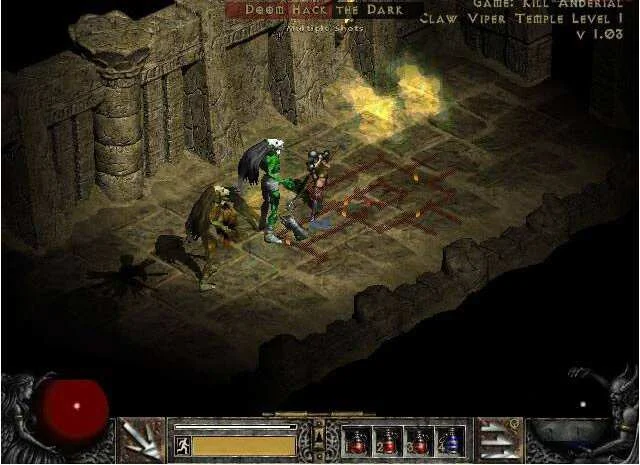
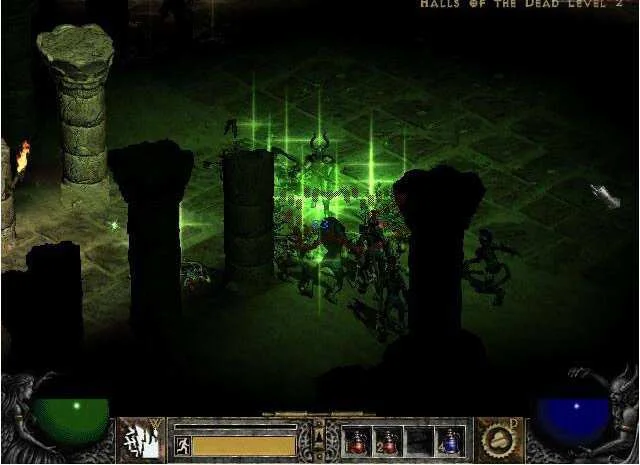
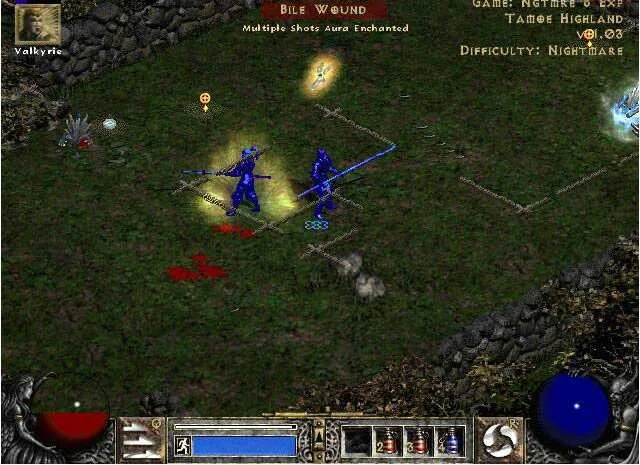
Trailer/Gameplay
Download
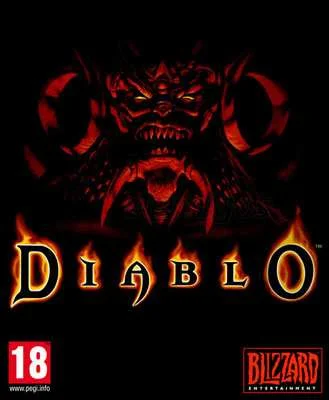
Diablo II: Complete Edition (2001), 4.26GB
ElAmigos release, unprotected game (serial or crack is not necessary).

Updated to version 1.14d (07.06.2016).

1. Extract files.
2. Burn or mount the image.
3. Install the game.
4. Play the game. If you like this game, BUY IT!
Diablo II Download
 Download from TeraBox
Included content: Diablo II + Diablo II: Lord of Destruction.
Torrent Download
The best torrent download speeds are with qBittorrent!