Dark Messiah of Might and Magic
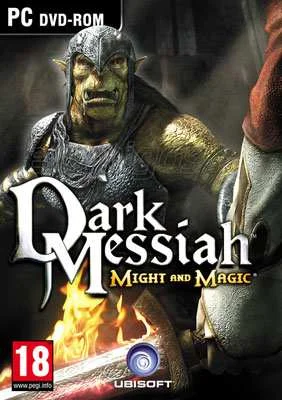
- Category:
- Release date:
- Game Genre:RPG, FPP, fantasy, Might & Magic, action RPG
- Developer:Arkane Studios Publisher: Ubisoft
- Release:ElAmigos
- Platform:PC
- Languages (subtitles):English, French, Italian, German, Spanish, Czech, Polish
- Dubbing/Audio:English, French, Italian, German, Spanish
- Crack:Hatred
- Game size:5.12GB
Game Description
Dark Messiah of Might & Magic is a first-person action RPG for PC built around directional melee combat, physics-driven encounters, stealth, and spellcasting. The current Steam listing still uses the original title, although the purchase section sometimes shortens it to “Dark Messiah Might and Magic.” That wording is not presented as a separate rebrand, and Dark Messiah of Might & Magic: Elements remains the distinct console edition rather than a replacement PC release.
First-person combat built around impact
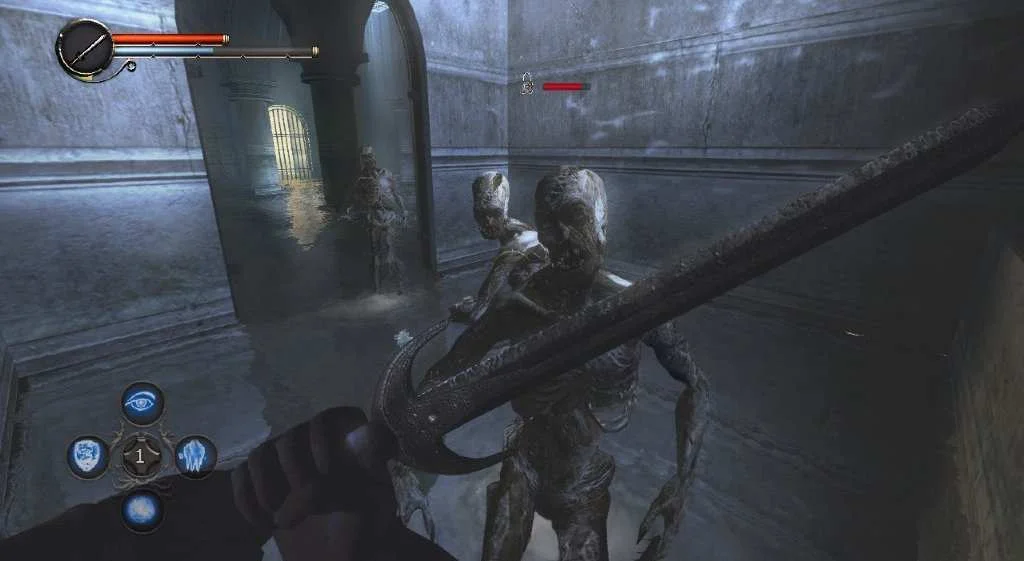
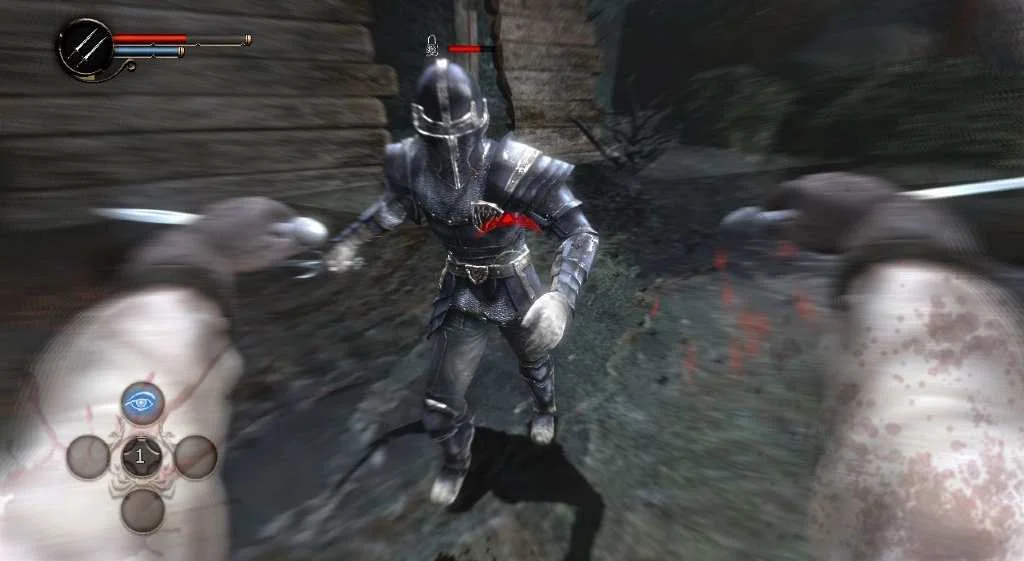
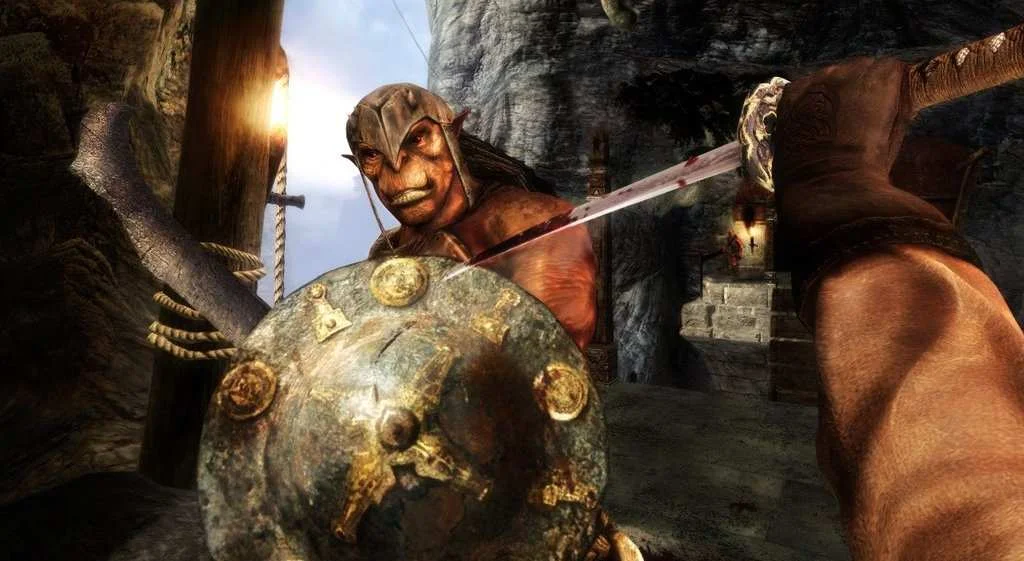
Dark Messiah puts the camera directly behind the weapon, so positioning, reach, timing, and movement matter in every fight. Swords provide reliable close-range damage, daggers reward attacks from behind, staves can stagger groups, and bows let dedicated archers control encounters from a distance. Shields add another defensive option, while charged attacks and directional strikes give melee combat more expression than a basic click-to-swing system.
The defining feature is environmental combat. Enemies can be shoved from ledges, knocked into fire, frozen on hazardous surfaces, or driven onto spikes and other traps. The famous kick attack is not a novelty disconnected from the rest of the design: it is a practical way to interrupt enemies, create space, and turn level geometry into a weapon. This makes encounters feel like small physical puzzles rather than isolated health-bar exchanges.
That emphasis on interaction also explains why the game remains distinctive among fantasy action RPGs. The enhanced Source Engine physics support throwable objects, movable bodies, breakable combat situations, and spells that affect enemy positioning. Players who enjoy first-person worlds where tools and surroundings matter as much as raw damage will find a similar design instinct in immersive first-person adventures such as Prey, although Dark Messiah is much more focused on direct melee violence.
Three paths through Sareth’s skill system
Progression follows a skill-point system rather than conventional loot rarity or unrestricted character statistics. Skill points are awarded for completing objectives, including optional discoveries, so exploration and alternative routes can improve a character even when the player is not defeating every enemy.
The three main categories are Combat, Magic, and Miscellaneous. Combat skills improve weapon use, physical attacks, archery, shields, and advanced fighting techniques. Magic skills unlock and strengthen spells, while Miscellaneous abilities cover utility improvements such as stealth, trap interaction, and health or mana increases. The structure supports hybrid builds, but it does not make every play style equally broad or equally convenient.
- Warrior builds emphasize melee damage, defensive options, power attacks, and crowd control.
- Stealth builds use daggers, silent movement, backstabs, and environmental positioning.
- Mage builds invest in offensive, defensive, and utility spells while managing mana.
- Hybrid builds combine reliable weapon damage with selected spells or utility skills.
Spells are most interesting when they interact with the physical space. Telekinesis can manipulate objects, fire can exploit combustible surfaces, and ice can alter footing and movement. The strongest results usually come from combining abilities rather than treating magic as a separate ranged damage system.
A focused campaign with branching solutions
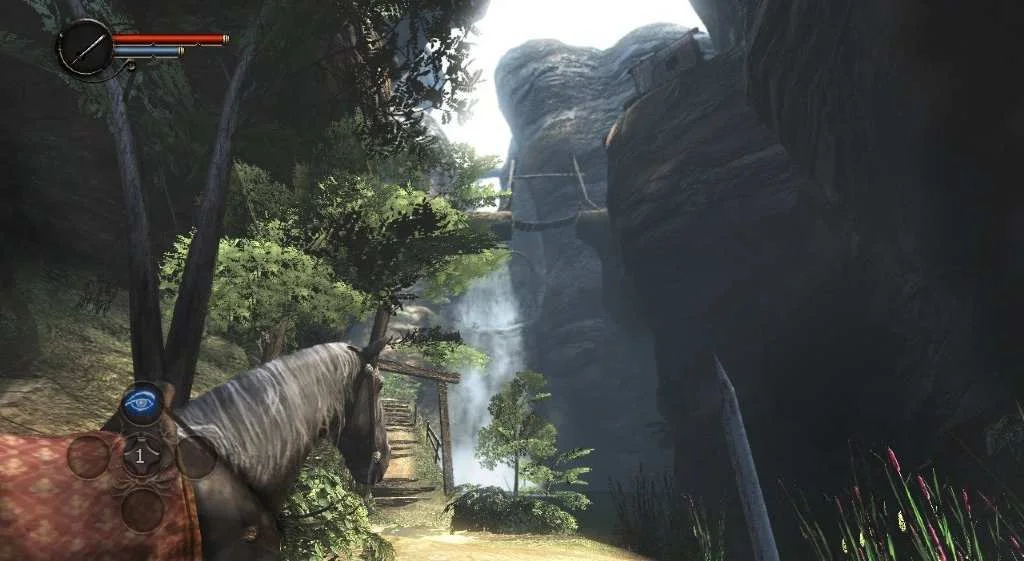
The single-player campaign follows Sareth through a linear fantasy adventure involving the Skull of Shadows, the demon Xana, and the wider Might & Magic setting. Its structure is mission-driven rather than open-world, with carefully arranged environments that hide alternate paths, secret areas, optional objectives, and combat opportunities.
Choices in progression and play style can influence how individual encounters unfold. A heavily armored fighter may force a route through a guarded area, while a stealth-focused character can search for darkness, elevation, or a vulnerable target. Magic users often create their own solutions by moving objects, controlling space, or exploiting elemental effects. The game is not a fully systemic sandbox, but its levels are designed to support more than one method of getting through a problem.
The campaign is also structured around mastery rather than endless character accumulation. Equipment is relatively controlled, item placement is deliberate, and skill investment determines which weapons and techniques become practical. Players looking for randomized loot, sprawling quest hubs, or a permanently expanding build may find the progression limited; players who prefer a compact action RPG with authored encounters will understand its priorities quickly.
Multiplayer is separate from the campaign
The PC version includes a distinct multiplayer component rather than campaign co-op. Its foundation is team-based combat between human and undead factions, with predefined classes that specialize in different battlefield roles. The official material describes a Crusade mode in which players can gain experience and skills across an online campaign structure, alongside other multiplayer formats such as team deathmatch and objective-based battles.
The multiplayer skill model differs from the single-player system. Instead of freely shaping Sareth across the full set of skill categories, players select a class and develop the abilities available to that class. The original manual also documents four multiplayer modes playable through LAN or Steam multiplayer features. This is competitive online content, not a way to bring another player into the story campaign.
Because this is an older PC multiplayer release, availability should be treated separately from the presence of the mode itself. The storefront lists multiplayer and Valve Anti-Cheat support, but current match activity can depend on community servers and remaining player interest.
PC storefront status, controls, and language support
The current PC storefront version is a paid Steam release from Arkane Studios published by Ubisoft. It is listed as an action and RPG title and uses Steam for installation, ownership, updates, and multiplayer access. The store does not present a modern definitive edition, free-to-play transition, season pass, or PC DLC lineup for this game.
The PC design is centered on keyboard and mouse controls, which suit directional attacks, quick item access, spell selection, and precise camera movement. The current storefront information does not list official native controller support, so players seeking a gamepad-first experience should not assume console-style input integration. The game also does not advertise modern features such as Steam Workshop support, official mod tools, or Steam Remote Play Together.
Interface support is listed for English, French, German, Italian, and Spanish. The storefront marks these as interface languages rather than full audio or subtitle packages. That distinction matters for players choosing the game specifically for localized voice acting or subtitles.
Who should play Dark Messiah?
Dark Messiah is a strong match for PC players who want first-person swordplay, physical enemy reactions, short-to-medium authored levels, and meaningful experimentation with hazards. It rewards players who look at a room and immediately notice ledges, fire, oil, traps, narrow bridges, and objects that can change the encounter.
It is less suitable for players expecting a traditional Might & Magic party RPG, a large open world, deep equipment crafting, or a stealth game that consistently supports nonviolent completion. Stealth exists, but combat remains the central language of the campaign. The story provides context for the action, while the real long-term appeal comes from replaying encounters with different skill investments and more creative uses of the environment.
Games with related immersive-sim DNA
The closest comparisons are not standard fantasy hack-and-slash games. Dark Messiah shares Arkane’s interest in player-directed solutions with first-person stealth action games such as Dishonored 2, though Dishonored offers broader mission spaces and more elaborate stealth systems. The comparison is most useful for understanding the shared emphasis on verticality, powers, alternate routes, and environmental problem-solving.
For a more direct Dark Messiah experience, choose the game for its unusual combination of melee physics, spell utility, skill-based progression, and authored fantasy levels. Its identity does not come from a large content model or a modern online ecosystem. It comes from giving the player a sword, a kick, a few dangerous rooms, and enough physical freedom to make the encounter play differently from the obvious solution.
Dark Messiah of Might & Magic FAQ
Is Dark Messiah of Might & Magic still the current PC name?
Yes. The current Steam listing uses Dark Messiah of Might & Magic. “Dark Messiah Might and Magic” appears as shortened product wording in part of the purchase interface, but it is not identified as a separate rebrand. Elements refers to the console edition.
Is the PC version a full action RPG or a traditional Might & Magic RPG?
It is a first-person action RPG with melee combat, magic, stealth, skill trees, and limited equipment progression. It is not a party-based, turn-based, or open-world role-playing game in the style of the classic Might & Magic computer RPGs.
Does Dark Messiah have co-op?
No. The PC release has a single-player campaign and separate competitive multiplayer modes. It does not include cooperative campaign play.
What are the main skill categories?
The skill system is divided into Combat, Magic, and Miscellaneous. These cover weapon mastery, spells, stealth, trap utility, defensive improvements, and other character abilities.
What makes the combat different from other first-person fantasy games?
The key difference is the combination of directional attacks, power strikes, kicks, spell effects, and physics-based hazards. Players can defeat enemies by exploiting the environment instead of relying only on weapon damage.
Which languages are available on PC?
The storefront lists English, French, German, Italian, and Spanish interface support. It does not list full audio or subtitle support for those languages.
System Requirements
Minimum: |
Processor: Pentium 4 3.2 GHz Graphics: 256 MB VRAM Memory: 1 GB RAM Disk space: 6 GB HDD Operating system: Windows XP |
Screenshots
Trailer/Gameplay
Download
Dark Messiah of Might & Magic (2006), 5.12GB
ElAmigos release, game is already cracked after installation (crack by Hatred).

Updated to version 1.2. No multiplayer mode.

1. Extract files.
2. Burn or mount the image.
3. Install the game.
4. ElAmigos release, game is already cracked after installation.
5. Play the game. If you like this game, BUY IT!
Dark Messiah of Might & Magic Download
🔒 Premium access required
To see and use the download links, you must be logged in and have an active PREMIUM account.
* Unlock downloads via Torrent and TeraBox.
Torrent Download
The best torrent download speeds are with qBittorrent!