From Dust
Game Description
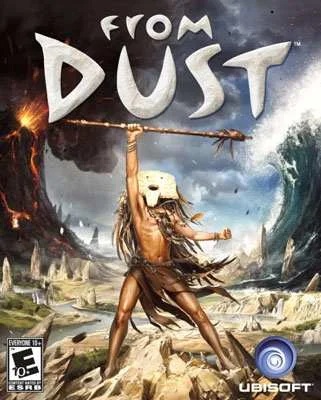
From Dust is a PC god game and environmental strategy puzzle from Ubisoft Montpellier, created under the direction of Eric Chahi. The current Steam and Ubisoft Store listings still use From Dust as the official name, with no modern rebrand or definitive edition replacing it. During development it was known as Project Dust, but that is a historical working title rather than a current storefront identity.
The game is built around a simple premise with unusually systemic consequences: guide a tribe across unstable islands while using supernatural powers to reshape the terrain. It is closer to a chain of real-time environmental puzzles than to a conventional city builder or open-ended god simulator.
Shape the land, protect the tribe
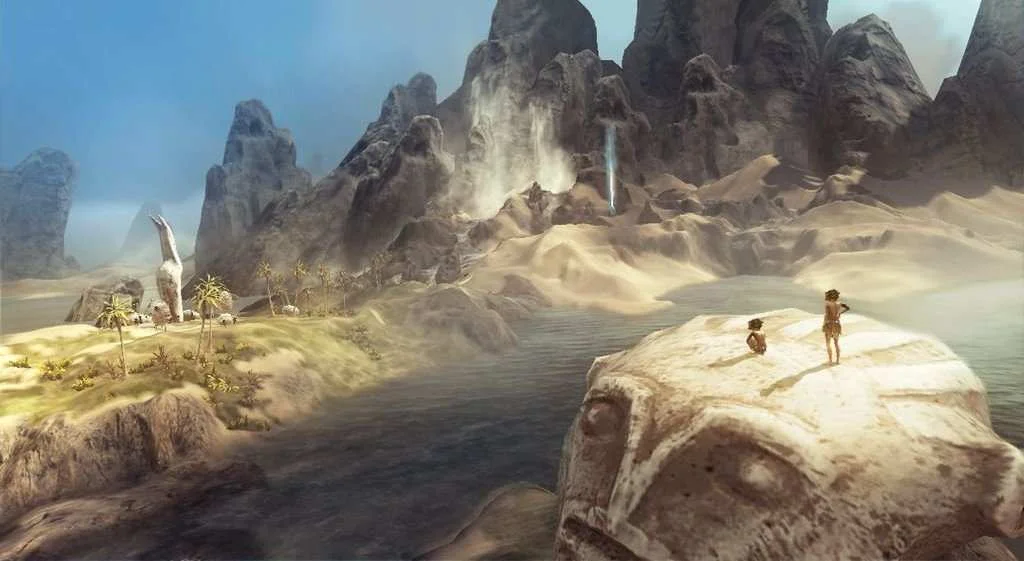
You control The Breath, a floating cursor-like presence that can gather and relocate natural materials. The basic loop is immediate: select soil, water, or lava, move it across the map, and release it where the terrain needs to change.
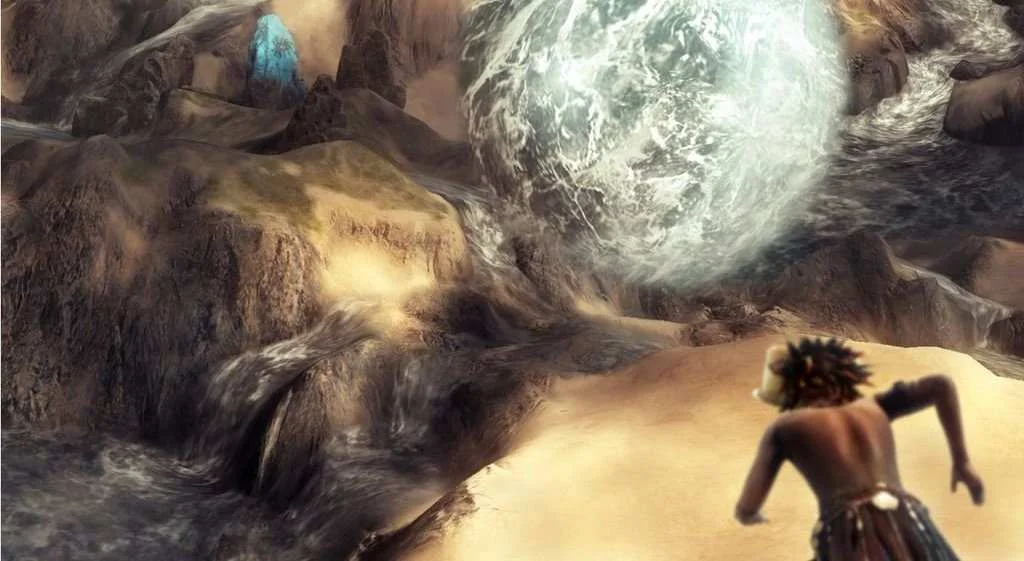
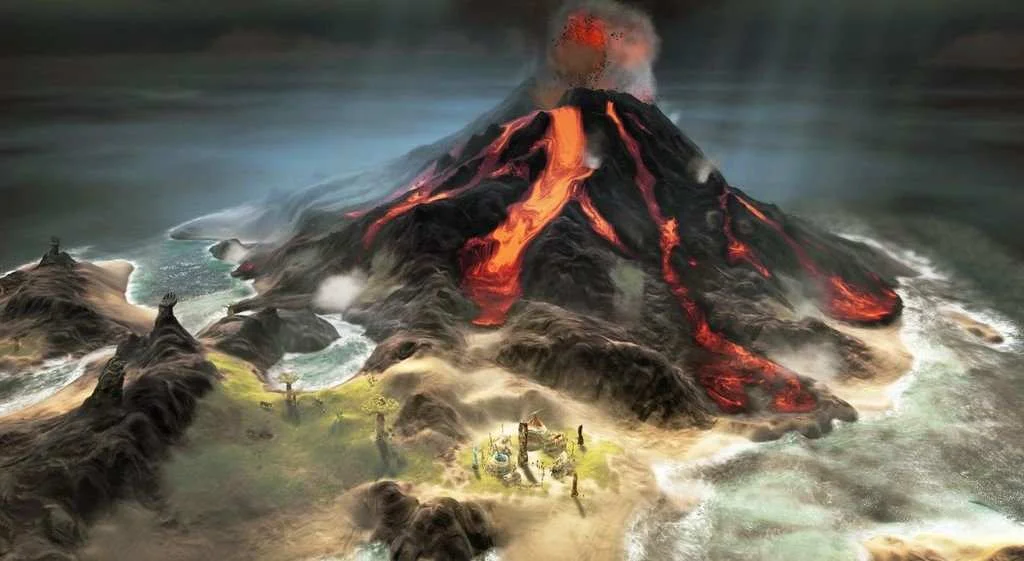
That manipulation is governed by an evolving nature simulation. Water flows downhill and erodes soil, lava cools into rock when exposed to water, and vegetation can spread across suitable ground before becoming vulnerable to fire. A bridge that solves one problem can create a flood somewhere else.
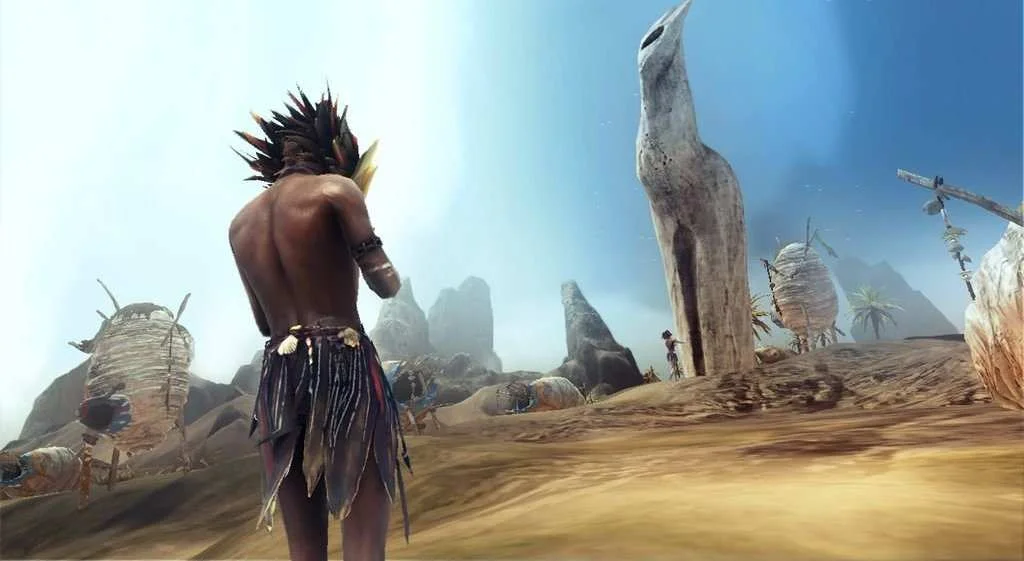
The camera uses an elevated, map-focused perspective designed for reading the whole environment rather than controlling an individual character. Villagers move through the world on their own, so your job is to create safe routes, preserve settlements, and react when the landscape changes faster than expected.
Most Story Mode territories ask you to bring villagers to marked totems, establish settlements, unlock new powers, and eventually guide the tribe to an exit. The objectives are clear, but the route to them is often open-ended. You can divert a river, raise a mound, extinguish a fire, or cool lava into a permanent barrier depending on the situation.
Natural disasters are the real opposition
From Dust does not rely on a conventional enemy army. Its threats are tsunamis, wildfires, earthquakes, volcanic eruptions, and torrential rain, alongside the less dramatic dangers created by your own terrain edits.
The important distinction is that disasters are not merely scripted attacks to survive with a single correct answer. They interact with the materials already present on the map. A wall of soil may hold back water briefly, while a better solution may be to reroute the water entirely or use lava to create new rock.
Totems and settlements expand your available toolkit. As the tribe activates important locations, The Breath gains additional powers that can alter the rules of a map for a limited time. These abilities turn familiar materials into strategic tools rather than simple obstacles.
Examples include temporarily making water easier to manipulate, producing earth in large quantities, increasing the amount of material The Breath can carry, or protecting settlements from specific environmental hazards. The challenge is deciding when to spend a power, because a badly timed ability may leave another village exposed.
Story Mode and Challenge Mode
The main campaign contains 13 territories spread across tropical, volcanic, and desert environments. Each map introduces or combines different physical systems, gradually asking you to manage more villages, more dangerous terrain, and shorter reaction windows.
Story Mode is not a traditional settlement-management campaign. You do not directly assign villagers to jobs, control individual units, or build a large economy. Instead, you solve compact scenarios by manipulating the environment and keeping the tribe alive long enough to complete its objectives.
Alongside the campaign is Challenge Mode, which adds 30 time-focused maps. These scenarios emphasize speed, route planning, and precise use of The Breath's abilities rather than narrative progression.
Challenge Mode also includes online leaderboards, giving the PC version a score-attack dimension. The result is a two-part structure: Story Mode teaches and tests the simulation, while Challenge Mode rewards efficient solutions and repeat attempts.
Who should play From Dust?
From Dust is a strong fit for players who enjoy physics-driven puzzles, god games, and strategy systems where the environment itself behaves like an opponent. It is especially appealing if you prefer experimenting with interacting rules over following a fixed construction checklist.
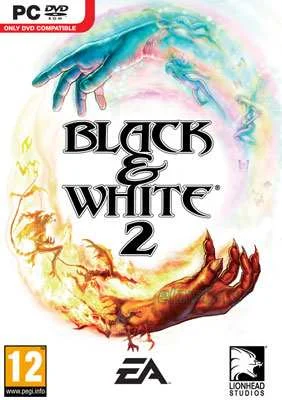
Players who enjoy older moral god games may recognize the broad perspective, but the emphasis here is different. Players seeking classic god-game strategy such as Black & White will find a similar sense of indirect power, although From Dust is more tightly focused on terrain manipulation than on morality, creature training, or empire building.
The game is less suitable for anyone expecting a freeform sandbox with unlimited building, a conventional real-time strategy game with armies, or a colony simulator with deep production chains. Its maps are designed around specific objectives, and the campaign offers controlled scenarios rather than an endlessly expanding world.
Its difficulty can also feel uneven. Villager pathfinding is an important part of the challenge, but players who want exact unit control may find the indirect design frustrating. The best results come from treating the terrain as a system to manage, not from trying to micromanage every person.
PC storefront and platform details
The current PC listings identify Ubisoft Montpellier as developer and Ubisoft as publisher. Ubisoft's own store presents the game as a PC digital Standard Edition, while Steam continues to list the original title rather than a remastered or rebranded edition.
On Ubisoft's storefront, the game requires a Ubisoft account and the Ubisoft Connect application. The Steam version also carries legacy Ubisoft activation information, so buyers should expect Ubisoft account integration rather than a completely standalone PC launch.
Input is centered on keyboard and mouse, with optional controller support listed for the PC version. The cursor-based terrain tools benefit from mouse precision, particularly when placing narrow land bridges, picking up small material deposits, or reacting to a fast-moving disaster.
Localization is limited but clearly documented: the PC storefront listings provide interface support for English, French, German, Italian, and Spanish. The official listings do not advertise co-op, competitive multiplayer, split-screen, or LAN play. This is a single-player experience, with online leaderboards serving the competitive side of Challenge Mode.
Related god games and environmental strategy
From Dust occupies a narrow space between god simulation, puzzle design, and real-time strategy. It does not offer the broad economic management found in a typical city builder, nor does it use combat as its main source of pressure.
For a more hands-on settlement-focused alternative, god-game city building with medieval villages in Townsmen VR provides direct population and production management, while From Dust concentrates on emergency terrain work and survival.
The closest comparison is therefore structural rather than cosmetic: these games let players influence communities from an elevated perspective, but From Dust makes geology, water flow, fire, and disaster timing the center of every decision.
From Dust FAQ
Is From Dust still the official PC name?
Yes. Current Steam and Ubisoft Store pages still list the game as From Dust. Project Dust was an earlier development name, not a replacement storefront title, and there is no current definitive or remastered edition presented under another name.
What kind of game is From Dust?
It is a single-player god game with environmental simulation, real-time strategy elements, and puzzle-like objectives. You reshape terrain and manipulate natural forces while guiding a tribe between settlements and totems.
Does From Dust have multiplayer or co-op?
No. The official PC store information identifies From Dust as single-player. Challenge Mode has online leaderboards, but there is no advertised co-op, split-screen, LAN, or competitive multiplayer mode.
How many campaign and challenge maps are included?
The storefront description lists 13 Story Mode territories and 30 additional Challenge Mode maps. Story Mode focuses on progression through the tribe's journey, while Challenge Mode emphasizes timed completion and leaderboard performance.
What can The Breath manipulate?
The Breath can gather and relocate materials including soil, water, and lava. These materials obey different physical rules after placement, allowing you to build routes, redirect flows, extinguish fires, or create hardened rock.
Does From Dust include DLC or a season pass?
The current store listings present a standalone Standard Edition and do not identify a named DLC collection or season pass. The documented content is the Story Mode campaign, Challenge Mode maps, and its leaderboard system.
System Requirements
Minimum: |
Processor: Core i7 2.66 GHz Graphics: 512 MB VRAM Memory: 1 GB RAM Disk space: 1 GB HDD Operating system: Windows XP/Vista/7 |
Screenshots
Trailer/Gameplay
Download
From Dust (2011), 1.07GB
ElAmigos release, game is already cracked after installation (crack by Skidrow).

Installation of old UBISoft Game Launcher is recommended.

1. Extract files.
2. Burn or mount the image.
3. Install the game.
4. ElAmigos release, game is already cracked after installation.
5. Play the game. If you like this game, BUY IT!
From Dust Download
🔒 Premium access required
To see and use the download links, you must be logged in and have an active PREMIUM account.
* Unlock downloads via Torrent and TeraBox.
Torrent Download
The best torrent download speeds are with qBittorrent!