Good Company
Edit date: 6-01-2023, 16:55
Reason: Updated to version 1.0.12 (04.08.2022)
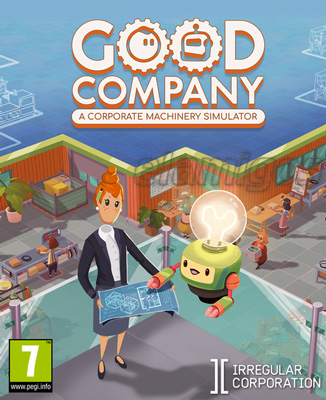
- Category:
- Release date:
- Game Genre:Strategy, Economic, humorous, indie games, simulation elements
- Developer:Chasing Carrots, Publisher: The Irregular Corporation
- Release:ElAmigos
- Platform:PC
- Languages (subtitles):English, French, German, Spanish, Russian, Portuguese-Brazil, Japanese, Chinese Simplified
- Crack:Codex
- Game size:0.52GB
Game Description
Good Company is a PC factory management and economic simulation game about turning a small workshop into a technology corporation. Current Steam and GOG storefronts continue to list the game under the original name, with no verified rebrand, replacement edition, or alternate current title. Developed and published by Chasing Carrots, it combines isometric factory construction, employee management, product design, research, and market competition.
Build a technology business from the ground up
The central loop begins with purchasing base materials and converting them into components, modules, and finished products. Employees can craft items at workplaces, while later automation allows machines and conveyor systems to handle more of the workload. Your role is not limited to placing buildings: you must also decide how materials move, which workers handle each task, and when a production line is ready to scale.
Every factory is a logistical problem waiting to emerge. Storage, courier routes, work zones, conveyor belts, splitters, mergers, and automated machinery determine whether materials reach the correct station at the correct time. Manual logistics can help stabilize an early operation, but the long-term objective is to create automated production loops that continue operating with minimal intervention.
Players who enjoy carefully balancing supply chains may also appreciate car-factory management games such as Production Line: Car Factory Simulation, although Good Company places more emphasis on employee logistics and designing the products themselves.
Product design matters as much as production
Good Company separates manufacturing from product development. In the Blueprint Designer, you combine modules into technology products and choose features that affect market appeal, production complexity, and commercial performance. A product is not automatically successful because it is advanced. Its features, drawbacks, price, and the current market phase all influence whether customers will buy it.
Research unlocks more complex components, modules, machines, and product possibilities. This creates a progression loop built around both engineering and business development. You may need to redesign an existing item when the market changes, then rework your factory so the new blueprint can be produced efficiently without starving older product lines of shared components.
The market is an active part of the simulation rather than a simple sell button. New markets unlock additional product types, market discovery reveals commercial opportunities, and changing demand encourages you to adapt your catalogue. Products, components, and modules are moved to delivery areas for sale, while incoming materials arrive through the same broader logistics structure.
Employees, policies, and operational control
Your workforce is another production system to manage. You can hire, train, and assign employees to crafting, assembly, logistics, research, and other company tasks. Worker skills influence efficiency, while employee happiness and workplace organization affect how smoothly the company operates.
Work policies provide another layer of decision-making. They can offer different benefits and tradeoffs, so the best policy depends on whether your current problem is slow manufacturing, weak logistics, insufficient research, or financial pressure. The game therefore asks you to solve bottlenecks through organization as often as through construction.
Buildings are functional spaces rather than decorative shells. Crafting tables, assembly workplaces, machines, storage, and research facilities must be placed inside buildings, and expanding into additional facilities gives you room to separate production stages. A tidy layout is not merely attractive; it reduces unnecessary movement and makes later automation easier to understand.
Campaign, challenges, and Freeplay
The single-player Campaign introduces the game's systems through narrative-driven levels. Each level presents milestones and objectives that teach a new concept or ask you to solve a specific business problem. Progress is tied to trophies earned from completed milestones, while additional objectives can improve your performance rating.
Campaign Challenges use more specific rules and performance conditions. They are useful for players who want structured tests rather than an open-ended company, with scores and trophy targets providing reasons to optimize a solution after it already works.
Freeplay offers a larger, longer-form company-building experience, but it is not a completely unrestricted sandbox. Progression, competitors, markets, and technology remain active, while Freeplay settings allow you to customize the starting conditions. This distinction is important: the mode is designed for continued management and expansion, not simply for placing every machine from the beginning.
Good Company also supports online co-op for up to four players. Multiplayer is tied to Freeplay and places everyone in the same company, with shared responsibility for the factory, workforce, research, and sales. It is a practical fit for groups that want to divide tasks, such as having one player manage logistics while another handles product design or market decisions.
PC features and storefront differences
On Steam, the game includes achievements, trading cards, cloud support, Family Sharing, and online co-op. Steam also provides access to the game's community and modding ecosystem. Official mod support has focused on adding scripts, adjusting content, and extending the game through mod.io-related tools.
The GOG version is listed as DRM-free, meaning the single-player game does not require activation or an online connection. GOG Galaxy is required for multiplayer features, and cross-platform multiplayer is supported. The Steam and GOG pages both list the same core game rather than separate editions or a renamed successor.
The interface is built around precise placement, menus, logistics configuration, and blueprint editing. Keyboard-and-mouse play is the safest expectation for detailed factory work, while Steam Input or similar remapping can make the game more comfortable on handheld devices. The developer FAQ also identifies Linux through Proton and Steam Deck-style systems as supported play environments, while macOS is not supported.
Text localization includes English, French, German, Spanish, Simplified Chinese, Japanese, Brazilian Portuguese, and Russian on the Steam listing. The storefront does not advertise full voice acting as a separate language feature, so the experience is primarily text and interface driven.
Who should play Good Company?
Good Company suits players who enjoy factory automation, economic planning, product optimization, and management games where small layout decisions create large downstream effects. It is especially appealing if you like watching a manual process evolve into a coordinated network of workers, machines, storage, and conveyors.
It is less suitable for players looking for a relaxed decorative builder, direct character control, or a campaign focused mainly on story. The game expects you to understand production dependencies and respond when a redesign disrupts an existing chain. Its strongest rewards come from solving operational problems rather than simply unlocking new buildings.
For a more puzzle-focused take on machine design, open-ended automation puzzles like Opus Magnum offer a useful contrast: Good Company manages a living business with employees and markets, while Opus Magnum concentrates on constructing and optimizing individual machines.
Similar factory and management games
Good Company sits between a traditional tycoon game and a logistics-focused factory builder. Isometric production-chain builders such as Factory Town share its interest in resource movement, transport networks, and gradual expansion, but Good Company is more focused on technology products, employee performance, and commercial demand.
Its closest appeal is the combination of blueprint design and factory optimization. You are not only trying to manufacture more items; you are deciding which items deserve production capacity and how much complexity the market can justify.
Good Company FAQ
Is Good Company still sold under its original name?
Yes. Verified Steam and GOG storefront listings use the name Good Company. No current rebrand or replacement edition has been confirmed.
Is Good Company single-player?
Yes. The Campaign, Campaign Challenges, and Freeplay can be played solo. Freeplay also supports online multiplayer for up to four players in the same company.
Does Good Company have co-op?
Yes. Co-op is online, limited to Freeplay, and supports up to four players. Cross-platform multiplayer is supported between the listed PC storefront versions, although the GOG version requires GOG Galaxy for multiplayer access.
What do you do in Good Company?
You buy materials, craft components and modules, design technology products, build production lines, assign employees, research new technologies, manage storage and logistics, and sell products in an evolving market.
Is Freeplay a completely unrestricted sandbox?
No. Freeplay provides customizable starting conditions and a longer company-building structure, but progression, competitors, markets, and technology systems remain active.
Does Good Company support mods?
Yes. Official modding support includes tools and interfaces for scripts, content adjustments, and additional modifications, with mod.io used as part of the supported ecosystem.
Does Good Company work without an internet connection?
The GOG edition is advertised as DRM-free and does not require activation or an online connection for single-player play. Online co-op naturally requires the relevant storefront service and an internet connection.
System Requirements
Minimum: | Recomended: |
| Processor: Quad Core 2.0 GHz Graphics: 2 GB GeForce GTX 560 / Radeon HD 6970 Memory: 4 GB RAM Disk space: 2 GB HDD Operating system: Windows 7 64-bit | Processor: Quad Core 3.0 GHz Graphics: 2 GB GeForce GTX 760 / Radeon R9 270X Memory: 8 GB RAM Disk space: 2 GB HDD Operating system: Windows 10 64-bit |
Screenshots
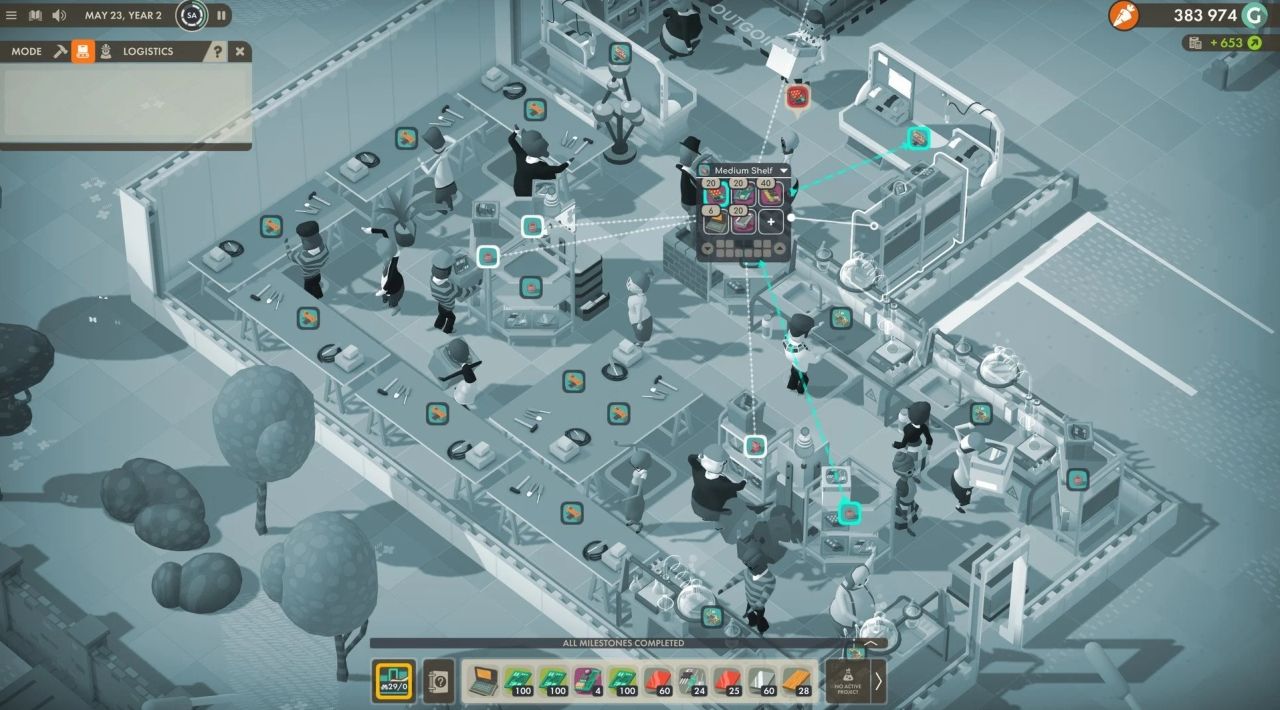
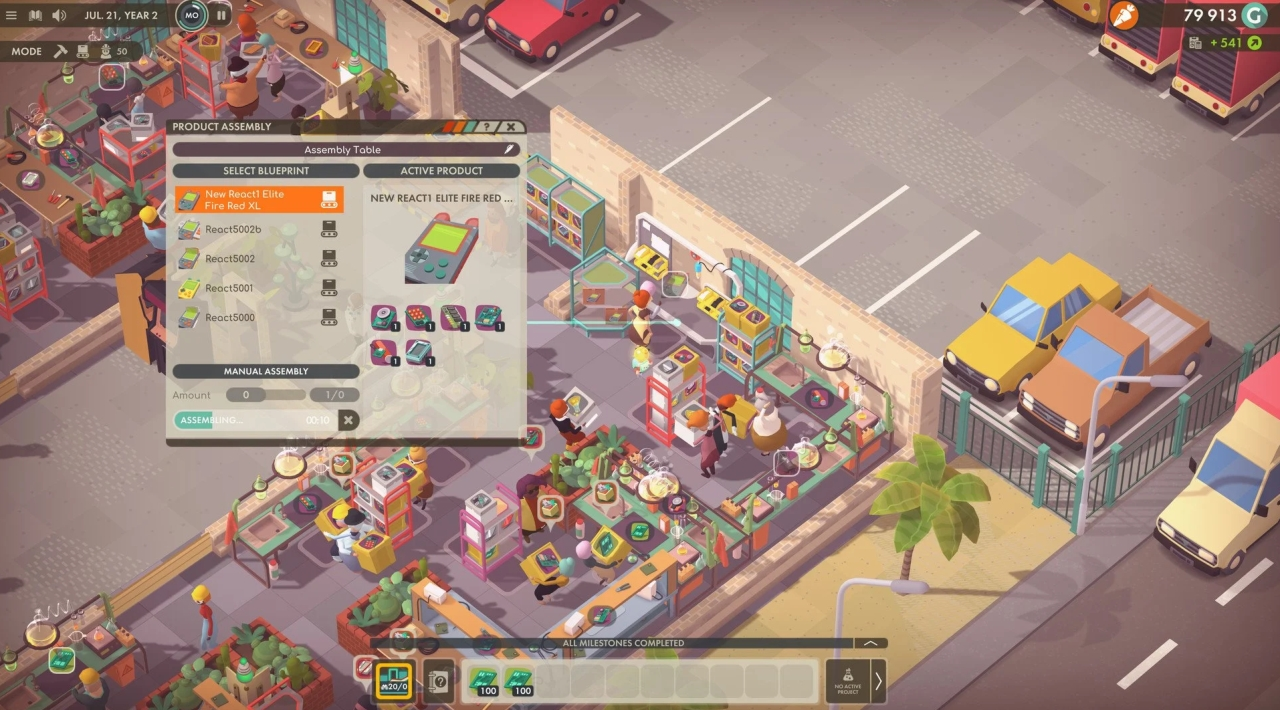
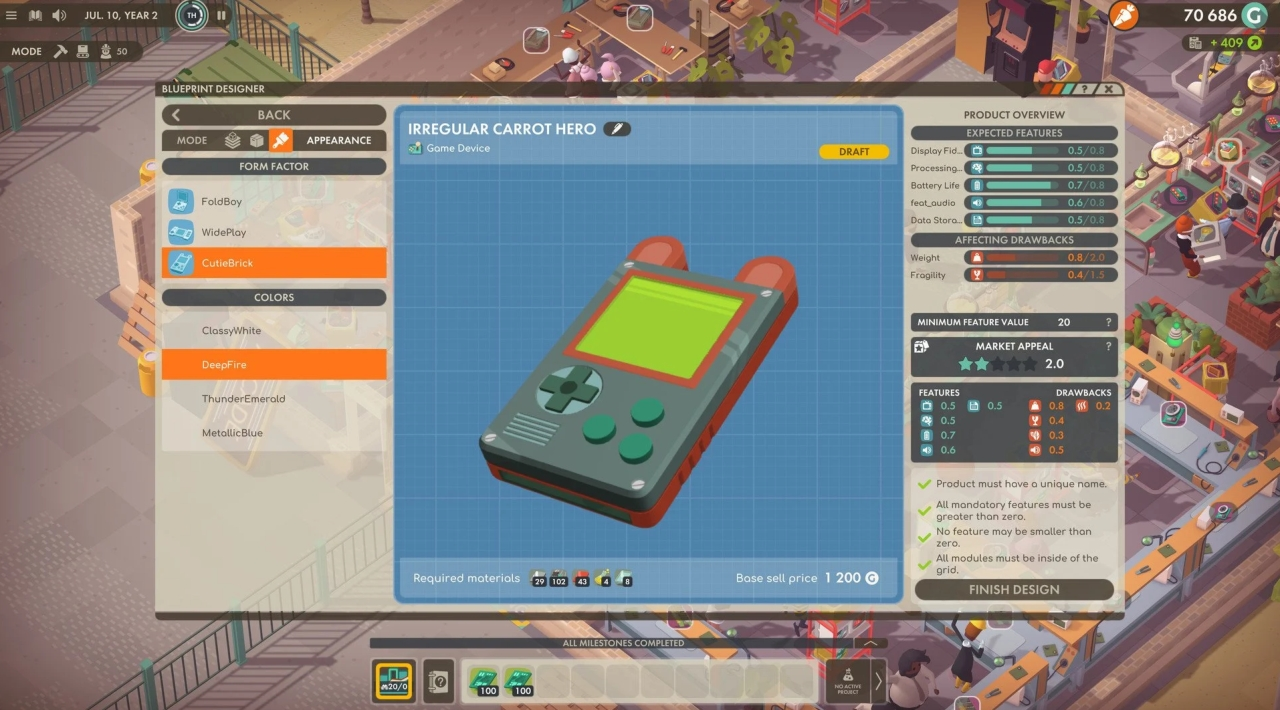
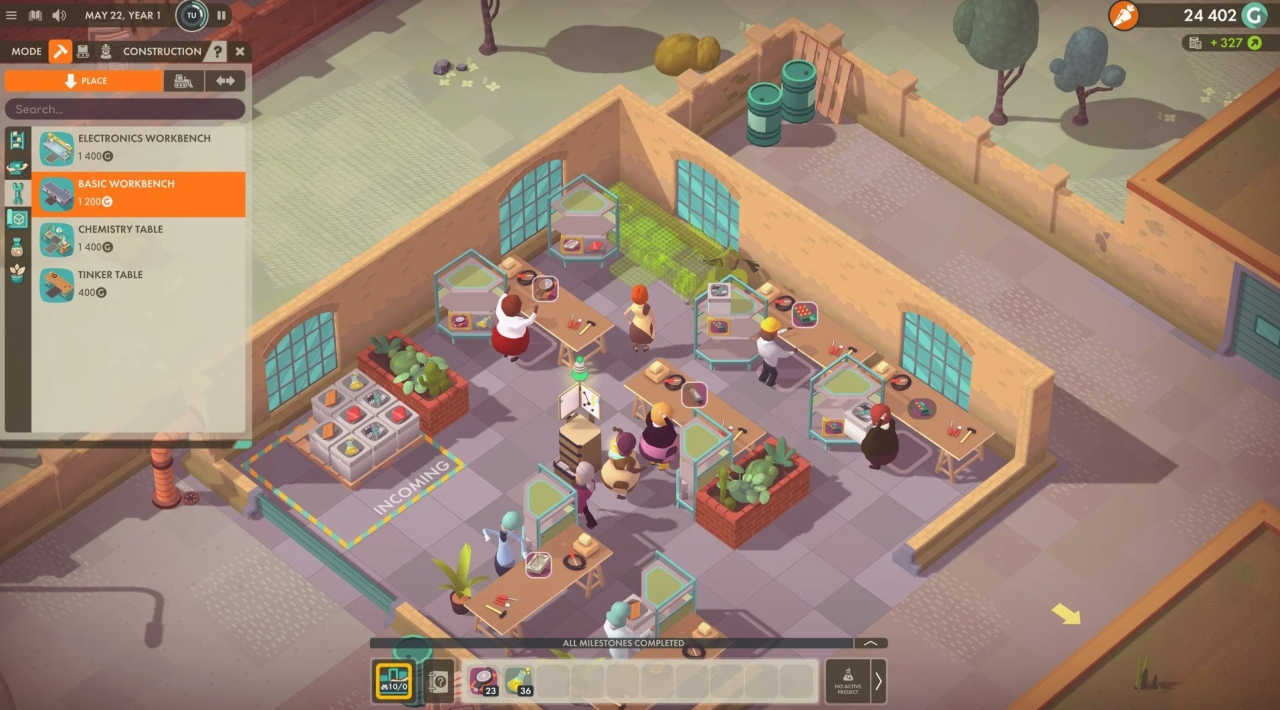
Trailer/Gameplay
Download
Good Company (2022), 0.52GB
ElAmigos release, game is already cracked after installation (crack by Codex).

Updated to version 1.0.12 (04.08.2022).

1. Extract files.
2. Burn or mount the image.
3. Install the game.
4. ElAmigos release, game is already cracked after installation.
5. Play the game. If you like this game, BUY IT!
Good Company Download
🔒 Premium access required
To see and use the download links, you must be logged in and have an active PREMIUM account.
* Unlock downloads via Torrent and TeraBox.
Torrent Download
The best torrent download speeds are with qBittorrent!