
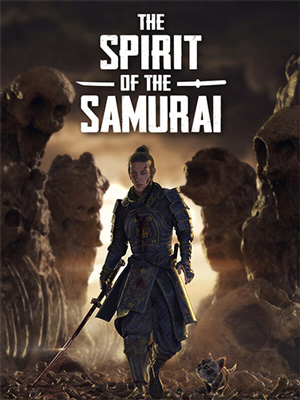
The Spirit of the Samurai
Edit date: 15-01-2026, 18:04
Reason: Updated to version 1.0.15 (17.10.2025)
- Category:
- Release date:
- Game Genre:Action, Platformers, Metroidvania, Indie Games, 2.5D, Side-scroll, Japanese Mythology, Samurai, Action Adventure, Singleplayer
- Developer:Digital Mind Games
- Release:ElAmigos
- Platform:PC
- Languages (subtitles):English, French, German, Spanish, Russian, Portuguese-Brazil, Korean, Japanese, Simplified Chinese, Traditional Chinese
- Dubbing/Audio:English
- Crack:Codex/Rune
- Game size:4.46GB
Game Description
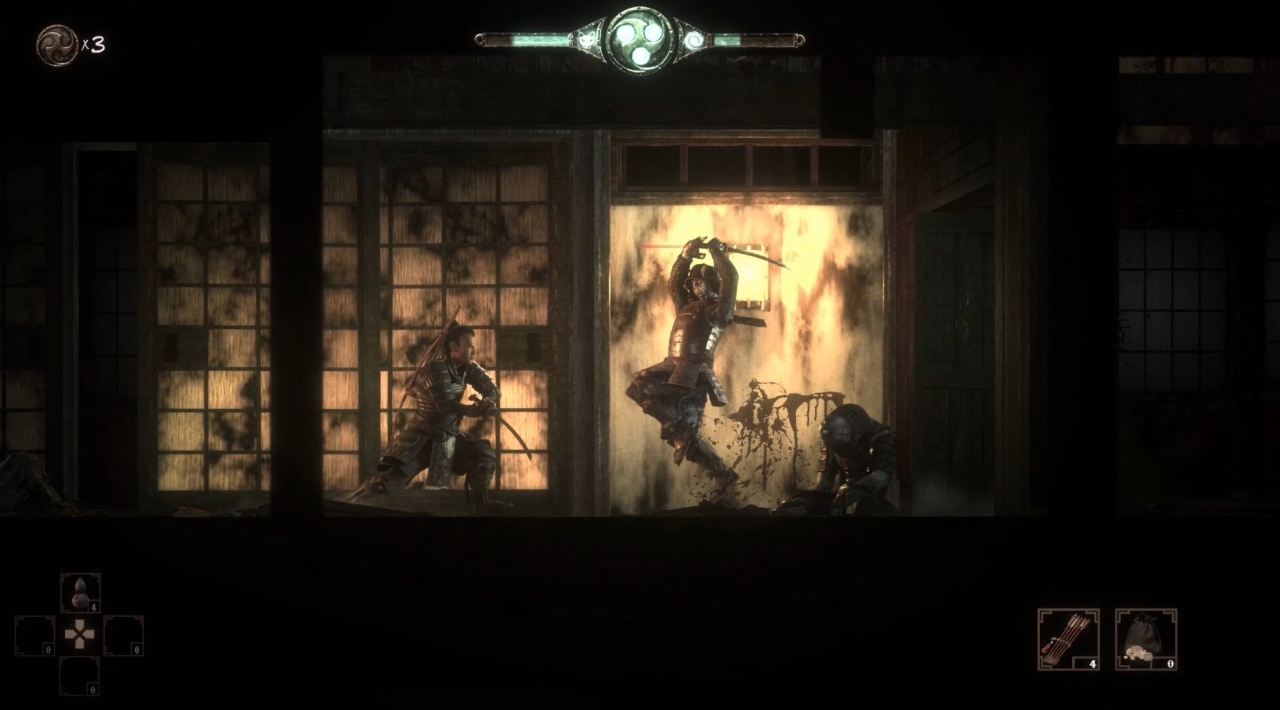
The Spirit of the Samurai is a PC 2D action-adventure game with side-scrolling combat, dark fantasy horror, and a distinctive stop-motion presentation. Steam currently lists it under this original title, with no separate definitive edition or rebranded PC version replacing the main game. Digital Mind Games developed the game, while Kwalee is its publisher.
The storefront description presents it as a 2D action adventure with Metroidvania elements, but players should set realistic expectations: the experience is closer to a structured, mostly linear side-scrolling campaign than to a large, open-ended map built around extensive backtracking. Its strongest identity comes from deliberate swordplay, character switching, Japanese folklore, and the unusual visual style.
Combat built around timing and custom combos
The main character, Takeshi, is a samurai defending his village against an Oni and an undead army. Encounters focus on reading enemy attacks, choosing the correct direction, and combining defensive actions with precise strikes. The combat is not a button-mashing spectacle. Parries, guarding, dodging, spacing, and attack timing all matter when facing groups of tengu, undead warriors, demons, and yokai-inspired creatures.
Takeshi can use several traditional weapons, including the katana, yari spear, and bow. Each option changes the rhythm of an encounter. The katana supports close-range pressure, the spear offers different reach and attack angles, while the bow provides a more cautious way to handle threats. Special attacks and linked powers give the character additional answers when ordinary strikes are not enough.
One of the game’s most notable systems is its in-game combo editor. Players can arrange learned moves into custom attack sequences, giving progression a practical connection to combat style. Experience gained from defeated enemies can be used to improve abilities, stats, and available techniques rather than simply serving as a passive level number.
Players looking for another PC samurai game built around side-scrolling movement, defensive timing, and a strong cinematic identity can compare its combat mood with stylized feudal-Japan action adventures such as Trek to Yomi. The two games differ substantially in structure, but both place atmosphere and sword-focused encounters at the center of the experience.
Three playable spirits, three different rhythms
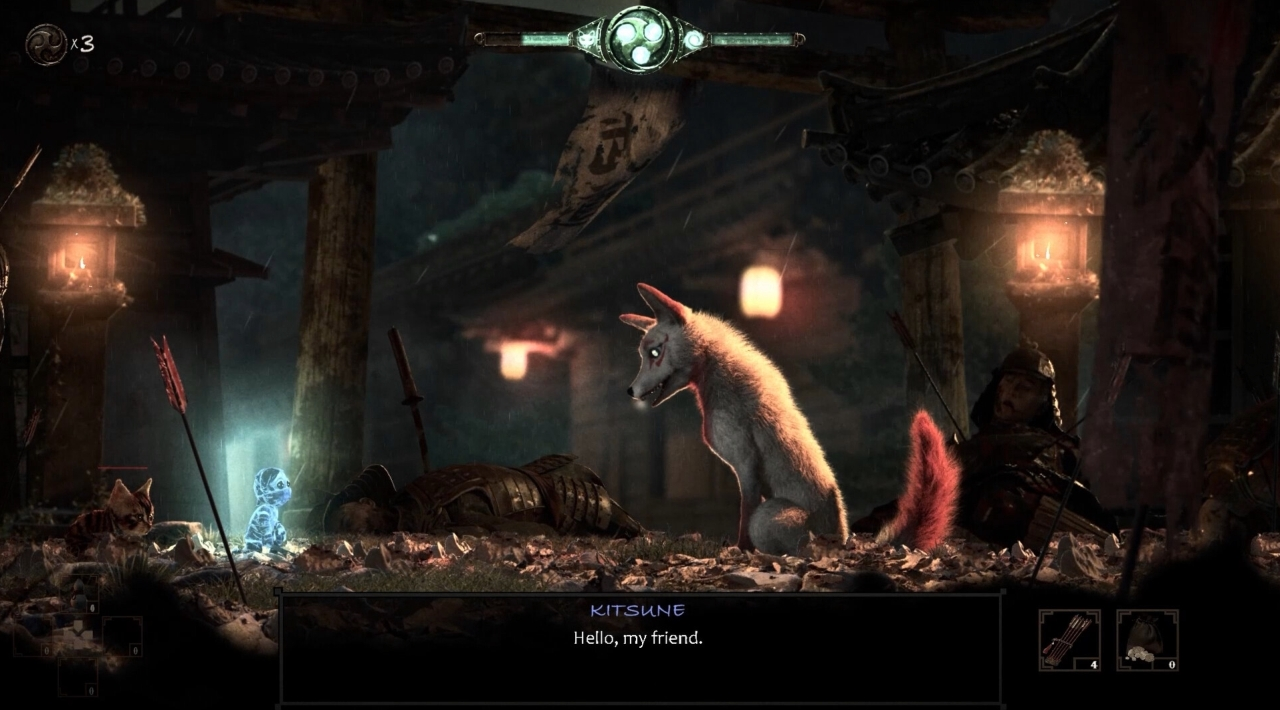
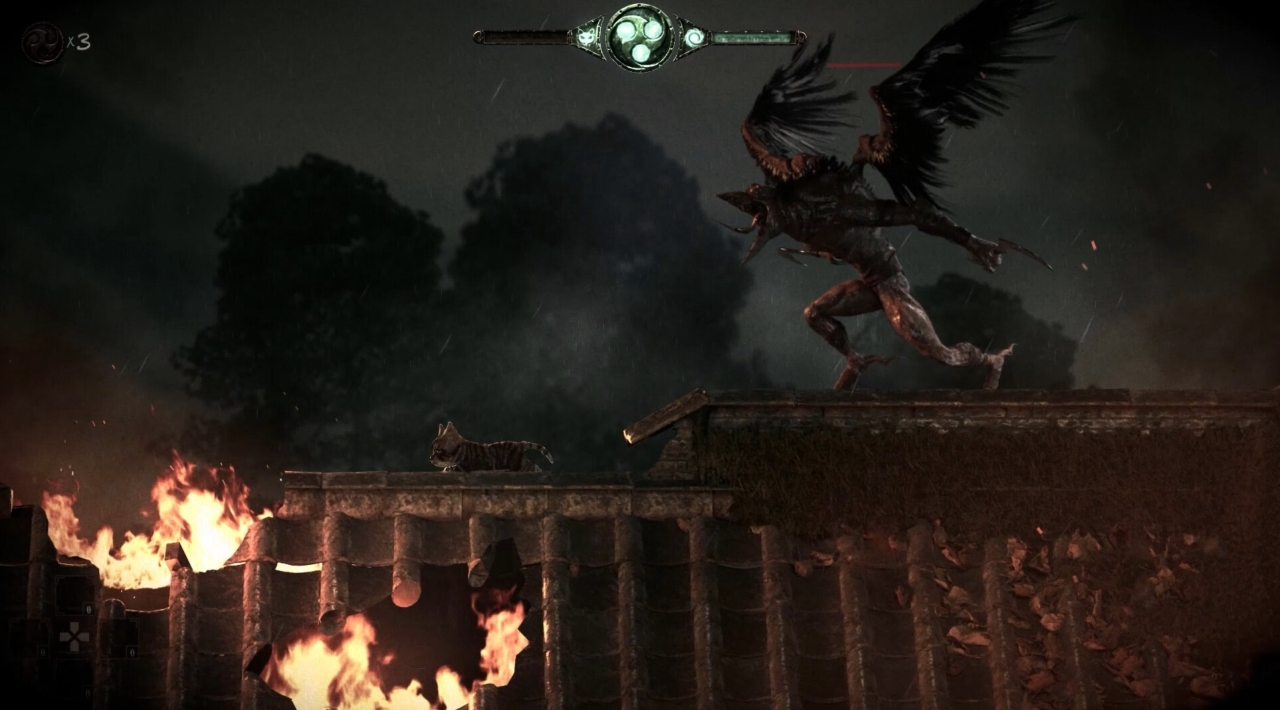
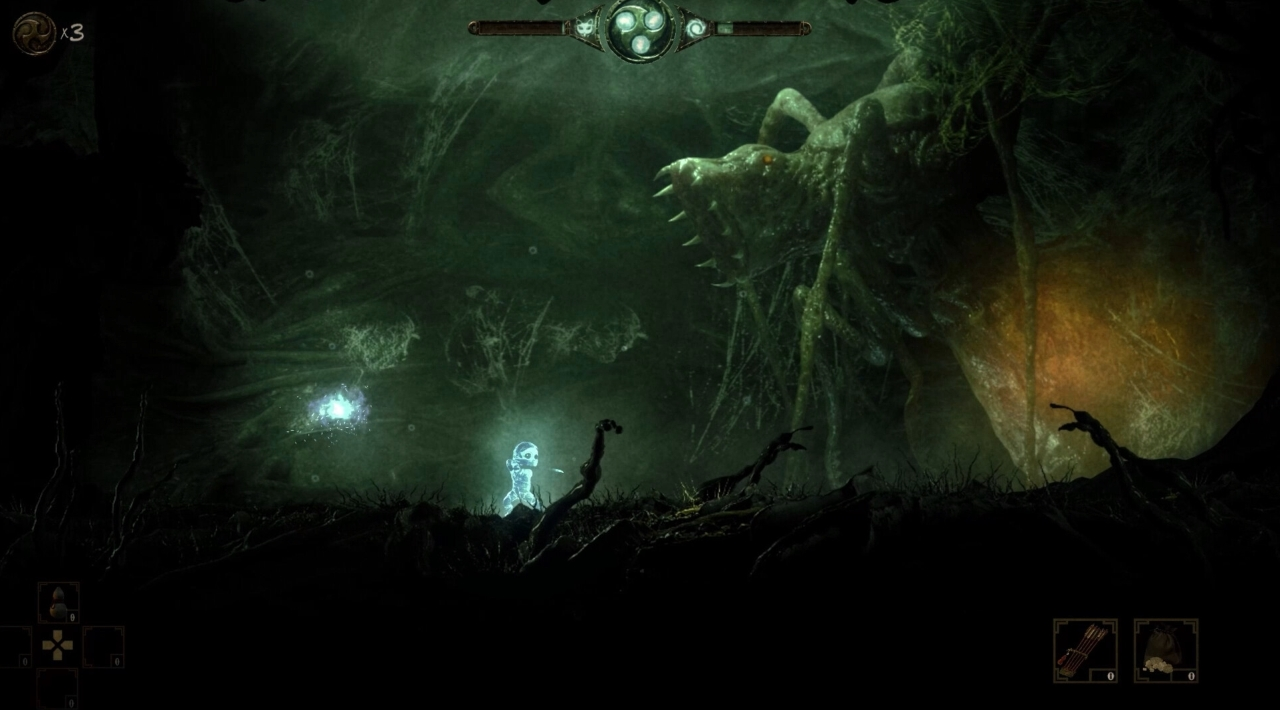
The Spirit of the Samurai is not limited to one controllable fighter. Takeshi is joined by Kodama, a small spirit, and Chisai, a warrior cat. The three characters are not presented as simple cosmetic variations. Their sections emphasize different forms of movement, interaction, and combat.
Takeshi carries the game’s most substantial melee system, while Kodama is associated with more precise traversal and spirit-based abilities. Chisai provides another change of pace through cat-like movement and exploration. These sequences break up the swordplay and make progression feel more like a sequence of linked character challenges than one uninterrupted combat corridor.
The character changes also help the game deliver variety without relying on a large equipment catalog. Instead of constantly replacing weapons, the campaign asks players to learn how each spirit interacts with obstacles, enemies, and spaces. That approach suits the game’s compact, authored structure.
Japanese mythology in stop-motion form
The setting draws from Japanese mythology and folklore rather than presenting a purely historical samurai story. The route moves through ruined villages, mountain caves, cemeteries, and other hostile locations while the Oni’s forces spread across the land. Named threats include tengu, undead enemies, demons, and the horrifying Jorogumo.
Its defining artistic feature is stop-motion-style animation across characters, cinematics, and combat scenes. The visual language recalls handcrafted creature animation and classic fantasy horror more than conventional pixel art or smooth hand-drawn animation. Movement is intentionally distinctive, and the unsettling motion gives the monsters a physical, almost puppet-like presence.
The atmosphere is one of the game’s clearest selling points, but it is also important to understand what the art style does not guarantee. The presentation is highly unusual, while the underlying progression remains focused on combat, platforming, exploration, and story scenes rather than on broad simulation or deep role-playing systems.
Campaign structure and available content
The base game is a paid single-player adventure. Steam lists a free demo separately, allowing players to sample the combat and presentation before committing to the full version. The main product also includes 20 Steam Achievements, Steam Cloud support, and Family Sharing.
The current Steam content listing shows one separate add-on: the official soundtrack. There is no season pass, multiplayer expansion, or large catalog of paid gameplay packs listed alongside the base game. Players buying the main product should therefore expect a self-contained campaign rather than a live-service content model.
Exploration includes secrets and optional discoveries, but the game is not built around procedural runs, open-world activities, or a long-term loot treadmill. Its replay value comes mainly from improving combat execution, experimenting with custom combos, finding hidden content, and completing achievements.
Who should play The Spirit of the Samurai?
This is a strong fit for players who want dark Japanese fantasy, unusual animation, side-scrolling sword combat, and a focused solo campaign. It should also appeal to people who enjoy learning enemy patterns, testing parries, and adjusting their attack strings instead of relying on a single dominant weapon or ability.
It is a weaker match for players expecting a sprawling Metroidvania with multiple interconnected regions, extensive ability-gated backtracking, or a large build-crafting system. The store’s Metroidvania label reflects exploration and platforming elements, but the overall experience is more guided and linear than games designed around broad route choice.
For a more traditional dark-fantasy Metroidvania with map-based exploration, weapon variety, and stronger interconnected-world design, side-scrolling soulslike adventures such as The Last Faith offer a different kind of progression. The comparison is useful because The Spirit of the Samurai emphasizes its animation and samurai setting more heavily than its world structure.
PC features, controls, and localization
The PC version supports keyboard controls and full controller support. Later Steam update notes specifically describe rebuilt keyboard controls, smoother movement, easier parries, more responsive turning during combat and jumps, and independent directional changes for combo hits. A gamepad remains a natural choice for the timing-heavy combat, but keyboard players are not excluded.
Steam also identifies the game as Steam Deck Verified. The platform feature set includes Steam Cloud, achievements, Family Sharing, and a third-party EULA requirement. The storefront does not list a separate launcher, online multiplayer system, or anti-cheat feature, and the game is presented as strictly single-player.
Interface and subtitle localization covers English, French, German, Spanish - Spain, Japanese, Brazilian Portuguese, Simplified Chinese, Traditional Chinese, Russian, and Korean. English is the only listed language with full audio alongside interface and subtitles, while the other languages provide interface and subtitle support.
Related PC games for comparison
The closest comparisons depend on which part of the game interests you most. For samurai atmosphere and side-scrolling presentation, Trek to Yomi is the most immediate reference. For a harder gothic Metroidvania structure, grim exploration-focused action games like Blasphemous 2 provide a broader map and more conventional ability-based progression.
Players interested primarily in supernatural samurai combat can also look at classic demon-hunting adventures such as Onimusha: Warlords. That game uses a third-person fixed-camera design and a different combat system, but it shares the combination of Japanese warrior fiction, folklore-inspired enemies, and supernatural danger.
The Spirit of the Samurai FAQ
Is The Spirit of the Samurai the current PC name?
Yes. The main PC storefront listing uses The Spirit of the Samurai. There is no verified renamed, remastered, or definitive PC edition replacing that title.
Is The Spirit of the Samurai a true open-ended Metroidvania?
The official store description mentions Metroidvania elements, including exploration, platforming, secrets, and varied character abilities. In practical terms, the campaign is more structured and linear than a large, highly interconnected Metroidvania.
Does the game have multiplayer or co-op?
No. The PC version is listed as single-player and does not advertise online co-op, split-screen, or competitive multiplayer.
What weapons does Takeshi use?
Takeshi can fight with a katana, yari spear, and bow. The game also includes special powers, character-specific moves, and a combo editor for assembling custom attack sequences.
Does the PC version support controllers?
Yes. Steam lists full controller support, and the game also supports keyboard input. Steam update notes describe improvements to both combat responsiveness and keyboard controls.
What languages are supported?
The game supports English, French, German, Spanish - Spain, Japanese, Brazilian Portuguese, Simplified Chinese, Traditional Chinese, Russian, and Korean for interface and subtitles. English includes full audio.
System Requirements
Minimum: | Recommended: |
| Processor: AMD FX-6300 / Intel i5-4440 Graphics: Nvidia GeForce GT 730 / AMD Radeon R7 240 / Intel HD Graphics 630 Memory: 4 GB RAM Disk space: 8 GB available space Operating system: Windows 10 64-bit | Processor: AMD Ryzen 3 1200 / Intel Core i5-7600 Graphics: Nvidia GeForce GTX 460 / AMD Radeon HD 7850 Memory: 8 GB RAM Disk space: 8 GB available space Operating system: Windows 10 64-bit |
Trailer/Gameplay
Screenshots
Download
The Spirit of the Samurai (2024), 4.46GB
ElAmigos release, game is already cracked after installation (crack by Codex/Rune).

Updated to version 1.0.15 (17.10.2025)

1. Extract files.
2. Burn or mount the image.
3. Install the game.
4. ElAmigos release, game is already cracked after installation.
5. Play the game. If you like this game, BUY IT!
The Spirit of the Samurai Download
🔒 Premium access required
To see and use the download links, you must be logged in and have an active PREMIUM account.
* Unlock downloads via Torrent and TeraBox.
DLC: Soundtrack.
Torrent Download
The best torrent download speeds are with qBittorrent!
Similar games to The Spirit of the Samurai:
Before your comment If you have a problem with the installation:
#1 Files are corrupted / Checksum error / Install VC 2013 x64 - LINK1 and LINK2
#2 Add an exception in antivirus - preferably for the entire folder with the game.
#3 Update your graphics drivers.
#4 Adjust Virtual Memory - VIDEO
#5 Extracting error? Download the part where the error is again - you can use a different browser or downloader. Use Winrar or 7zip.
#6 Fix for +20 threads CPUs and old 2017-2020 installers
ReUpload? NO. Why? TeraBox links are always active (99%).
Premium TeraBox you will get for free! LINK.